



In This Article Show
A small utility room does not have to feel cramped or chaotic. With the right layout and storage choices, even the tiniest laundry or mudroom can work harder than you think.
I have spent years helping homeowners rethink overlooked spaces, and these 12 designs consistently deliver the biggest transformation with the least square footage.
1. Floor-to-Ceiling Shelving Units
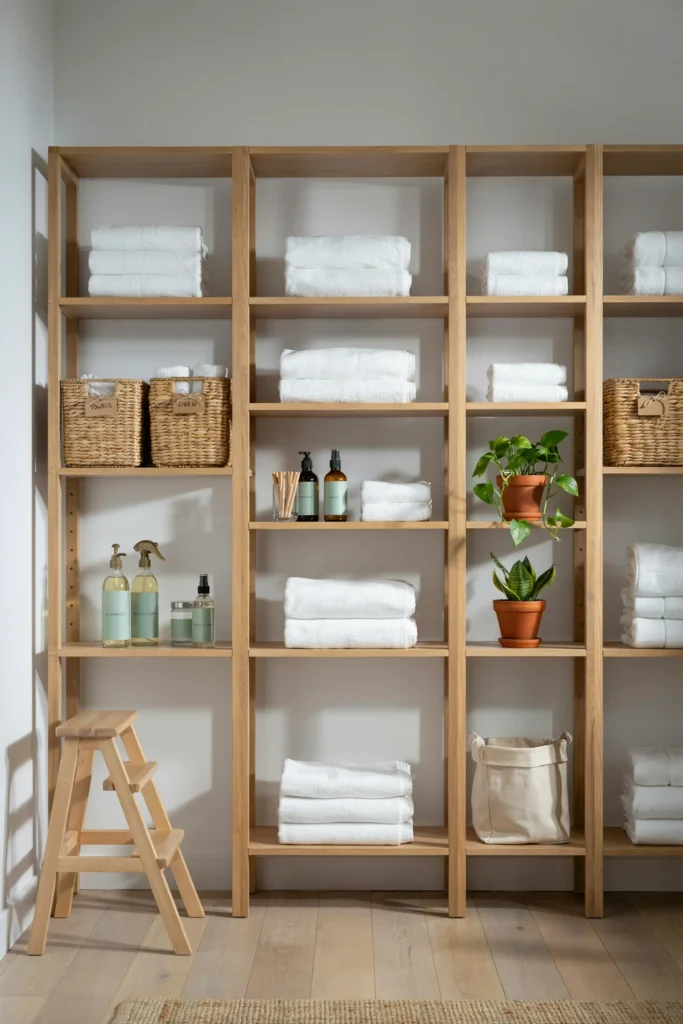
When floor space is tight, go vertical. Floor-to-ceiling shelving pulls your eyes upward and opens up the room visually while giving you a serious amount of storage.
In my own utility room makeover, I replaced a single low cabinet with tall open shelving and nearly tripled my storage capacity overnight.
What works well here:
- Use adjustable shelves so you can reconfigure as your needs change
- Store everyday items at eye level and seasonal or rarely used items up top
- Add a small step stool tucked behind the door for easy reach
2. Pull-Out Drawer Systems Under the Counter
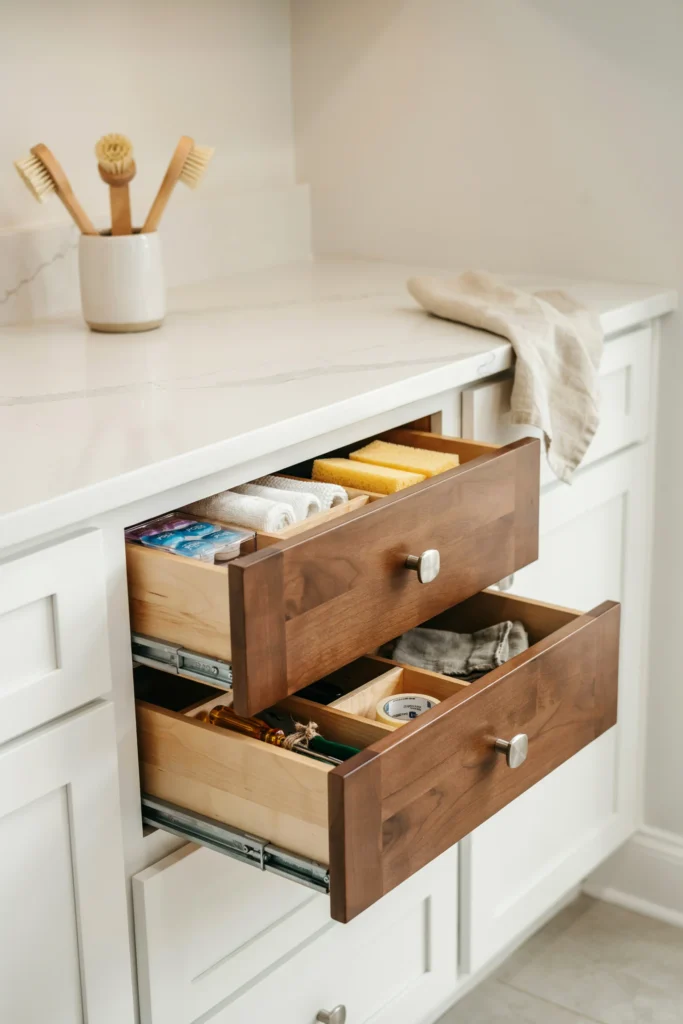
The space under a utility counter is some of the most wasted real estate in a small room. Deep pull-out drawers change that completely.
Instead of bending and digging into a dark cabinet, you slide the drawer out and see everything at once.
Key benefits:
- Full-extension drawers let you access items at the very back
- Dividers inside drawers keep cleaning supplies, detergent pods, and small tools organized
- Works beautifully under a side-by-side washer and dryer setup
3. Stacked Washer and Dryer Configuration
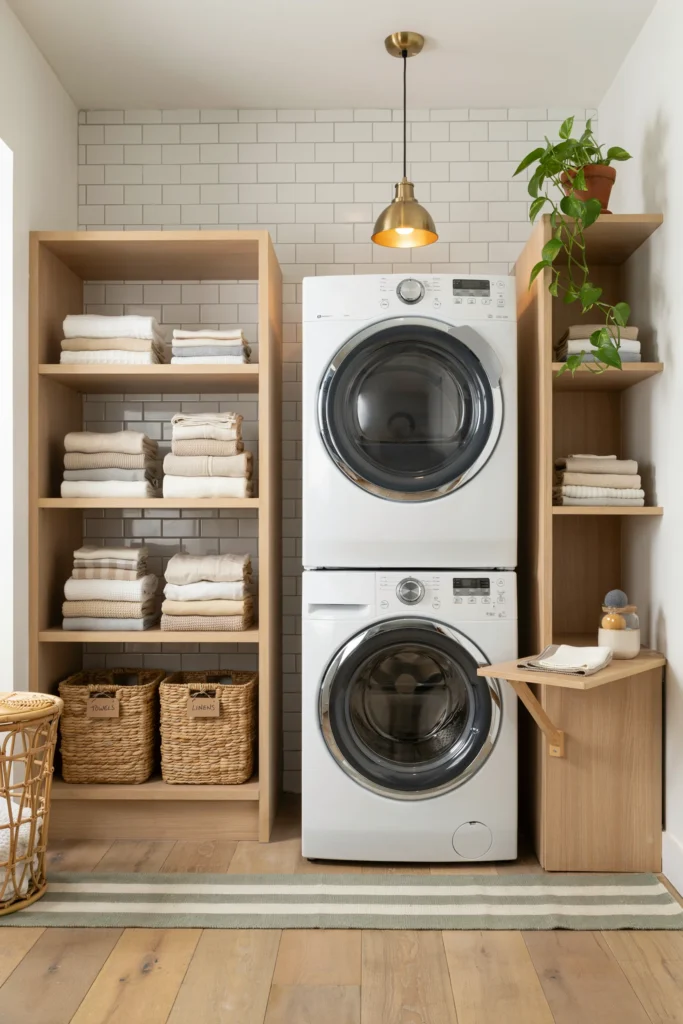
If you have not already stacked your appliances, this single change frees up an entire wall. A stacked configuration takes up roughly half the footprint of a side-by-side setup.
I have seen homeowners go from a cramped, barely functional room to a full laundry and cleaning station just by making this one switch.
Things to keep in mind:
- Make sure your ceiling height allows for stacking
- Use the freed-up wall space for a folding station or extra cabinetry
- Front-load machines are a requirement for stacking
4. Over-the-Door Organizers
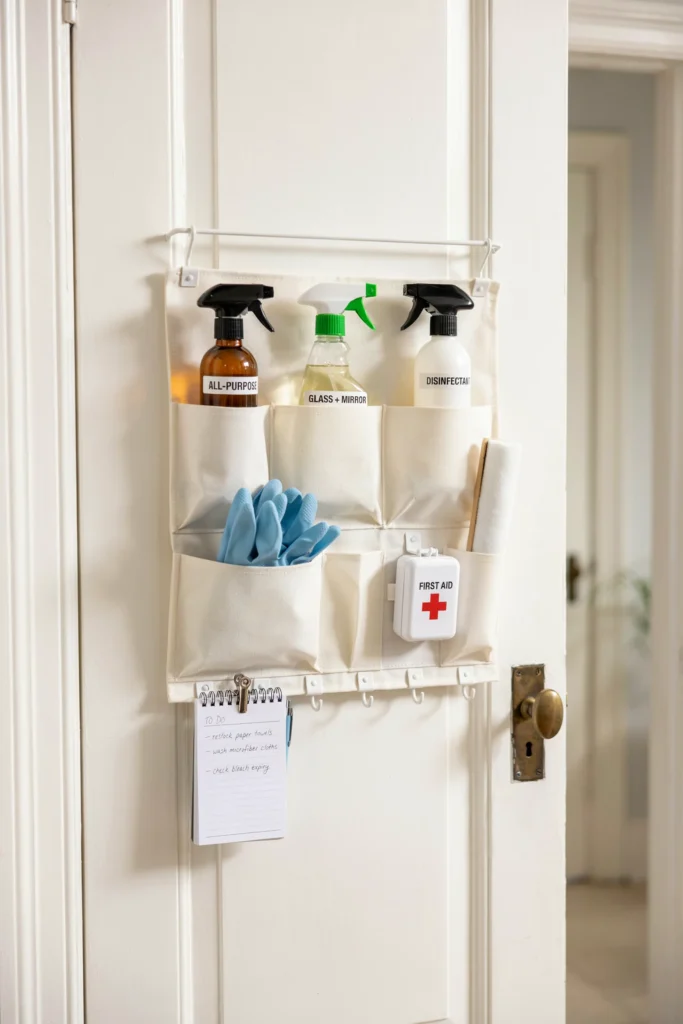
Doors are free storage. Most people ignore them completely. An over-the-door organizer on the back of your utility room door holds a surprising amount without taking up any floor or wall space.
Great uses for over-the-door storage:
- Cleaning sprays and small bottles
- Rubber gloves and scrubbers
- Light bulbs and batteries
- Lint rollers and small tools
Look for adjustable organizers with deep pockets so items stay secure when the door opens and closes.
5. Built-In Folding Station With Hidden Storage
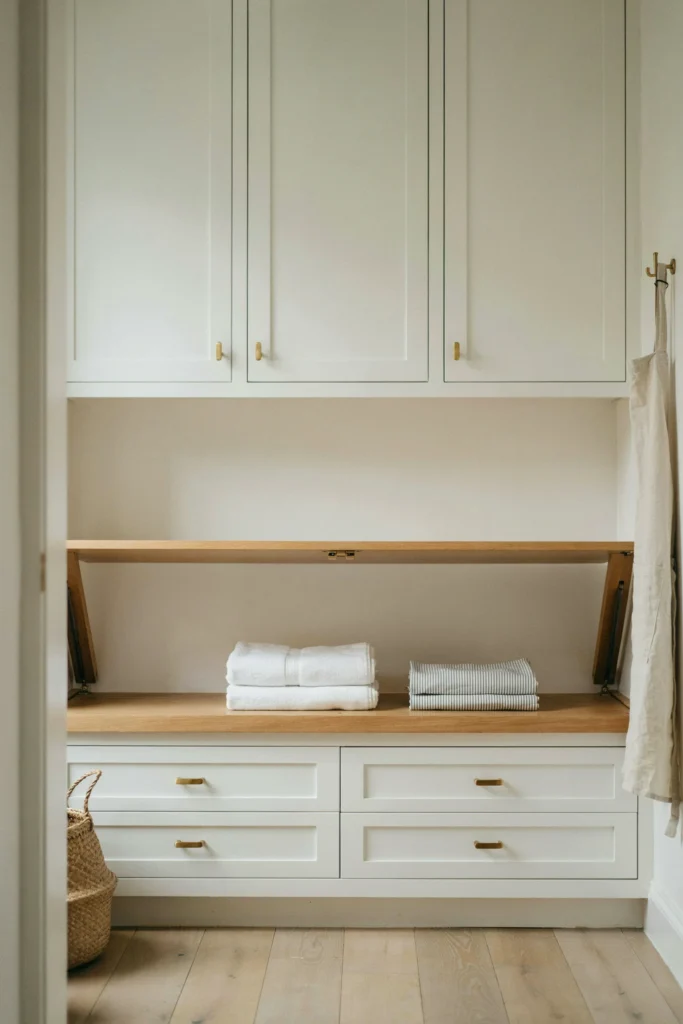
A fold-down or pull-out folding station is one of the smartest investments for a small utility room. When you are done folding, it tucks away flat against the wall and the room feels open again.
Pair it with a row of cabinets above and drawers below, and you have a fully functional laundry station in a space that is barely bigger than a closet.
Design tips:
- Use a sturdy piano hinge rated for heavy use
- Add a lip to the front edge so clothes do not slide off
- Mount it at a comfortable standing height, usually around 36 inches from the floor
6. Wall-Mounted Drying Racks
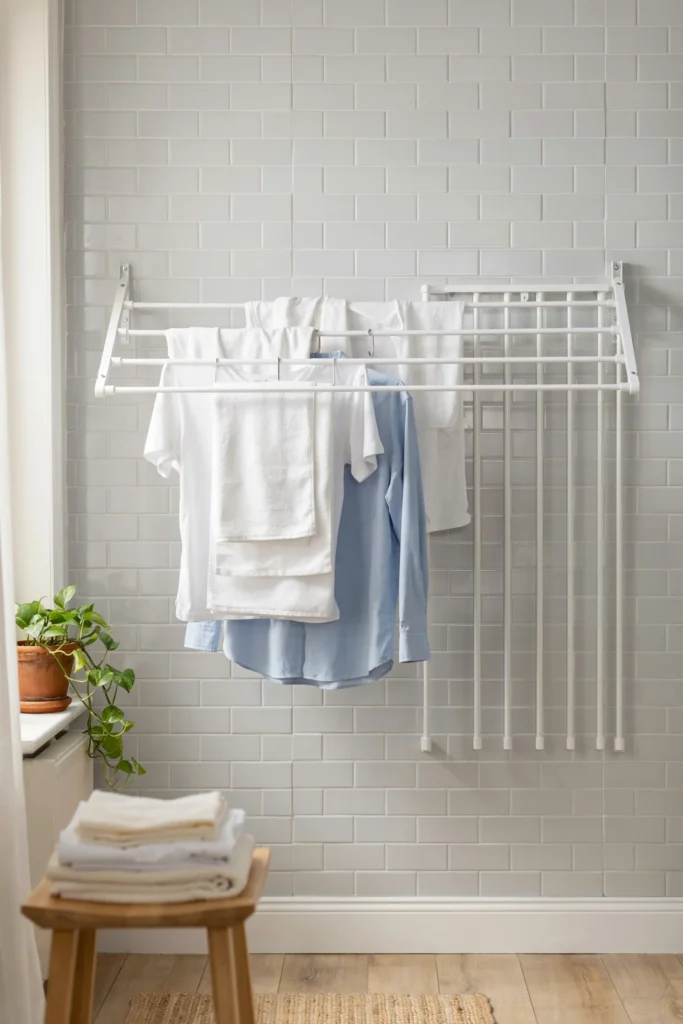
Not every item can go in the dryer. A wall-mounted drying rack solves this without taking up floor space. The rack folds flat against the wall when not in use and extends when you need it.
These are especially useful for families with delicate fabrics, workout clothes, or hand-wash items.
What to look for:
- Stainless steel or powder-coated frames hold up well in humid environments
- Multiple horizontal bars give you space to spread out large items
- Mounting directly to studs ensures it can handle the weight of wet laundry
7. Recessed Shelving Between Wall Studs
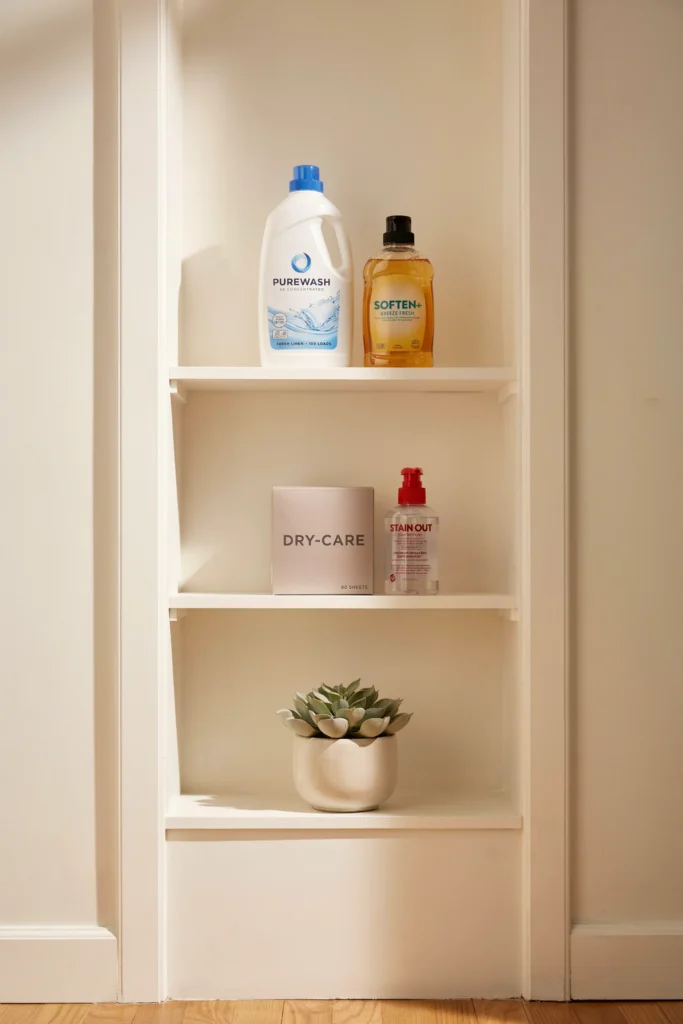
If you are doing any renovation, recessed shelving is worth every bit of planning. You cut into the wall between two studs and create a niche that sits flush with the wall surface.
This gives you 3.5 to 5 inches of depth, which is enough for detergent bottles, fabric softener, dryer sheets, and small cleaning supplies.
Best placement spots:
- The wall directly beside or above the washer and dryer
- Above the utility sink
- Along a longer wall to create a built-in display shelf
8. Pegboard Wall Panels
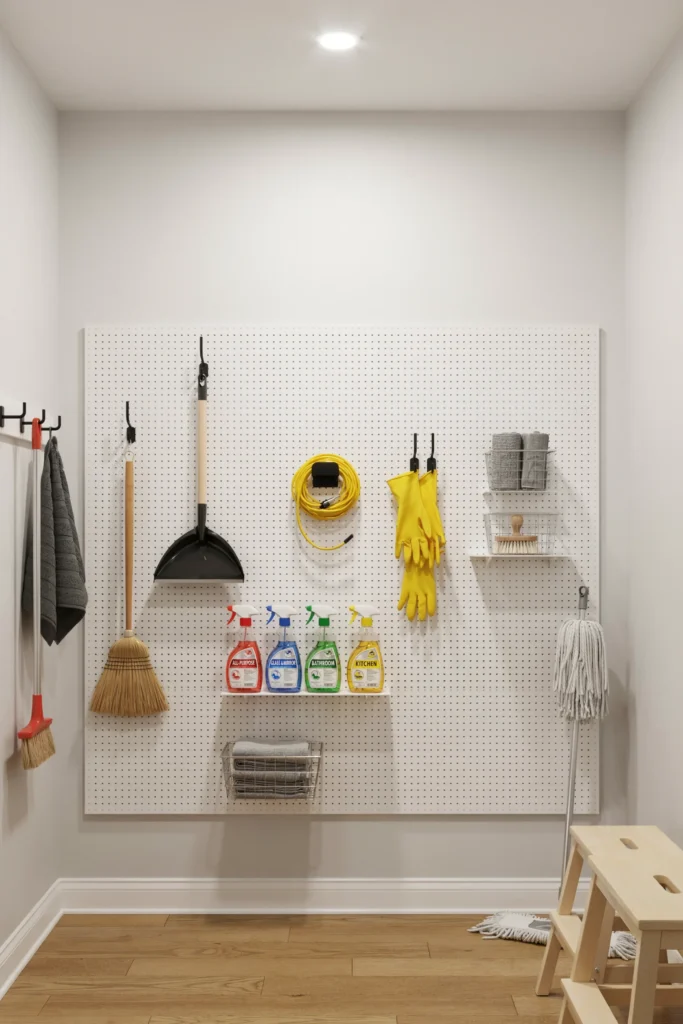
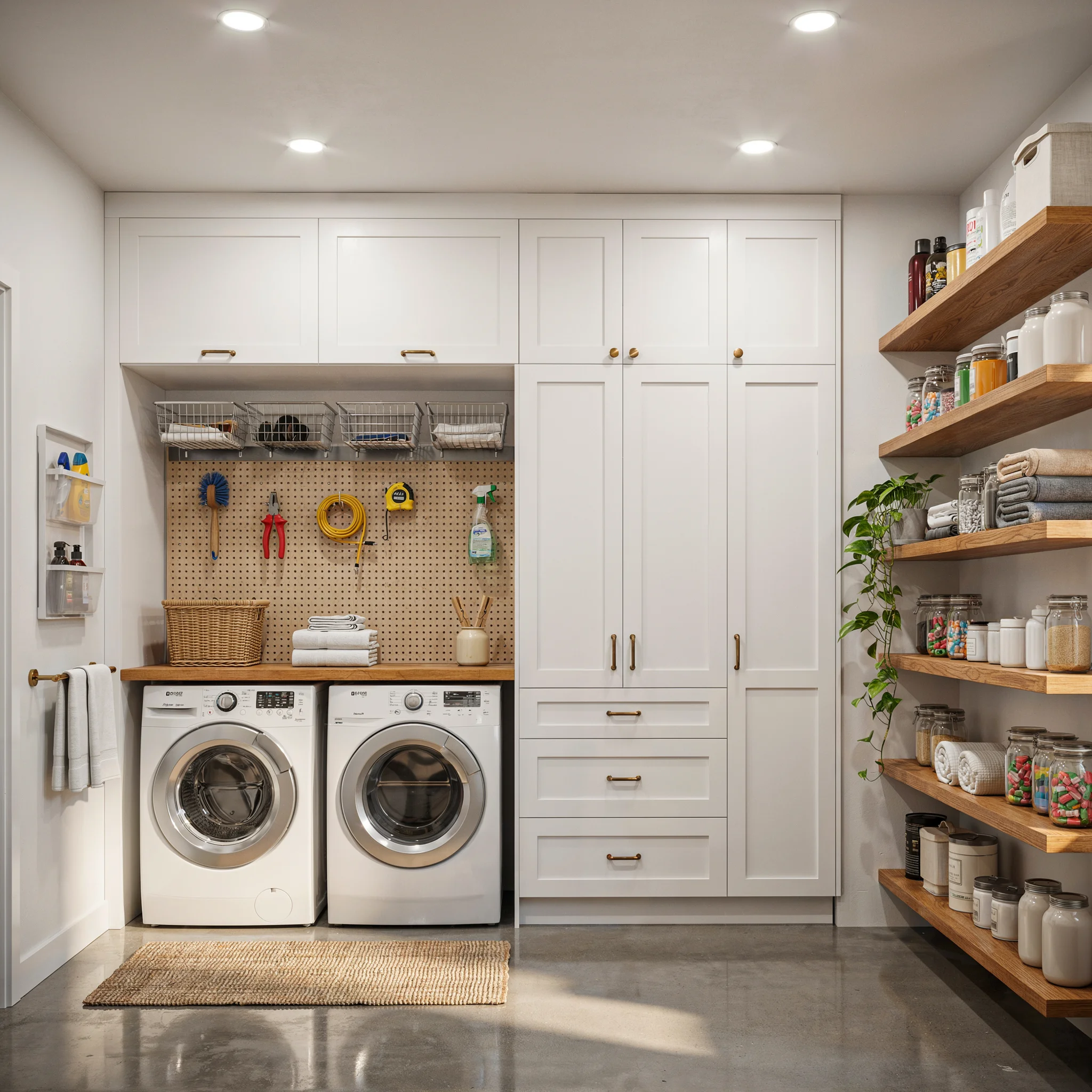
Pegboard is practical, affordable, and endlessly customizable. Mount a full panel on one wall and you can hook, hang, and organize almost anything.
I used pegboard in a utility room renovation where the client had zero wall cabinet budget. We covered the entire back wall and turned it into the most organized space in the house.
What you can store on pegboard:
- Brooms, mops, and dusters
- Extension cords and tool pouches
- Small baskets for miscellaneous items
- Spray bottles and cleaning supplies
Paint the pegboard to match your wall color and it looks far more intentional than industrial.
9. Labeled Basket and Bin Systems
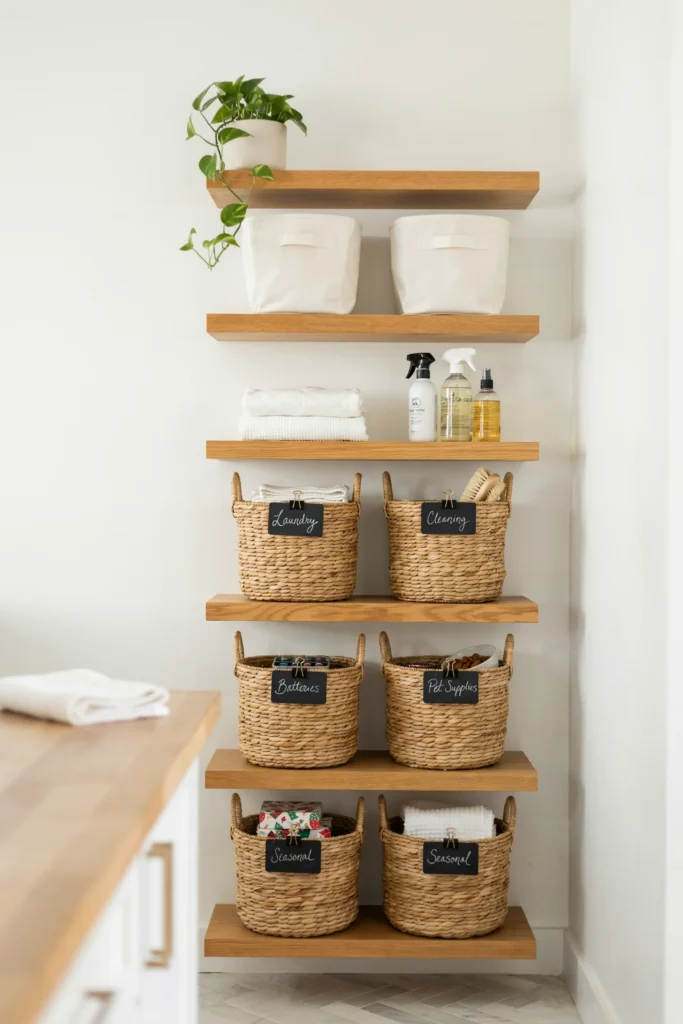
Open shelving only works when everything has a place. Labeled baskets and bins make it easy to grab what you need and put it back without thinking.
Uniform bins on shelves also make a utility room look intentional rather than cluttered, even when it is full of stuff.
Practical tips:
- Use matching bins or baskets for a clean visual look
- Label by category: cleaning, laundry, pet supplies, batteries
- Wicker, canvas, or wire baskets all work depending on your style
10. Narrow Slide-Out Pantry Tower
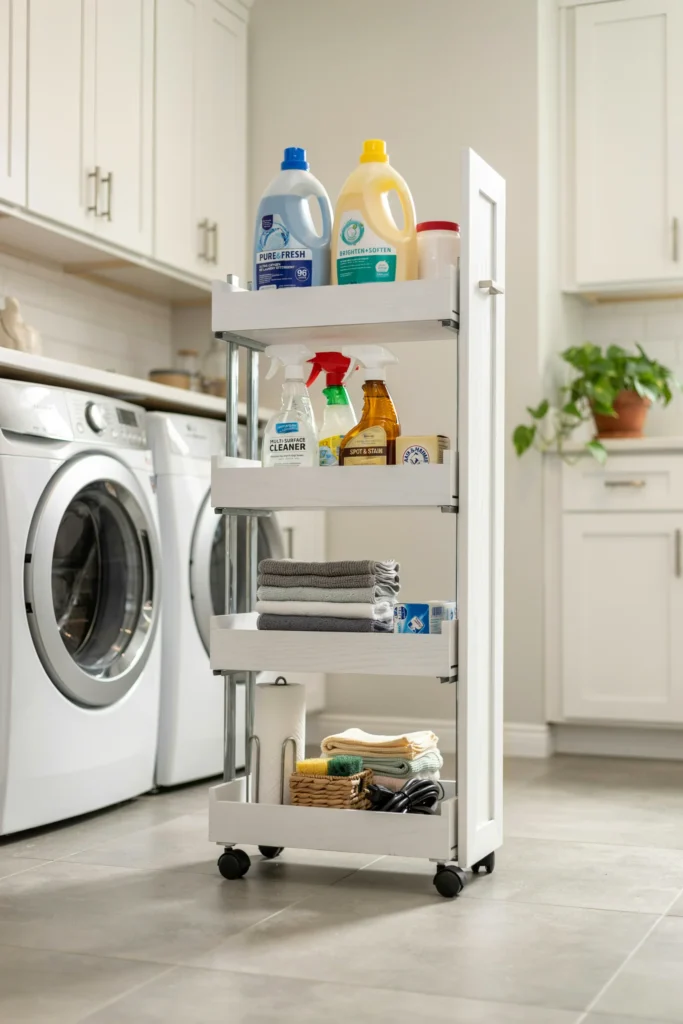
A 6 to 9 inch gap beside the washing machine or in a corner might seem useless. A custom or off-the-shelf slide-out tower turns it into a storage goldmine.
These towers roll out on smooth casters and hold an enormous amount of product in a very slim footprint.
Best items to store here:
- Detergent, bleach, and fabric softener
- Cleaning rags and extra sponges
- Shoe care products or pet grooming supplies
11. Overhead Cabinet Runs Above the Door
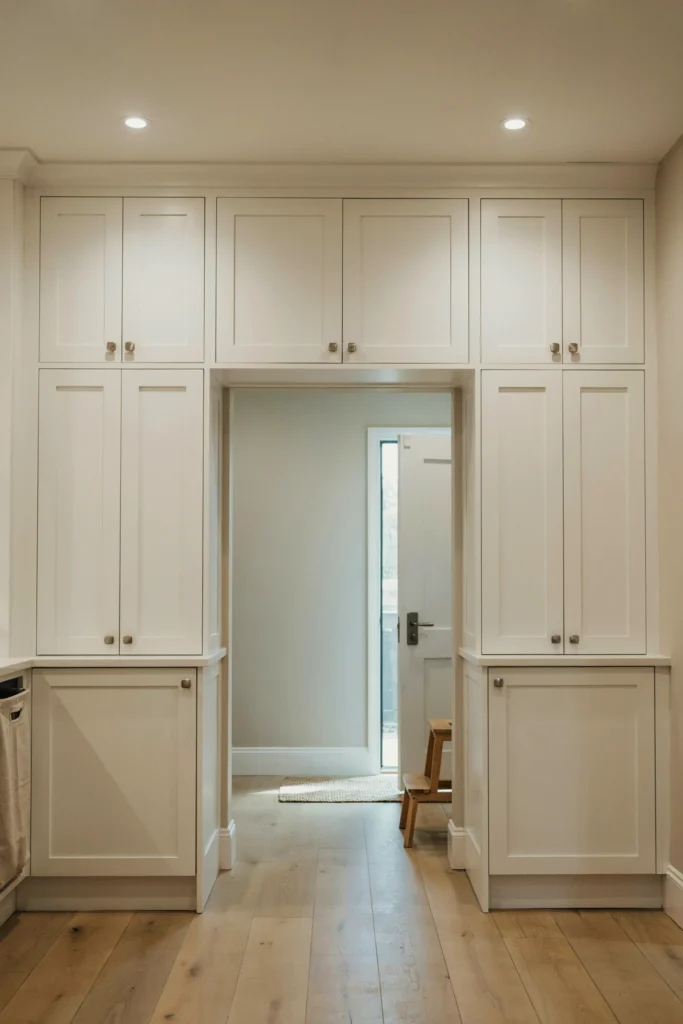
Most utility rooms stop their cabinetry at the standard 7-foot ceiling height. But if your ceilings go higher, you are leaving a full row of cabinet space untouched.
Run a cabinet row above the doorframe and use that space for bulky, rarely used items like spare bedding, cleaning equipment for seasonal use, or a stockpile of paper goods.
Practical considerations:
- Use a small rolling ladder or step stool for safe access
- Keep cabinet doors in line with the rest of the room so it looks intentional
- Label the inside of the doors with contents for quick reference
12. Utility Sink With Built-In Side Storage
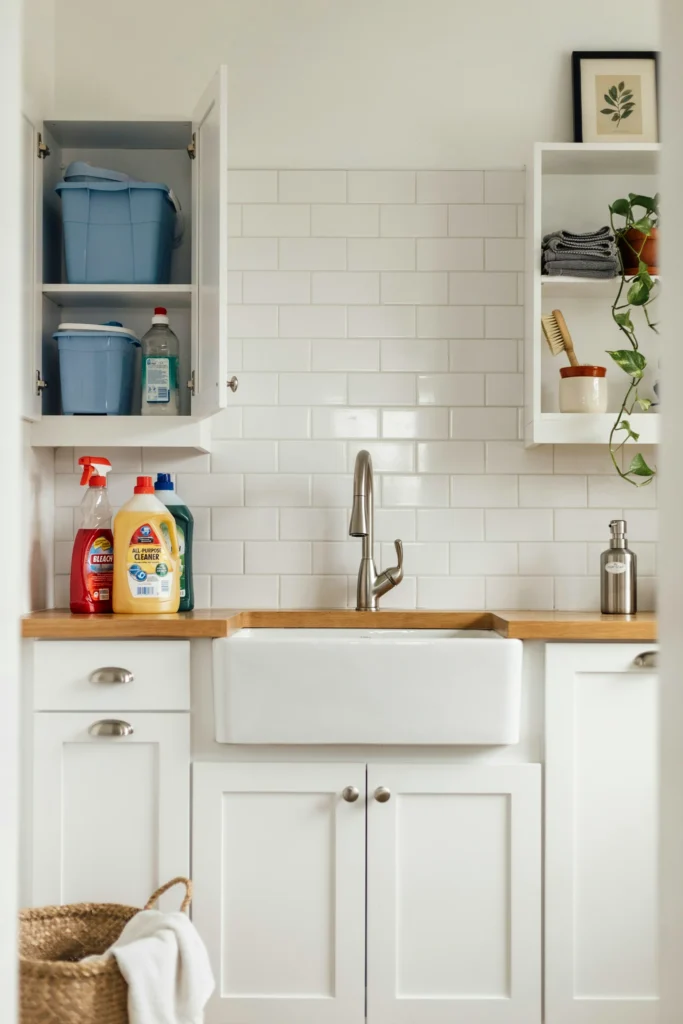
If your utility room includes a sink, make the most of it. A utility sink with built-in cabinet storage on the sides doubles the function of that fixture.
You get a proper place to soak stained clothes, fill buckets, and hand-wash items, plus cabinet or shelf space right where you need it for related supplies.
Design features worth adding:
- A pull-out spray head for rinsing large items
- A cabinet underneath to hide cleaning buckets and large bottles
- Side shelves or a built-in ledge for items you reach for constantly
Final Thoughts
A small utility room is not a disadvantage. It is just a design challenge that rewards thoughtful planning. The best small utility rooms I have worked on share one thing in common: every inch has a purpose.
Start with one or two of these ideas, see how they change how you use the space, and build from there. You do not need to overhaul everything at once. Small, smart changes add up fast.