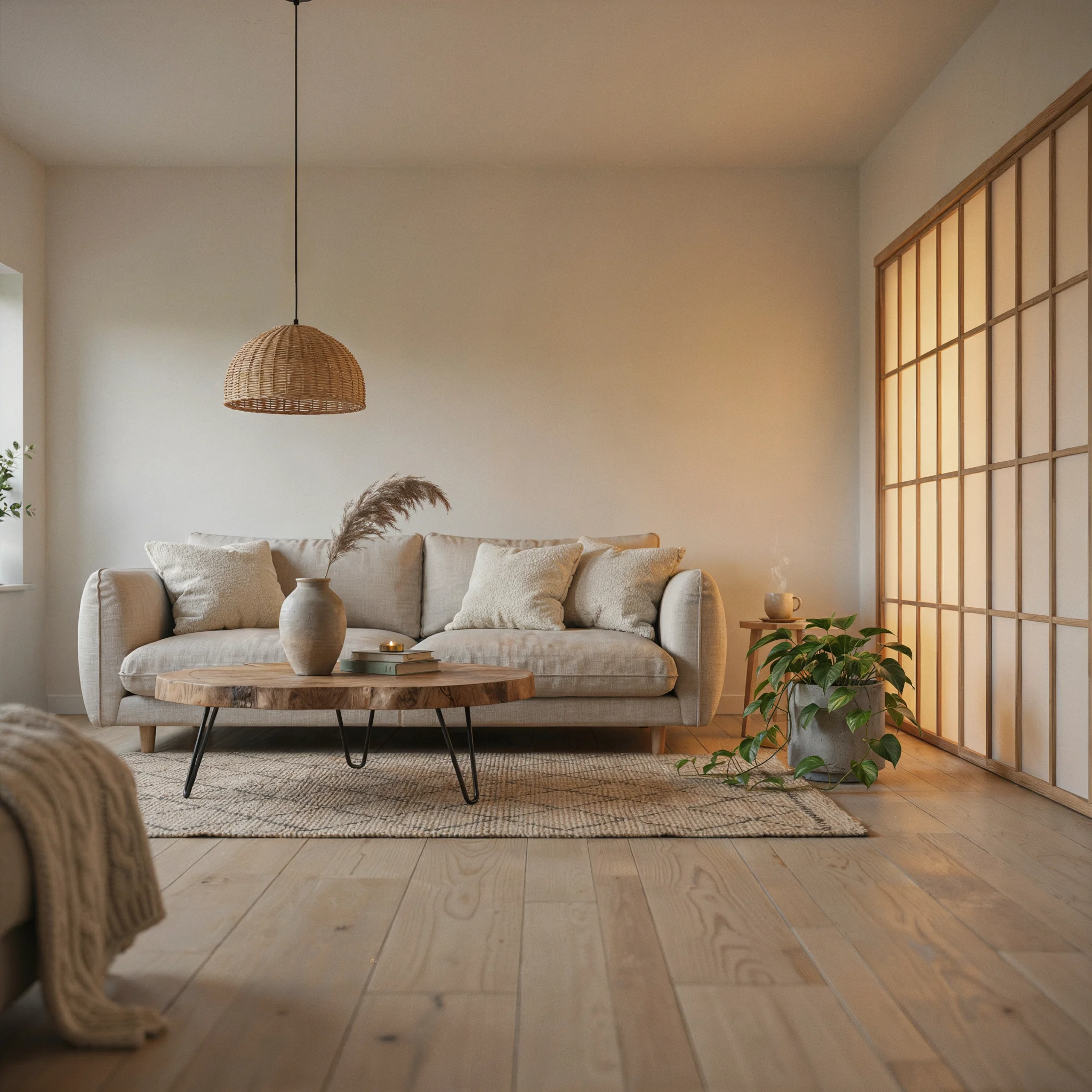
11 Zen Japandi Living Room Decor Ideas That Master the Art of Cozy Minimalism
I used to think a cozy living room needed more — more throw pillows, more art on the walls, more stuff. Then I discovered Japandi style and completely changed how I think about home decor. This Japanese-Scandinavian design approach proves that less truly is more.
Here are 11 ideas that will help you build a living room that feels both calm and deeply livable.
1. Start With a Soft Neutral Color Palette
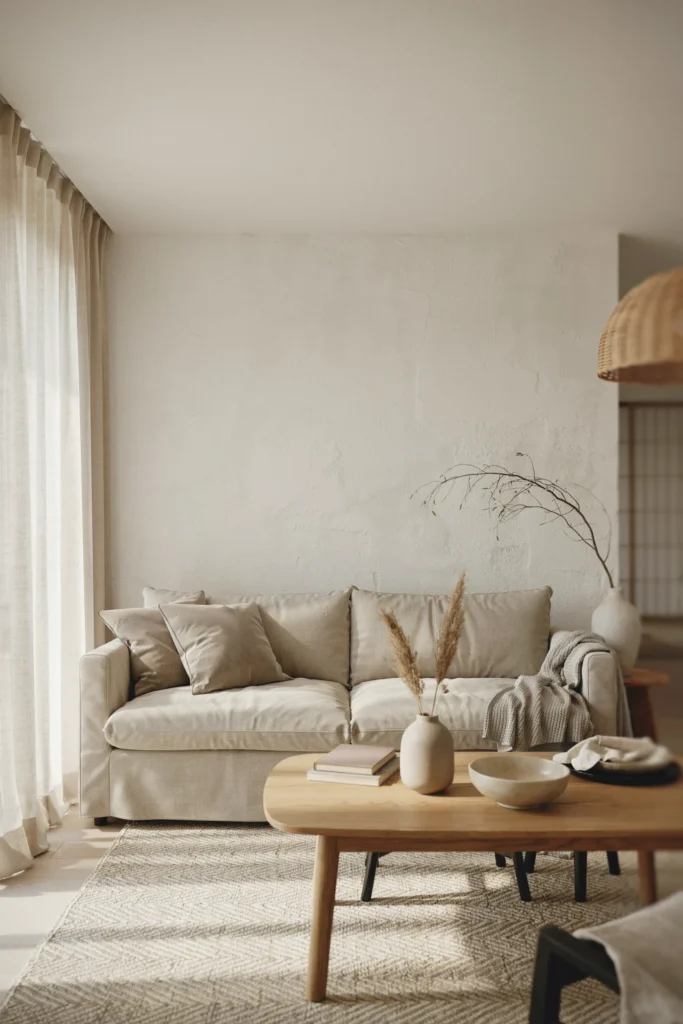
The foundation of every Zen Japandi living room is a calming color scheme. Instead of filling the room with bold colors, focus on shades inspired by nature.
Some of my favorite choices include:
- Warm white
- Soft beige
- Sand tones
- Light taupe
- Muted gray
- Pale wood tones
These colors instantly make a room feel larger and more relaxing. When I switched from bright accent walls to soft neutrals, the entire atmosphere of my living room changed.
2. Choose Low-Profile Furniture
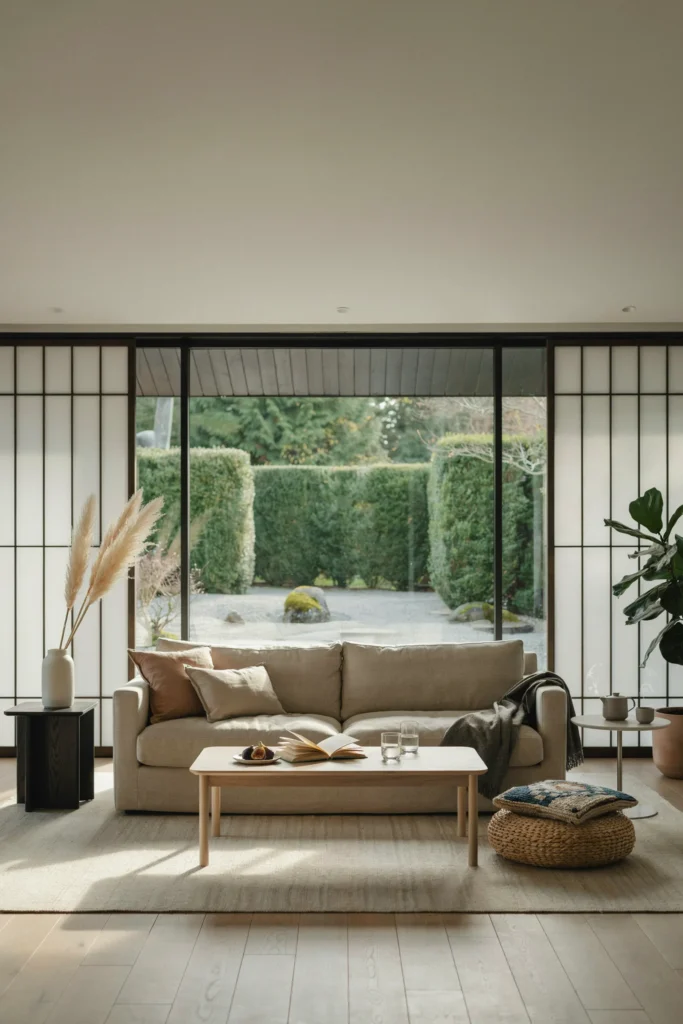
One defining feature of Japandi design is furniture that sits closer to the ground. This creates a grounded and balanced look.
Consider:
- Low sofas
- Platform coffee tables
- Minimal side tables
- Floor cushions
Lower furniture naturally makes ceilings feel higher while encouraging a more relaxed environment.
3. Let Natural Wood Take Center Stage
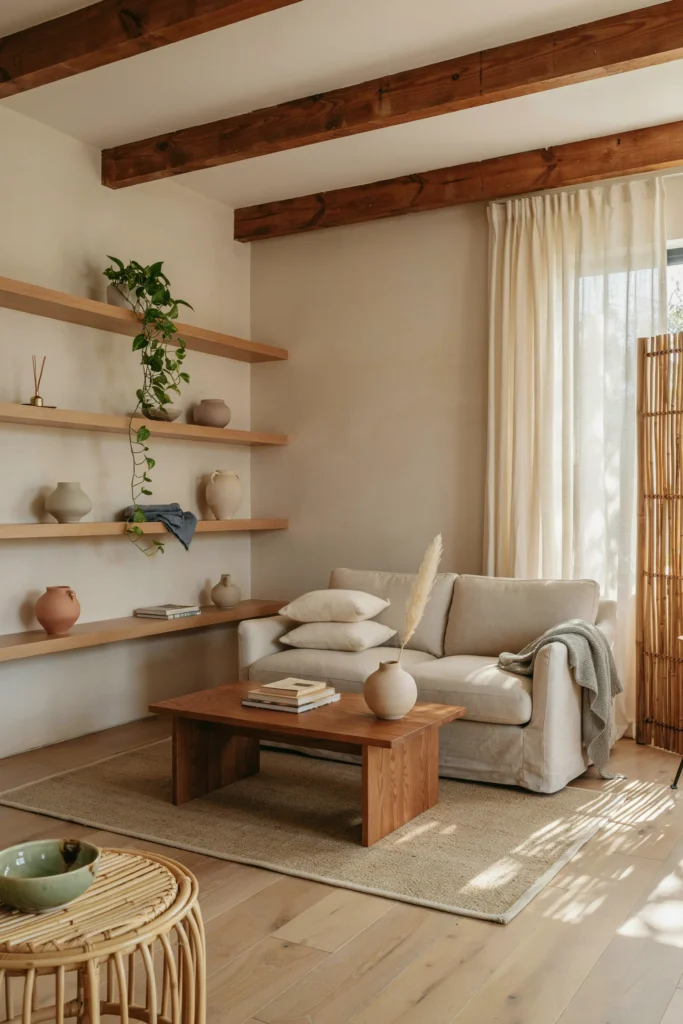
Wood is one of the most important materials in Zen Japandi interiors. It brings warmth and texture without adding visual clutter.
Popular wood finishes include:
- Oak
- Ash
- Walnut
- Bamboo
I personally love mixing lighter wood furniture with a few darker accents. The contrast adds depth while maintaining a clean appearance.
See Also: 13 Japandi Living Room Ideas That Feel Like a Peaceful Retreat
4. Declutter Ruthlessly
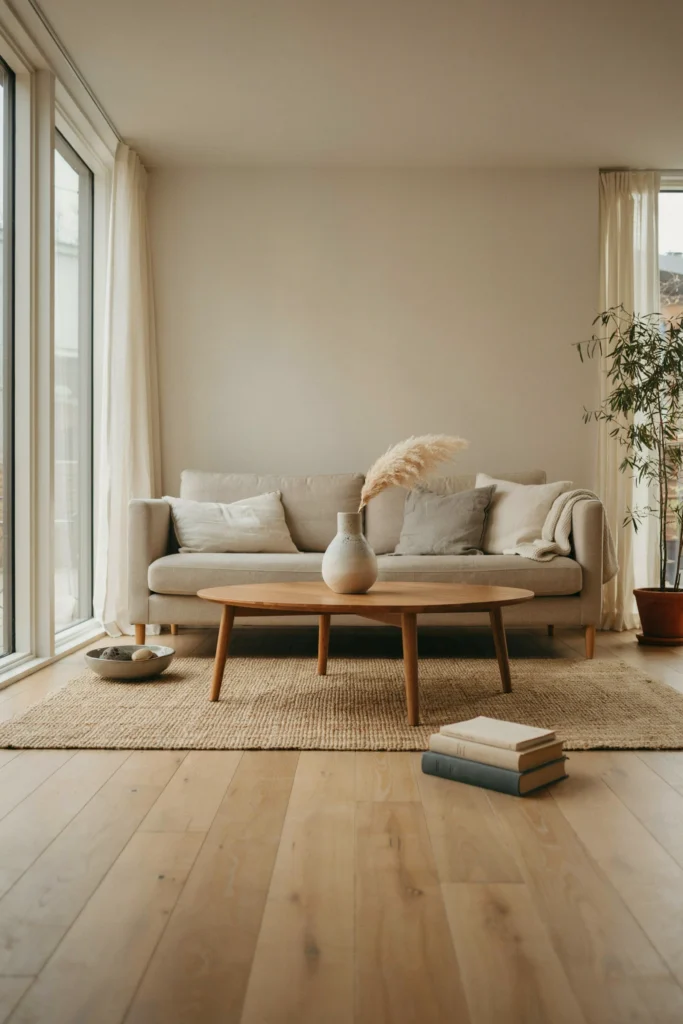
This idea may be the most important of all.
Zen-inspired spaces thrive on simplicity. Every item should serve a purpose or bring genuine joy.
Whenever I refresh my living room, I ask myself:
- Do I use this regularly?
- Does it contribute to the room’s atmosphere?
- Would I miss it if it disappeared?
If the answer is no, it usually gets removed.
A room with fewer items often feels more luxurious than one packed with decorations.
5. Add Organic Textures for Warmth
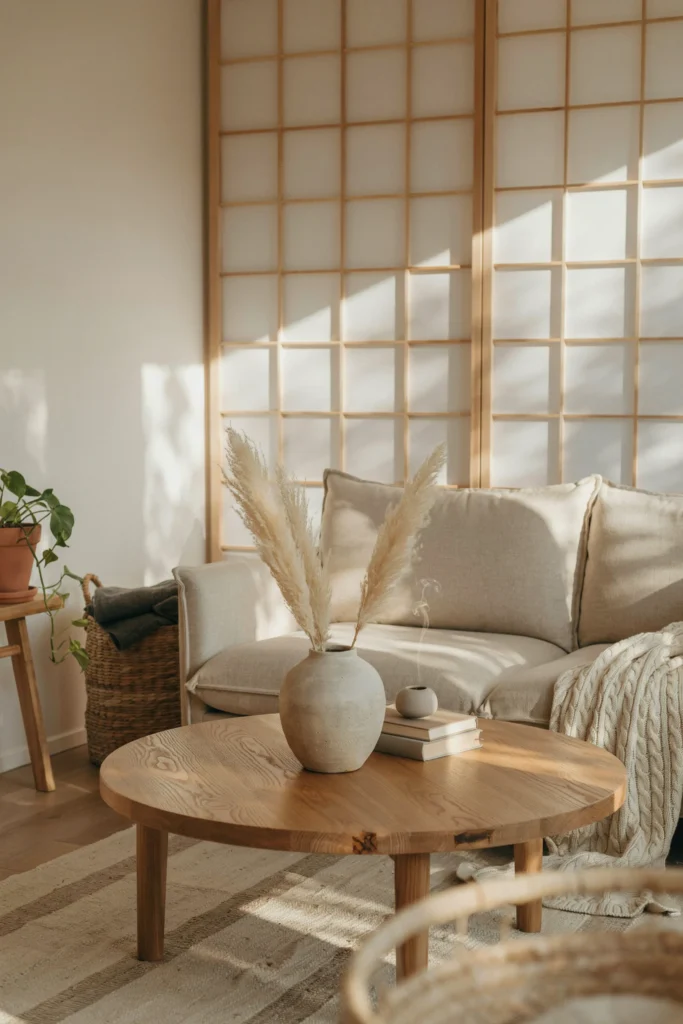
Minimalism can sometimes feel sterile if there is not enough texture.
To keep the room cozy, layer natural materials such as:
- Linen curtains
- Cotton throws
- Wool rugs
- Woven baskets
- Handmade ceramics
These subtle details create visual interest without overwhelming the space.
6. Embrace the Beauty of Imperfection
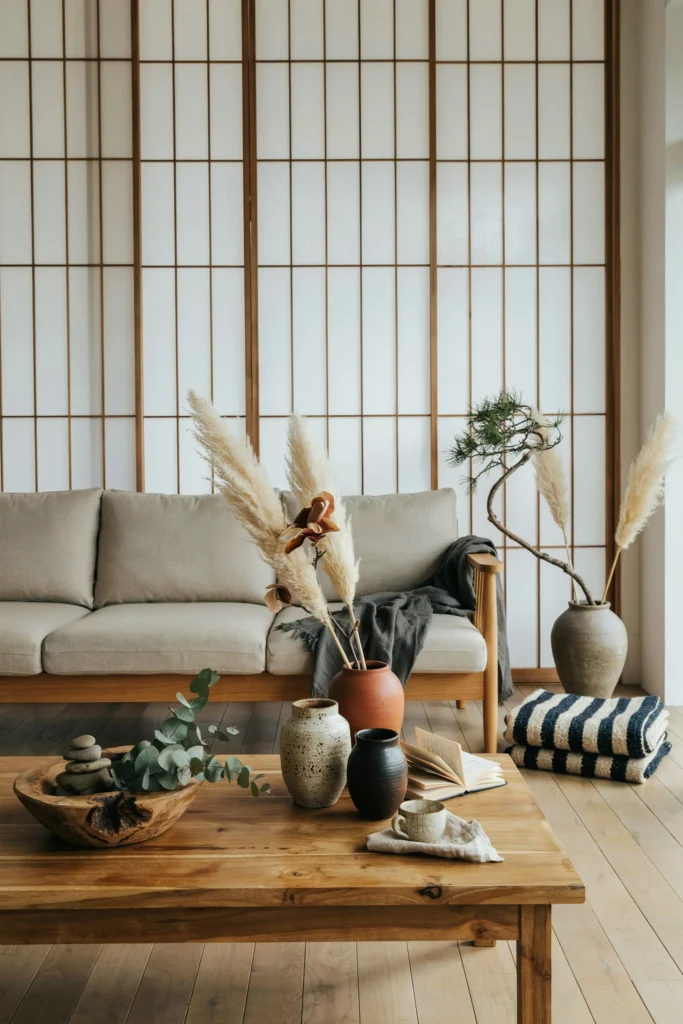
Zen philosophy celebrates authenticity and imperfection. This concept works beautifully within Japandi interiors.
Instead of chasing perfection, incorporate pieces that feel handmade and unique.
Examples include:
- Hand-thrown pottery
- Rustic wooden bowls
- Textured vases
- Artisan-crafted decor
Some of my favorite pieces have small imperfections that actually make them more beautiful.
7. Create a Connection With Nature
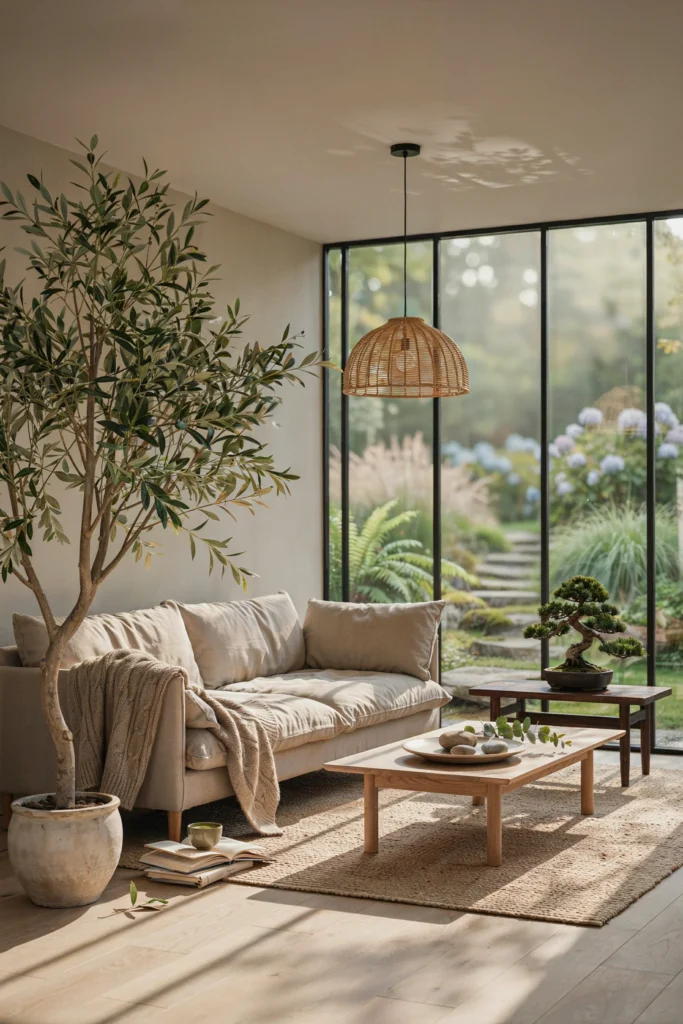
Nature plays a huge role in Zen-inspired design.
Even a few carefully selected plants can transform a living room.
Excellent choices include:
- Olive trees
- Snake plants
- Rubber plants
- Bonsai trees
- Fiddle leaf figs
Avoid overcrowding the room with greenery. One large plant often makes a stronger statement than several small ones.
See Also: 15 Modern Japandi Bedroom Ideas for a Calm & Minimal Home
8. Focus on Soft, Layered Lighting
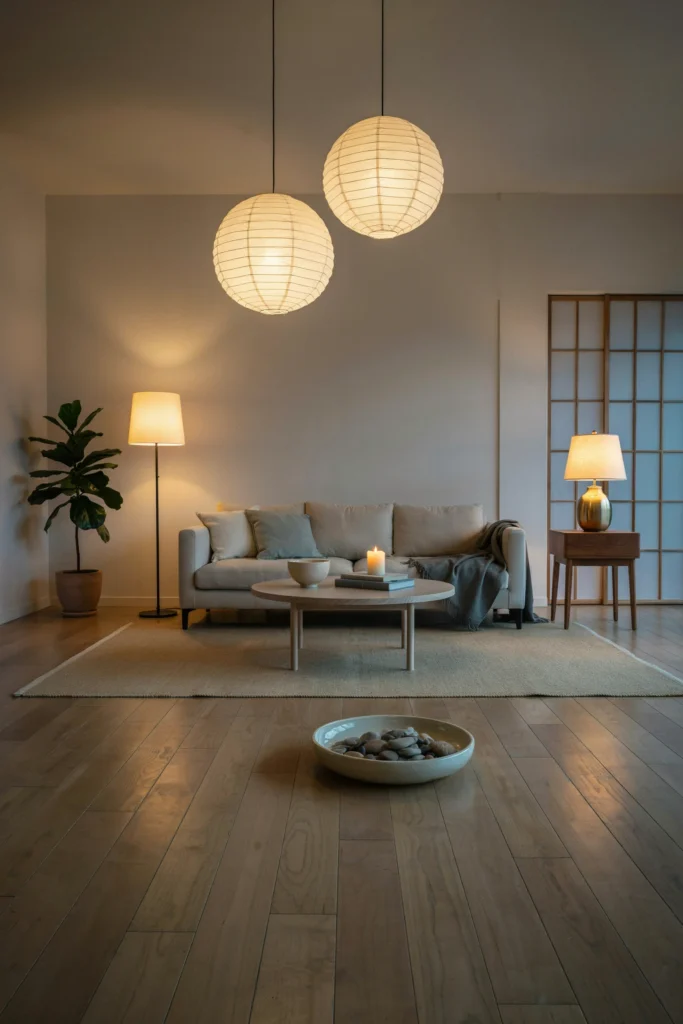
Lighting can completely change the mood of a space.
Zen Japandi living rooms avoid harsh overhead lighting whenever possible. Instead, layer multiple light sources.
Try combining:
- Paper lanterns
- Floor lamps
- Table lamps
- Warm LED bulbs
- Candles
In my experience, warm lighting instantly makes minimalist spaces feel more inviting and comfortable.
9. Keep Decor Meaningful and Intentional
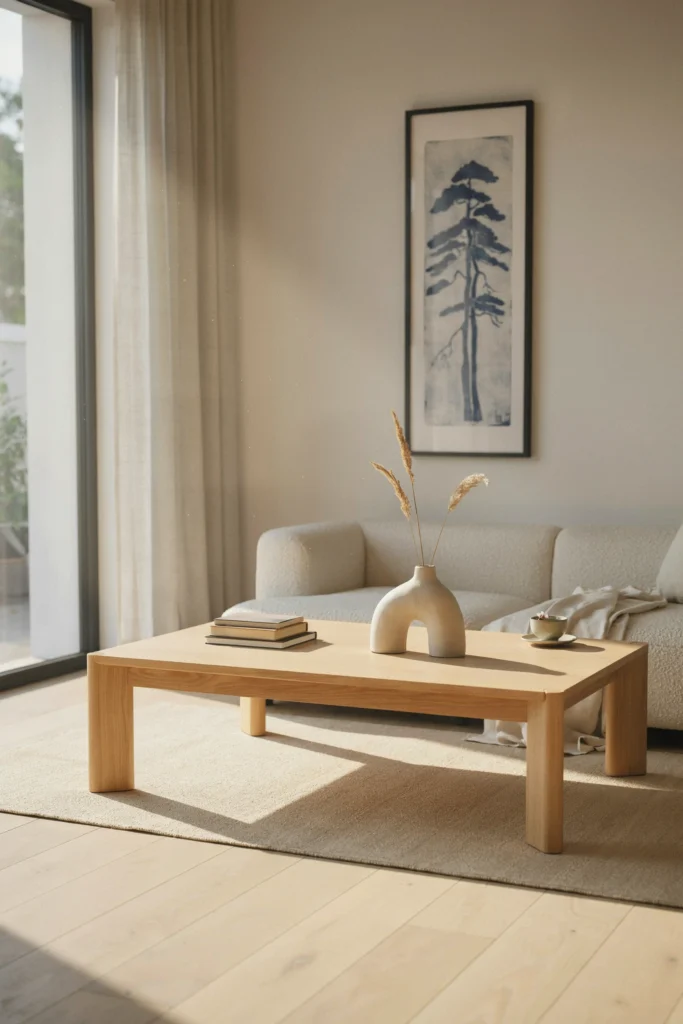
A common mistake is filling empty shelves simply because they look bare.
Japandi design takes the opposite approach.
Choose a few meaningful pieces such as:
- A favorite ceramic vase
- A stack of beautiful books
- A sculptural object
- Family heirlooms
- Handmade artwork
Giving each item room to breathe makes it feel more important.
10. Incorporate Simple Black Accents
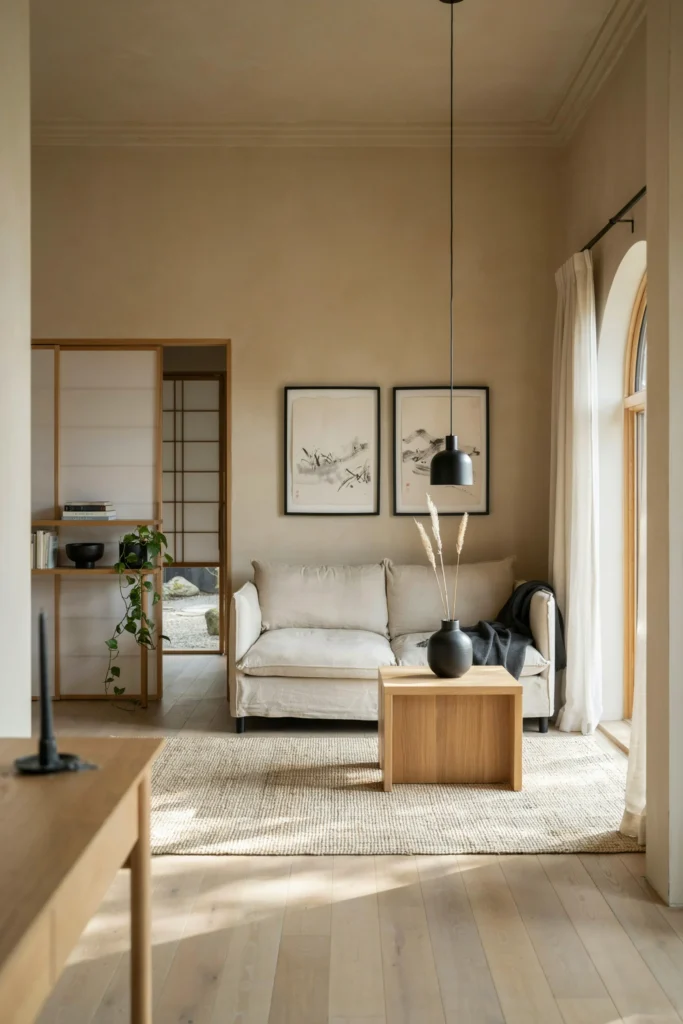
While neutral colors dominate Japandi interiors, small black details help anchor the room.
You can introduce black through:
- Picture frames
- Lamp bases
- Hardware
- Decorative bowls
- Furniture legs
A little contrast prevents the space from looking flat while maintaining the minimalist aesthetic.
11. Design Around Comfort, Not Trends
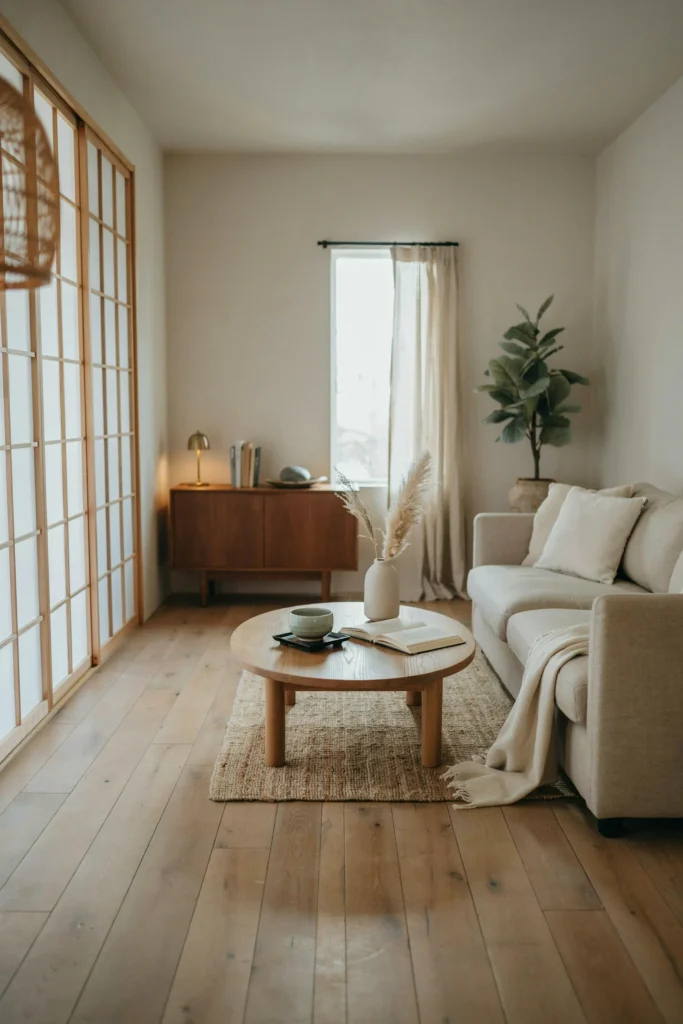
The most successful Zen Japandi living rooms prioritize how a space feels rather than what is currently popular.
Ask yourself:
- Is the room relaxing?
- Does it encourage slow living?
- Can you comfortably spend hours here?
Some of my favorite design decisions were not trendy at all. They simply made the room feel more peaceful and functional.
When comfort becomes the priority, timeless design naturally follows.
Final Thoughts
Zen Japandi living room design proves that minimalism does not have to feel cold or restrictive. By combining natural materials, thoughtful decor, soft textures, and intentional simplicity, you can create a space that feels both elegant and deeply comforting.
After incorporating these ideas into my own home, I noticed something unexpected. The room not only looked better, but it also felt better to spend time in. That quiet sense of calm is what makes Zen Japandi style so enduring.