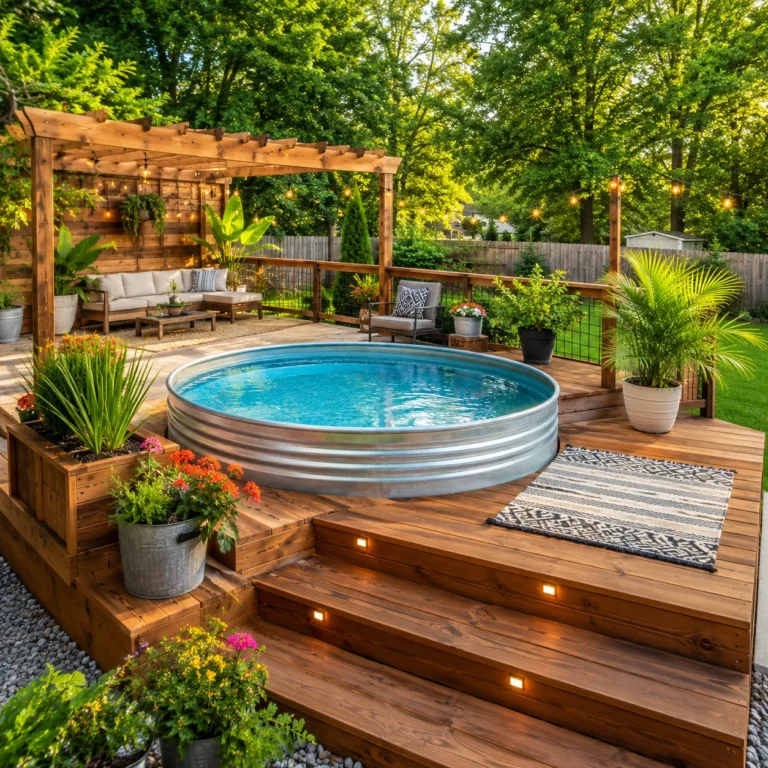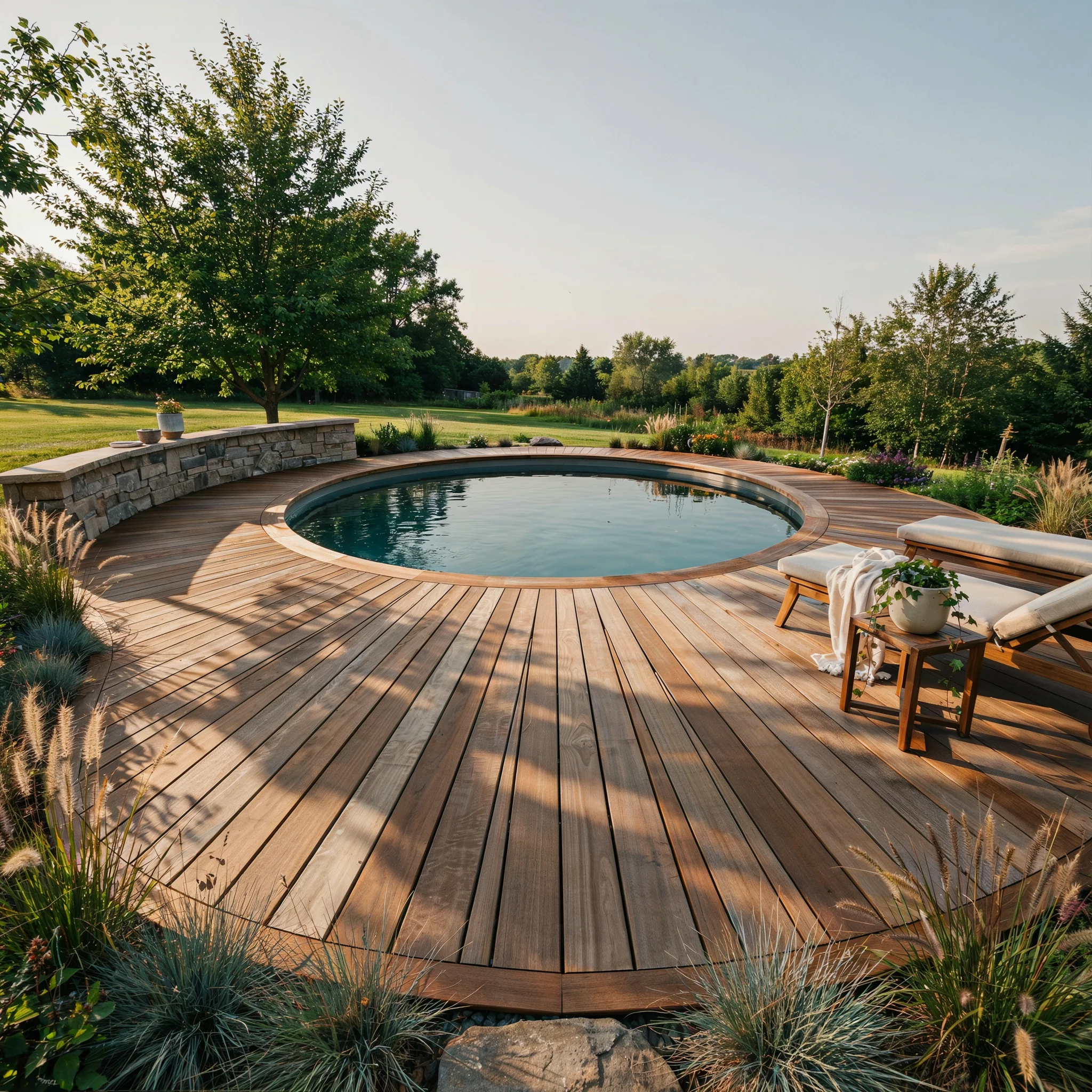
16 Sunken Above Ground Pool Ideas That Look Fully Inground
I almost skipped an above ground pool because I wanted that sleek inground look without the inground price tag. Then I found sunken above ground pools, and they changed my whole backyard plan.
With the right deck, retaining wall, or landscaping, you can sink an above ground pool into your yard and fool every guest. Here are 16 ways to pull it off.
1. Build a Deck That Sits Flush With the Top Rail
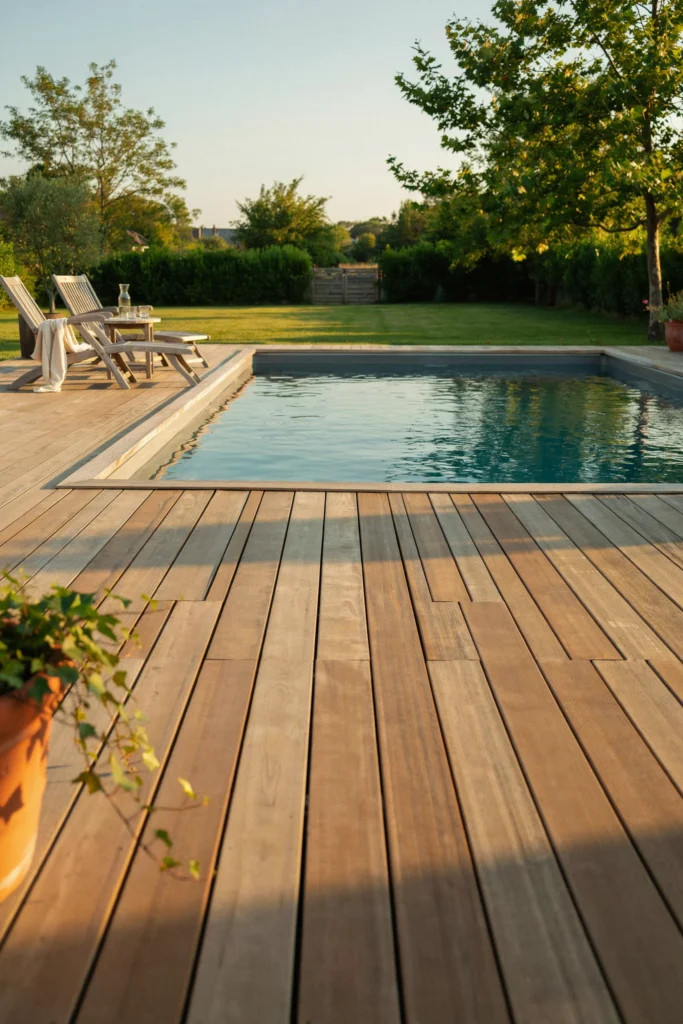
The biggest giveaway on most above ground pools is that metal or resin rail poking up around the edge. Build a deck so its surface lands right at that rail height, and the rail disappears under the boards. I helped a friend do this with her 24 foot Intex pool, and once the decking went down, nobody who visited could point to where the deck ended and the pool began.
- Measure the pool’s top rail height before you cut a single board.
- Use a properly framed deck on footings, not a floating platform, since the area right next to the pool carries extra weight from foot traffic and wet feet.
- Leave a removable panel near the pump or filter so you can still reach the equipment.
2. Dig the Pool Partway Into a Natural Slope
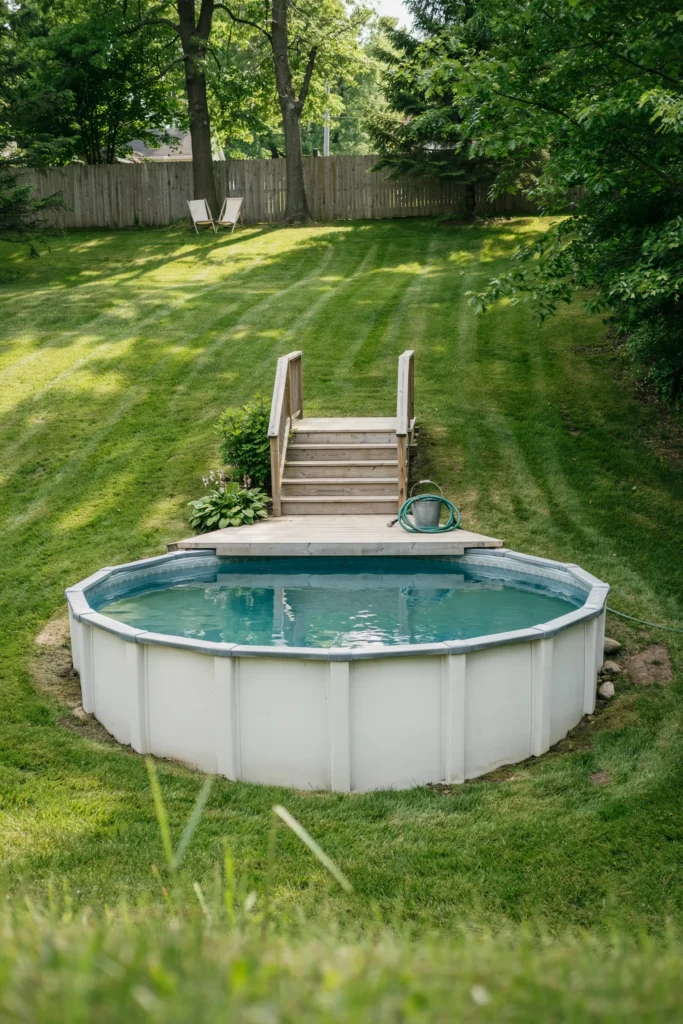
If your yard has any kind of grade to it, use it. Set the pool into the lower end of the slope and the high side will naturally hide most of the pool wall. This is one of the cheapest ways to get a sunken look because the ground is already doing half the work for you.
- Have the ground checked for proper drainage before you dig, so water doesn’t pool around the base.
- Keep at least 2 feet of flat, compacted ground around the entire base, even on a slope.
- Plan for a short retaining wall or steps on the downhill side to finish the transition.
3. Frame It With a Retaining Wall
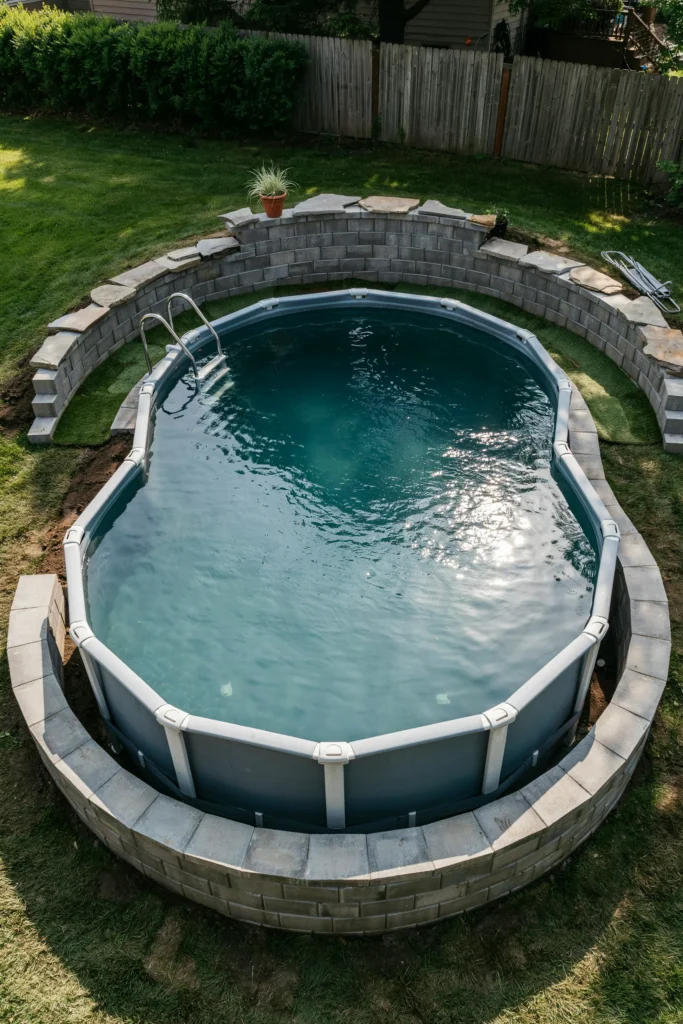
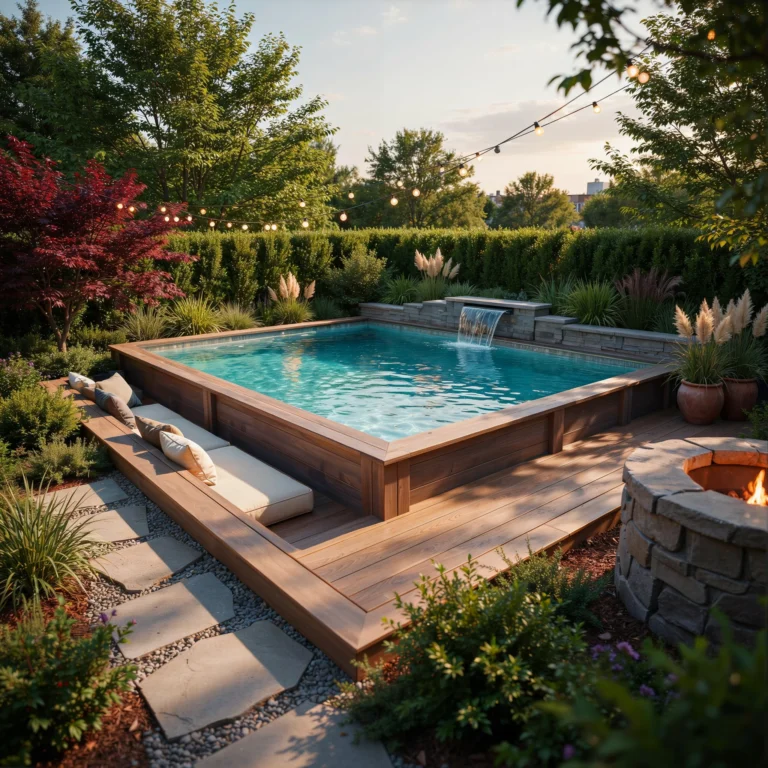
A retaining wall built a foot or two out from the pool gives you a clean, finished edge and lets you backfill soil between the wall and the pool to bury the visible metal. My neighbor used concrete block for hers, then capped it with flagstone, and it reads exactly like the coping on an inground pool.
- Use a wall block rated for retaining soil, not a decorative veneer block, since it needs to hold real weight.
- Backfill with gravel first for drainage, then soil on top.
- Cap the wall with flat stone or pavers so it doubles as extra seating.
4. Go Rustic With a Stacked Stone Wall
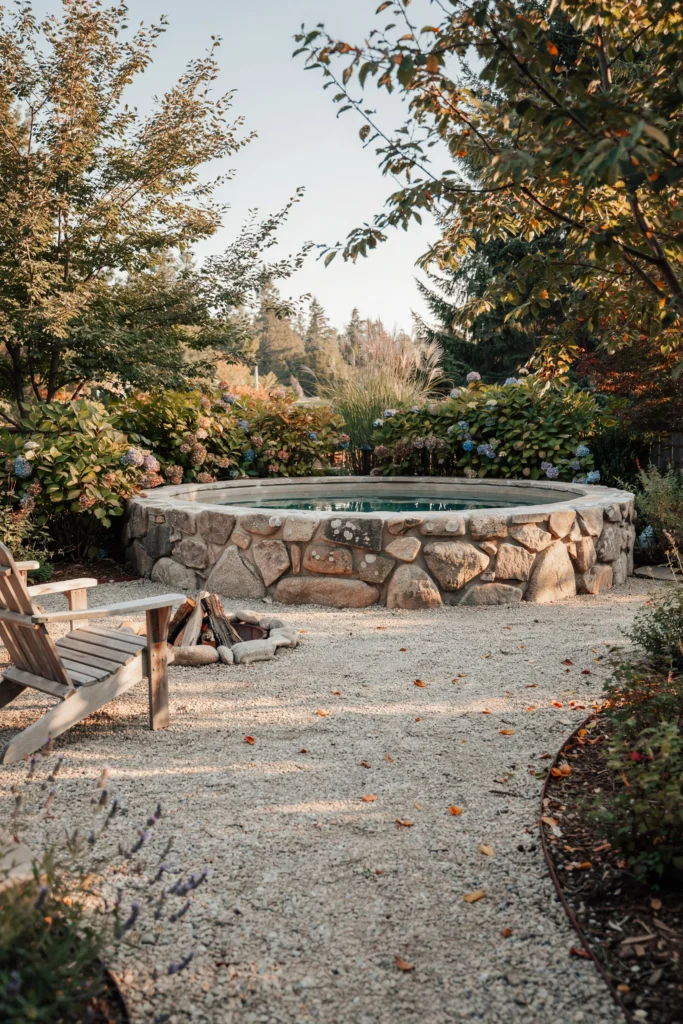
Fieldstone or stacked natural stone gives the whole setup a much higher end feel than block or wood ever will. It works especially well if the rest of your landscaping already leans rustic, like a stone fire pit or a gravel path nearby.
- Choose stones with flat faces so stacking stays stable without heavy mortar.
- Mix stone sizes so the wall doesn’t look too uniform or manufactured.
- Add a drainage gap behind the wall to keep water from building up against it.
5. Add Paver Coping Around the Edge
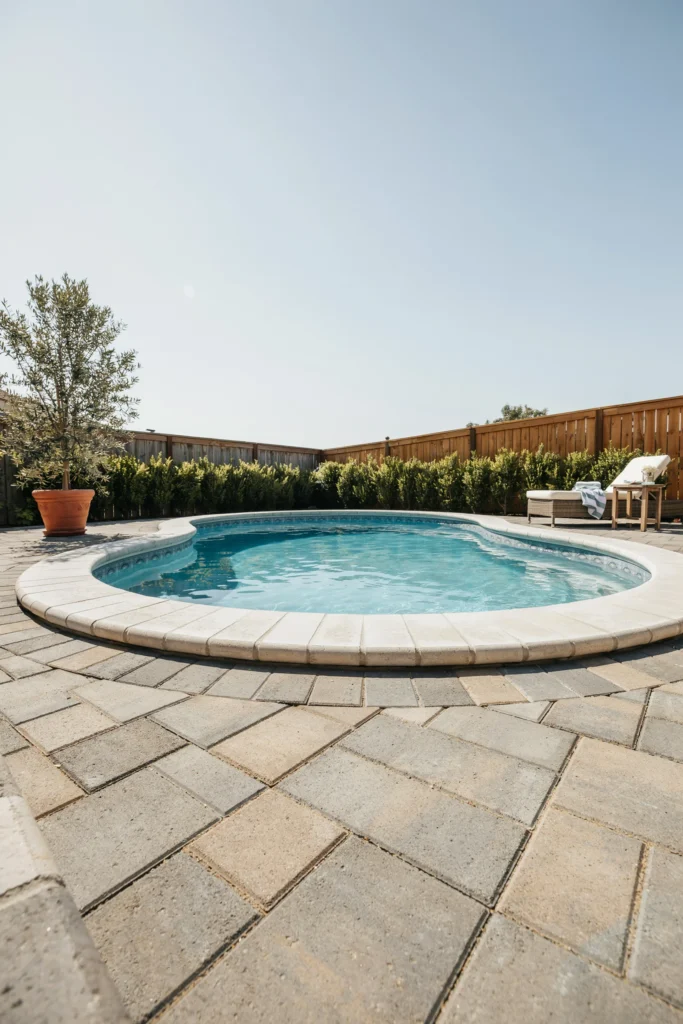
Inground pools almost always have a coping, that strip of stone or concrete right at the water’s edge. You can copy this on an above ground pool by laying pavers tight against the top rail once your deck or patio is built around it.
- Pick pavers with a slight overhang at the inner edge so they sit just past the pool wall, similar to real coping.
- Use a bullnose or rounded edge paver if anyone will walk barefoot near the pool often.
- Set pavers on a compacted base, not loose sand, so they don’t shift over a season.
6. Use a Multi Level Deck With Built In Stairs
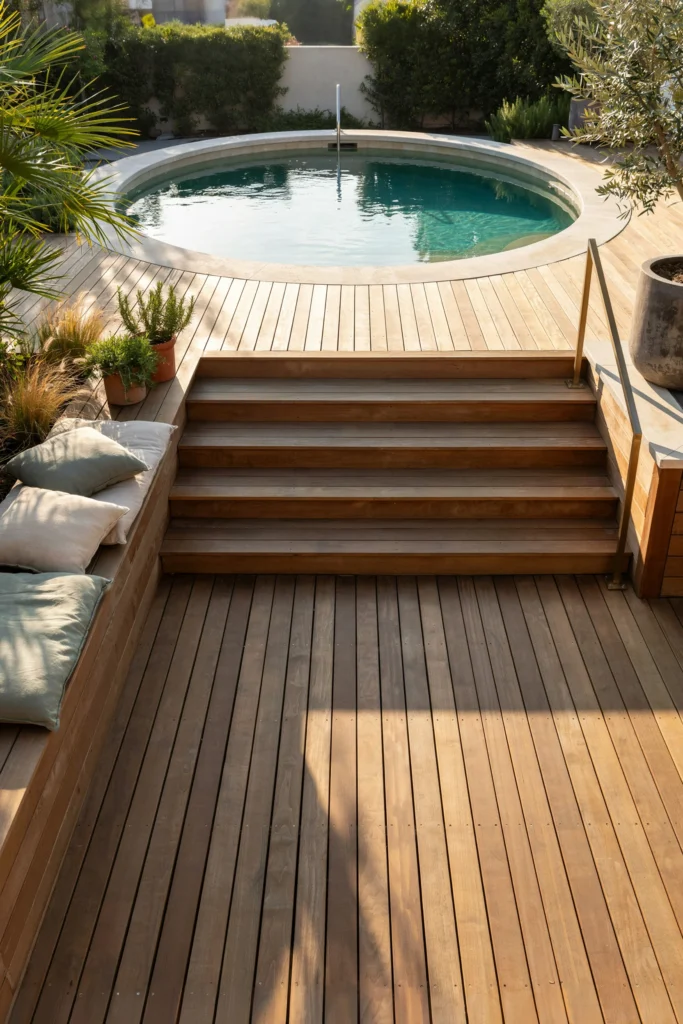
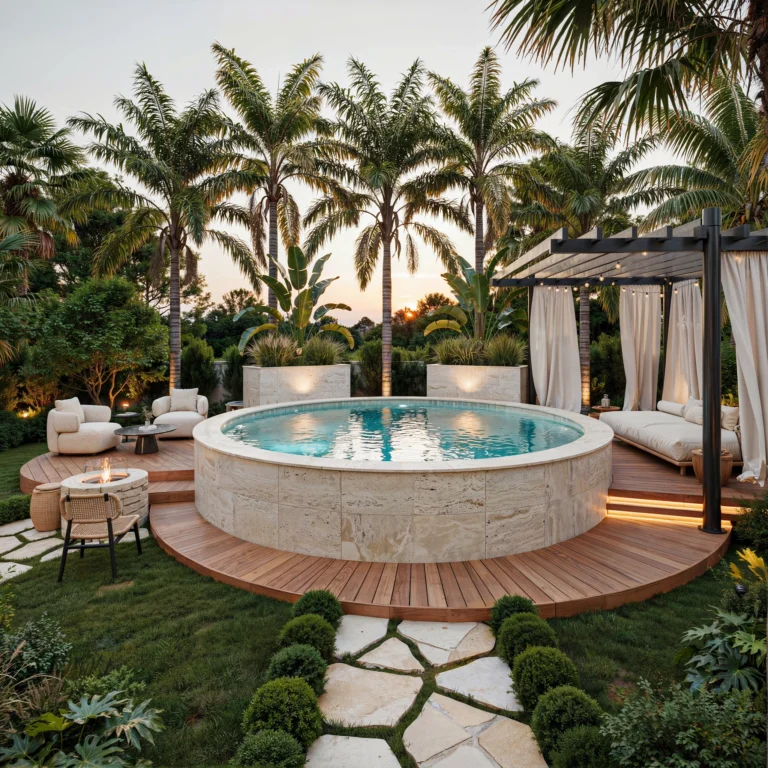
A single flat deck looks fine, but a deck with two or three levels and proper stairs reads as a real backyard structure instead of an add on. I built mine with a lower lounging level and a higher entry level near the pool, and it made the whole yard feel intentional instead of patched together.
- Plan your levels around how people will actually move through the space, not just how it looks on paper.
- Add at least one bench or built in seat on a lower level so the deck earns its footprint.
- Use wide, shallow stair treads since they feel more natural near water.
See Also: 21 Above Ground Pool Deck Ideas That Make Your Pool Look Built-In
7. Clad the Visible Wall in Wood
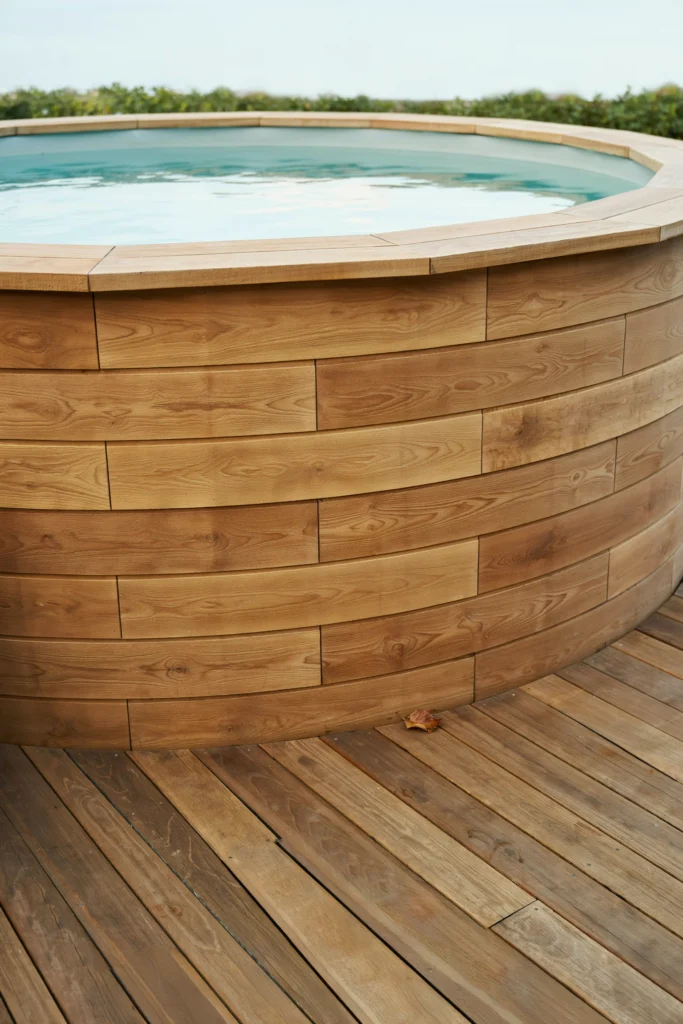
If part of the pool wall still shows above your deck or patio, cover it with the same wood or composite boards used on the deck itself. This single trick does more to hide the “kit pool” look than almost anything else on this list.
- Match the cladding boards to your deck’s color and grain so the wall reads as part of the structure.
- Leave a small gap behind the cladding for airflow, since trapped moisture can warp wood fast.
- Use exterior grade screws, not nails, since the boards will see constant humidity.
8. Pick Composite Decking With a Framed Border
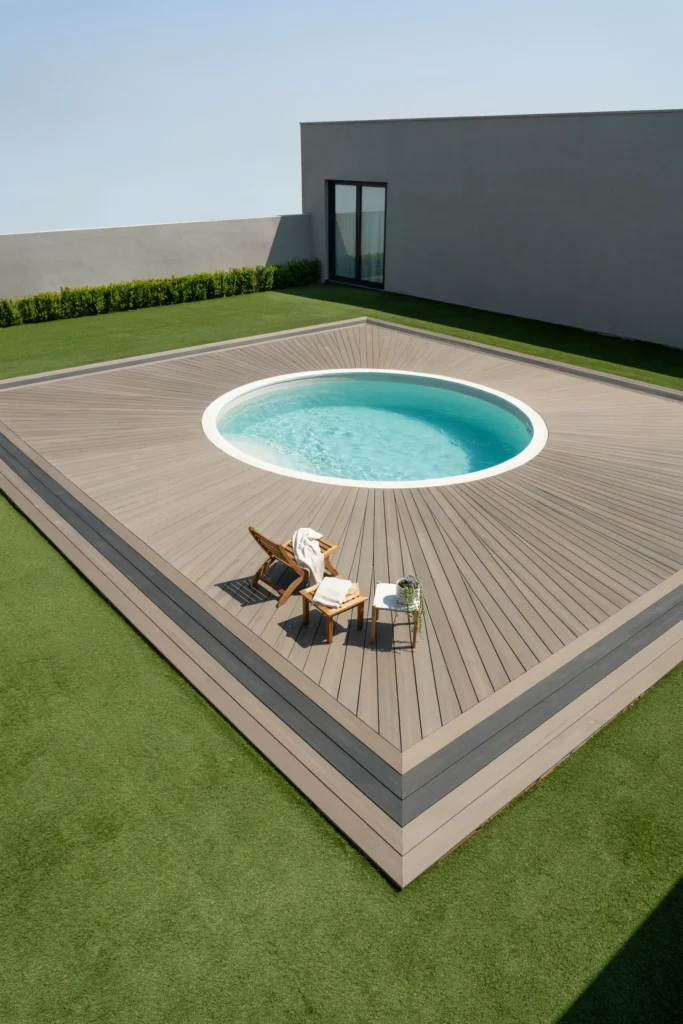
A picture frame border, where the decking boards run a different direction along the outer edge, gives a deck a finished, custom built look. It’s a small detail, but it’s the kind of thing that makes people assume you hired a contractor for the whole project.
- Run the border boards perpendicular to the field boards for the clearest visual break.
- Pick a composite color a shade darker than the main decking so the border doesn’t disappear.
- Mitre the corners carefully, since a sloppy corner joint is the first thing people notice.
9. Skip the Ladder for Built In Steps
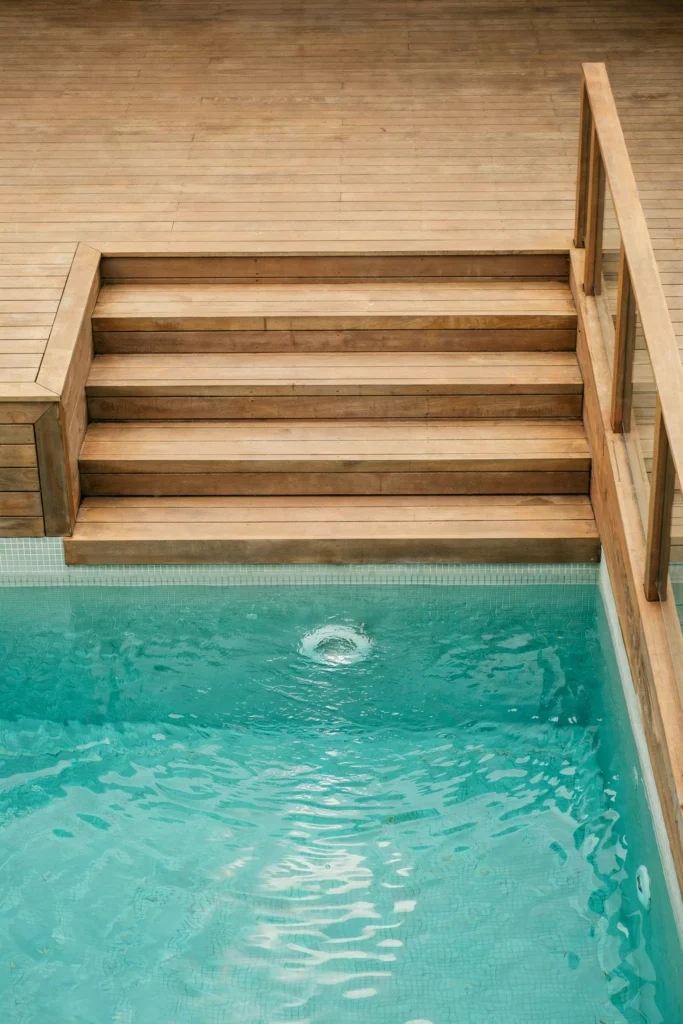
A clip on pool ladder is one of the fastest ways to ruin an otherwise convincing sunken pool. Replace it with steps built into your deck that lead straight down to the water, the same way steps work on an inground pool.
- Build steps with a closed riser, no gaps, so they don’t read as a separate accessory.
- Add a handrail that matches your deck railing, not a generic pool store rail.
- Use non slip decking or stair tread strips, since this area gets wet constantly.
10. Surround It With a Privacy Fence
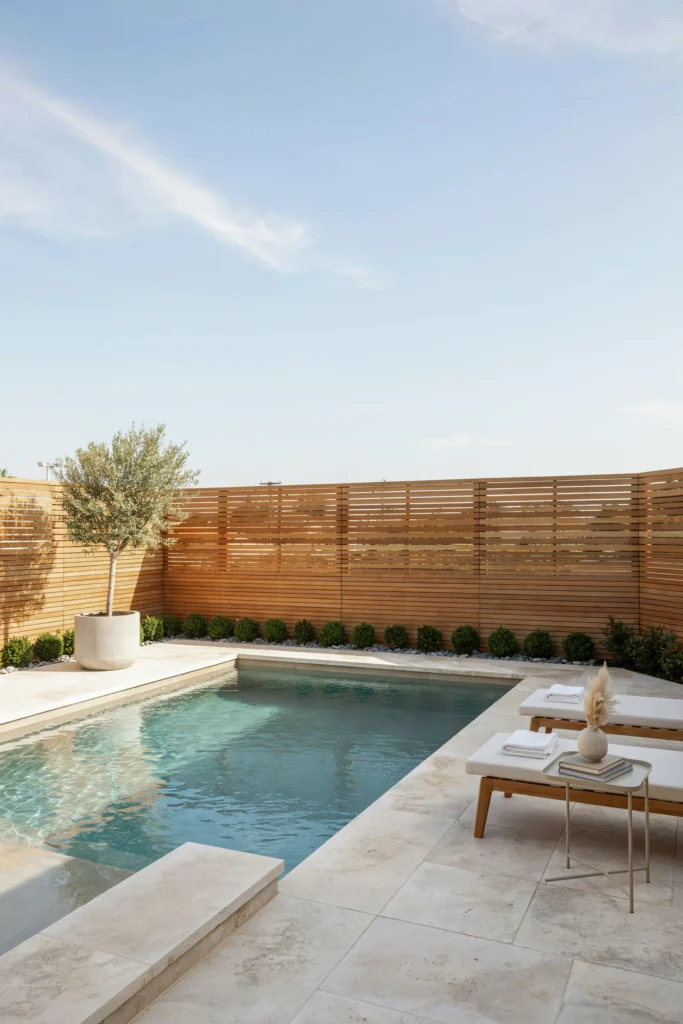
A fence built a few feet out from the pool hides the exterior wall and gives you privacy at the same time. I went with horizontal slat fencing around mine because it has a more modern feel than standard pickets, and it kept the focus on the deck instead of the pool itself.
- Keep at least 3 feet between the fence and the pool wall for airflow and access.
- Choose a fence height that blocks the view from neighboring yards without making your own yard feel boxed in.
- Stain or paint the fence to match your house trim so the whole yard feels connected.
11. Plant a Border Instead of Building One
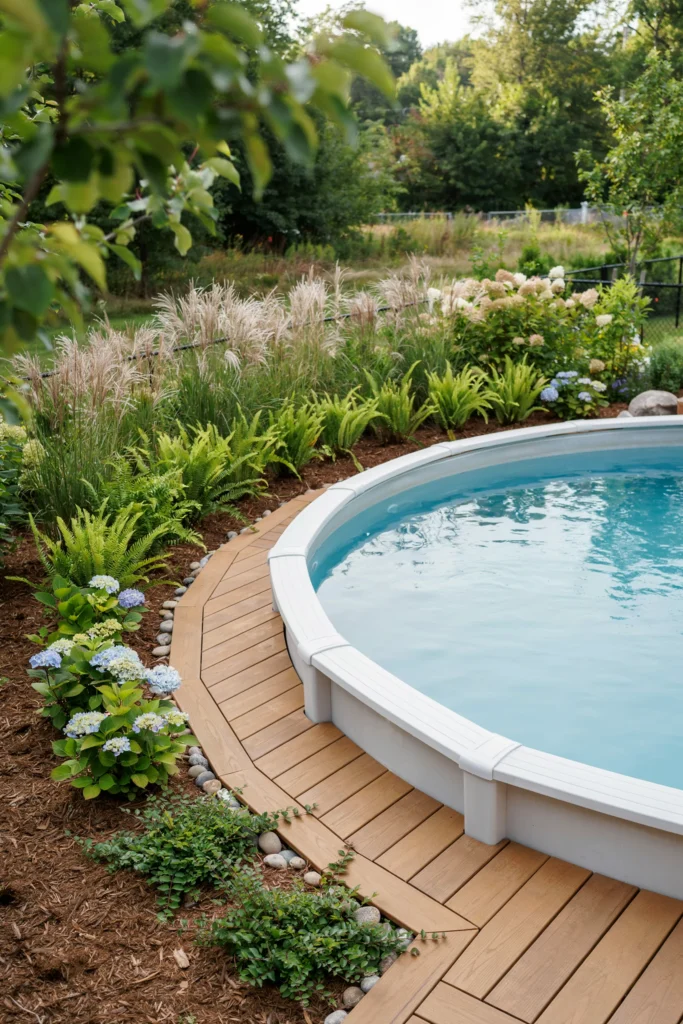
Not every yard needs a hard structure around the pool. A dense planting border of shrubs, ornamental grasses, or small trees does the same job of hiding the pool wall, and it softens the whole space at the same time.
- Choose plants that won’t drop a lot of leaves or seed pods into the water.
- Leave a mulched gap between the plants and the pool wall for maintenance access.
- Mix heights so the border looks layered instead of like a single hedge line.
12. Build Raised Garden Beds Into the Retaining Wall
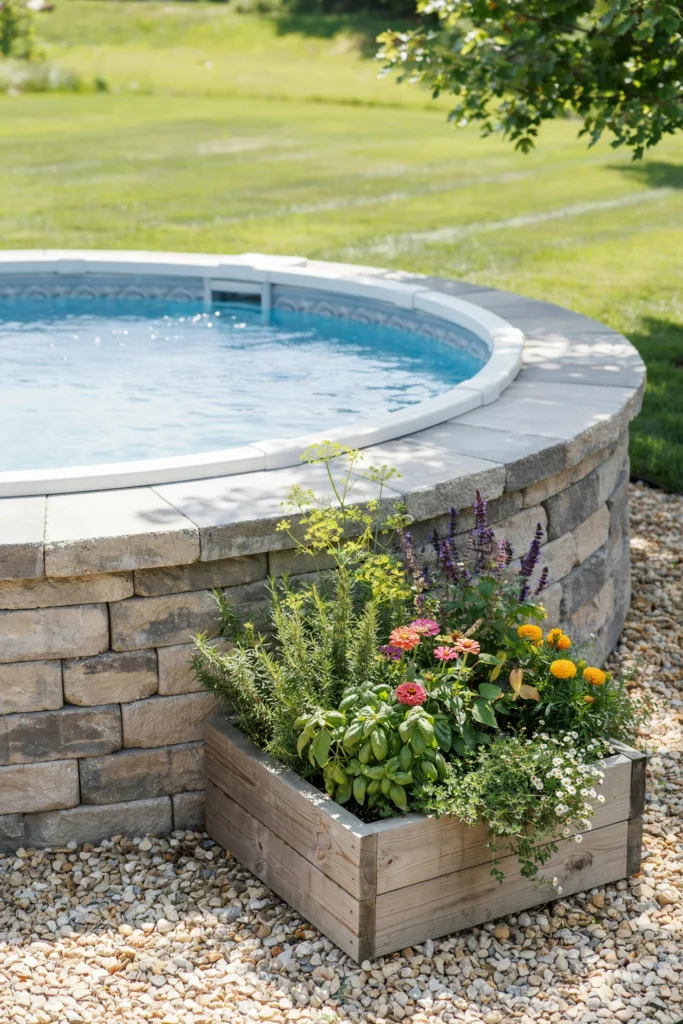
If you’re already building a retaining wall, extend a section of it into raised garden beds. This hides more of the pool wall, adds color right where people will be looking anyway, and gives you a spot for herbs or flowers without taking up extra yard space.
- Line the inside of any wood bed with a waterproof barrier so soil moisture doesn’t rot the wall.
- Keep beds far enough from the pool that soil and mulch can’t wash in during heavy rain.
- Pick low maintenance plants if you want this area to look good without constant upkeep.
13. Add a Sunken Lounge Area Next to the Pool
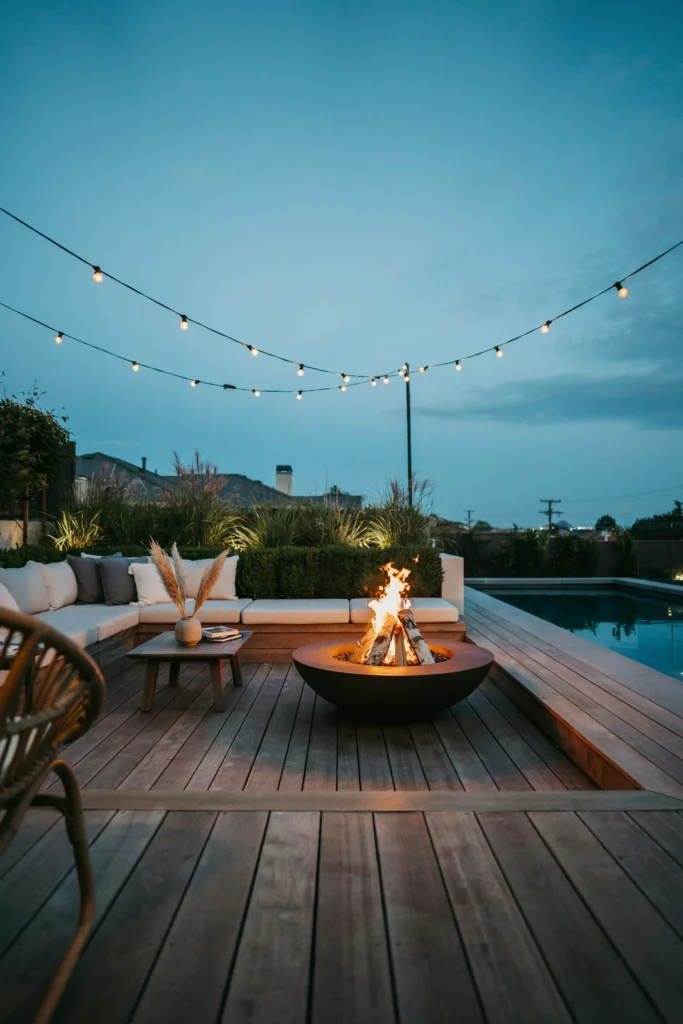
A lowered seating area, even just a small one with a fire bowl or a couple of built in benches, makes the whole backyard feel designed around the pool instead of around a backyard pool kit. It also draws the eye away from the pool’s structure and toward the space you’ve created.
- Keep the lounge area at least a few feet from the pool deck so splashes don’t soak the seating.
- Use the same decking or paver material in both spaces so they read as one project.
- Add outdoor rated cushions or built in storage for them, since fabric left outside year round wears out fast.
14. Put Up a Pergola Over Part of the Deck
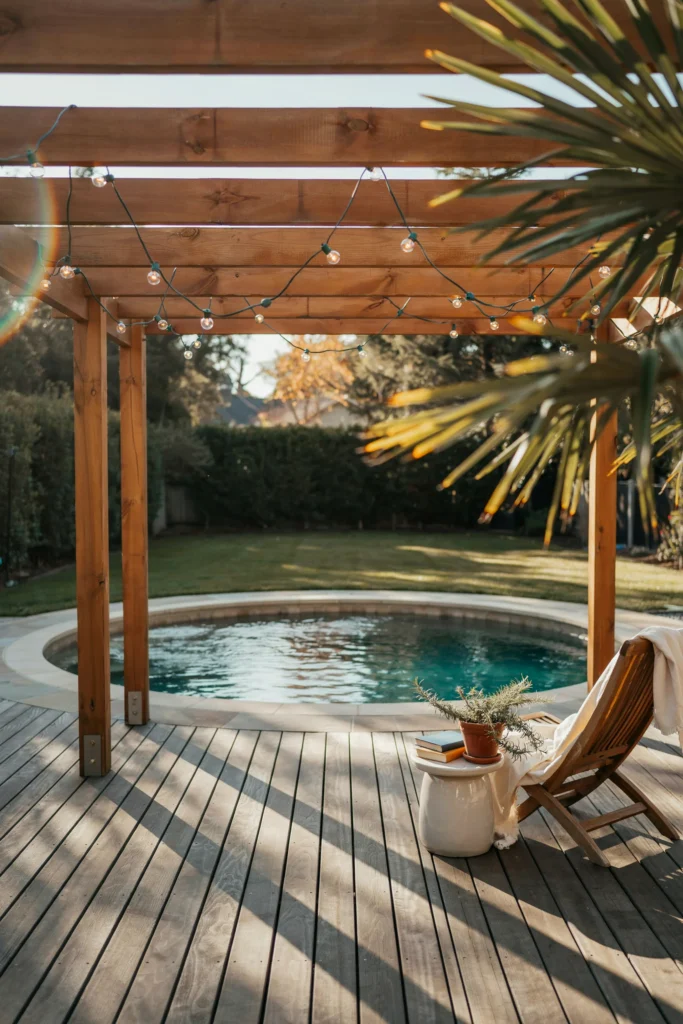
A pergola over the entry point or a seating corner gives the deck a sense of scale that a flat, open platform doesn’t have. It also gives you actual shade, which matters more than people expect once the pool is finished and you’re out there every weekend.
- Anchor pergola posts into the deck framing itself, not just surface mounted, for real stability.
- Leave the area directly over the pool open so it doesn’t trap leaves or block sun from the water.
- Add string lights or a simple fabric shade panel for evening use.
15. Run Lighting Along the Deck Edge and Stairs
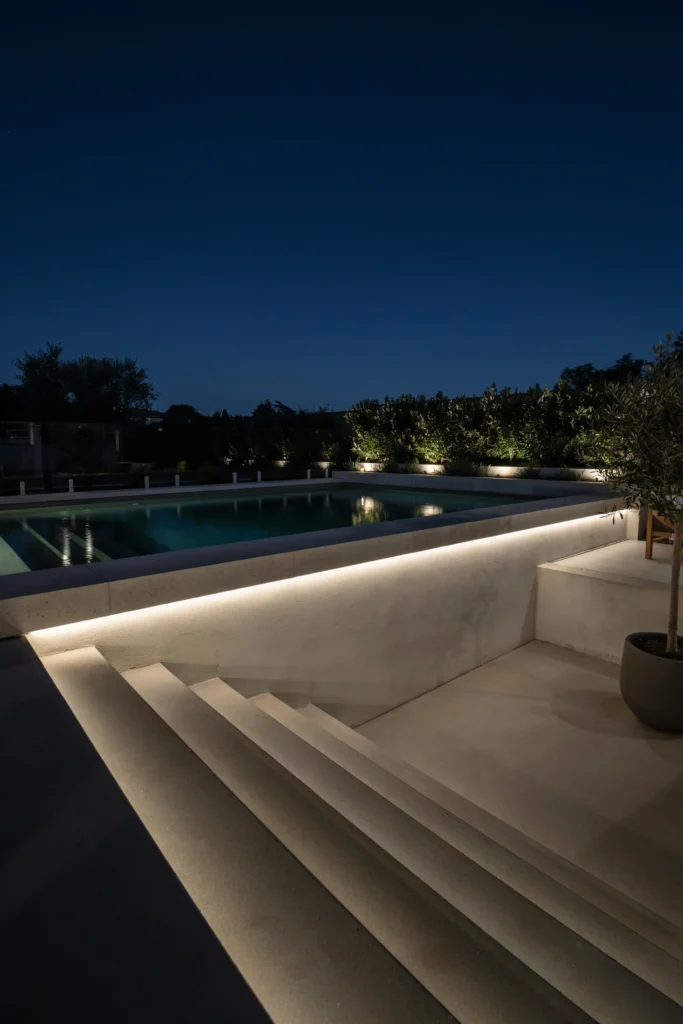
Inground pools almost always have built in lighting around the deck and steps, and you can copy that effect with simple low voltage lights tucked under the deck edge or stair risers. At night, this does more for the “real pool” illusion than any single structural change on this list.
- Use warm white LED strips or pucks rated for damp or wet locations.
- Place lights along stair risers first, since that’s both the most useful and most convincing spot.
- Run wiring before the decking goes down, since adding it after is far more work.
16. Grade the Yard So the Transition Line Disappears
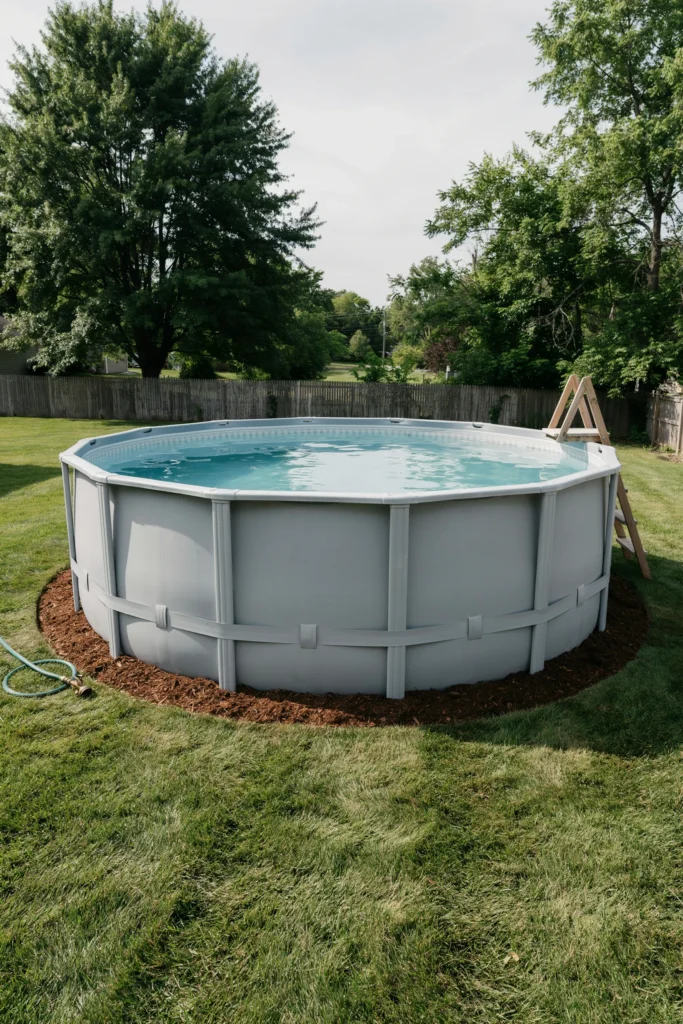
However you sink your pool, the final step is grading the surrounding soil so there’s no harsh line where buried meets exposed. A gentle slope or a thin mulch bed at the base does more for the finished look than people expect, and it’s one of the last things most people think to fix.
- Grade soil away from the pool base slightly so water drains away, not toward it.
- Use mulch or gravel rather than bare soil right at the transition, since bare dirt shows every gap.
- Walk the full perimeter once it’s done and look for any spot where the pool wall still peeks through.
If you’re planning this project, pick two or three ideas from this list rather than trying to do all sixteen at once. A deck or retaining wall paired with some planting and a bit of lighting will already get you most of the way to that fully inground look, and you can always add the rest later as your budget allows.