



In This Article Show
Here’s something I’ve learned after years of setting up workspaces for myself and clients: a home office doesn’t need a dedicated room to work well. What matters is how intentionally you design the space you have.
If you’ve ever tried working from your dining table or a corner of your bedroom, you already know how distracting a poorly set up space can be. The good news is that with a few smart choices, almost any area can become a place where you actually want to sit down and get things done.
Here are 12 home office ideas that can help you turn any space into a productive zone.
1. Claim a Defined Spot, Even if It’s Small
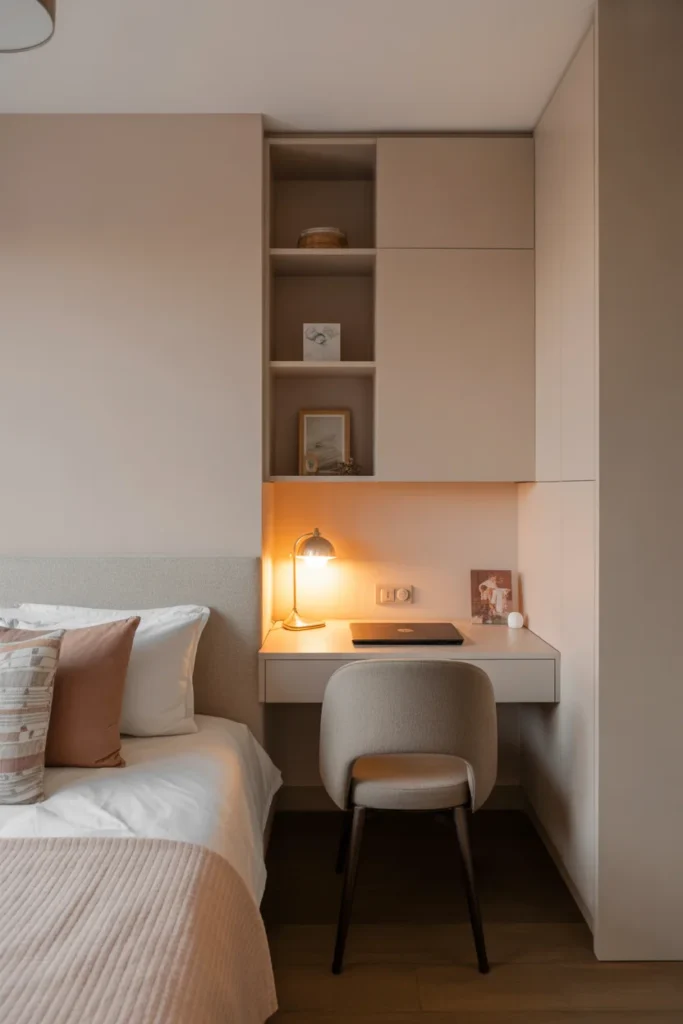
You don’t need a full room to create a workspace. What you do need is a clearly defined area.
It could be:
- A corner of your bedroom
- A section of your living room
- Even a wide hallway nook
The key is consistency. When you sit in that spot, your brain starts to associate it with work. That alone improves focus more than you might expect.
2. Choose a Desk That Fits Your Space
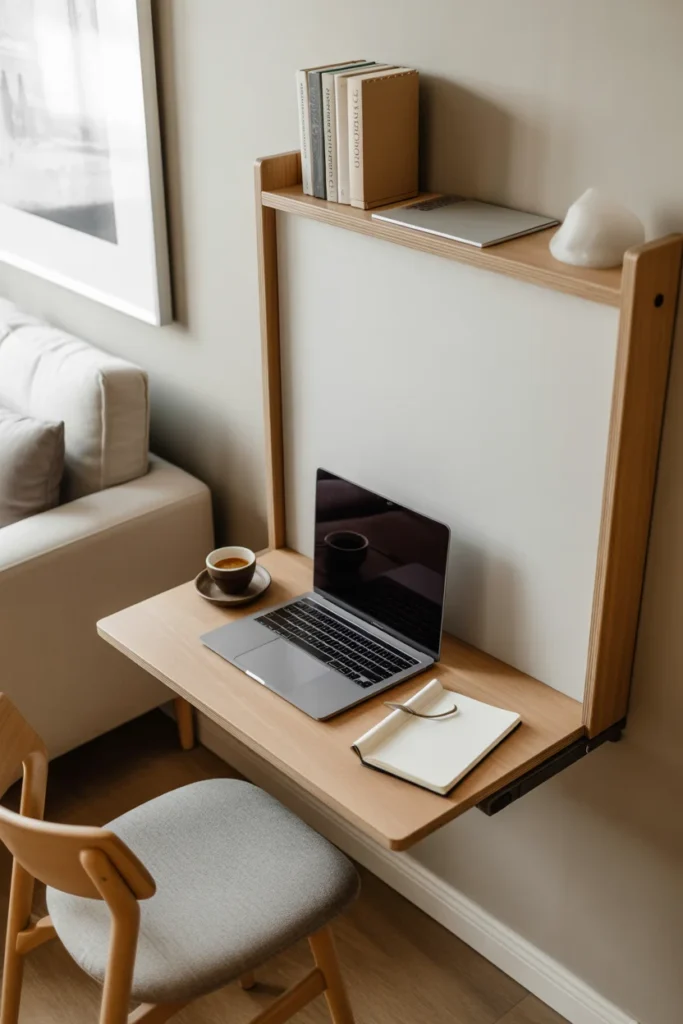
I’ve seen people struggle simply because their desk was too big or too small for their space.
If you’re tight on room:
- Go for a wall mounted desk
- Try a fold down table
- Use a slim console table
If you have more space, a larger desk can give you breathing room. Just make sure it doesn’t overwhelm the area.
Comfort and proportion matter more than style alone.
3. Invest in a Comfortable Chair
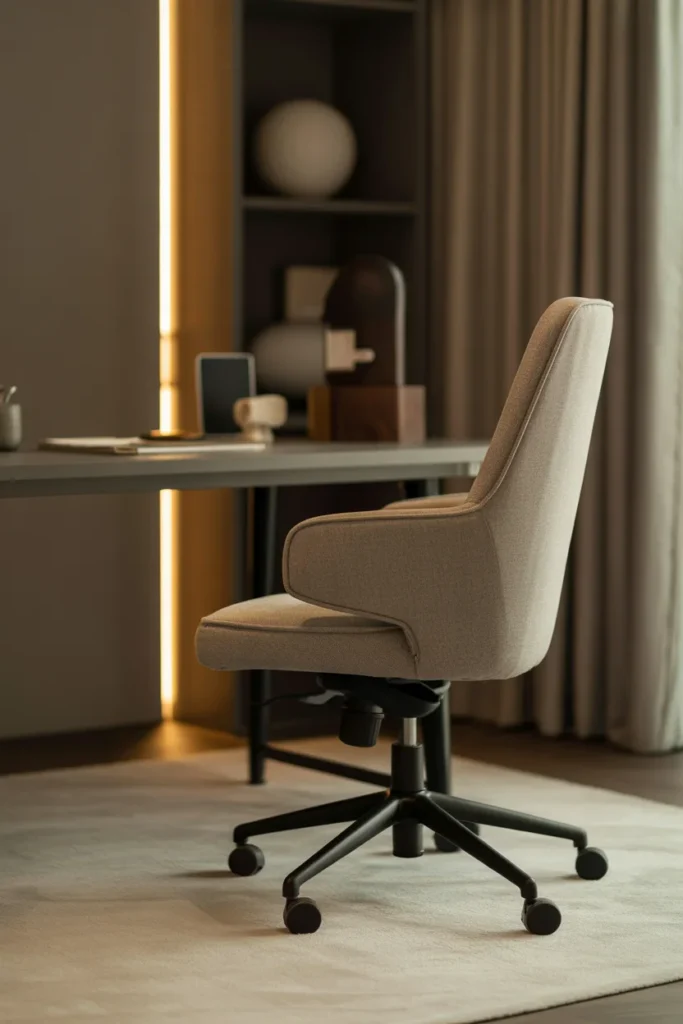
This is one place where cutting corners usually backfires.
You don’t need the most expensive chair, but you do need one that supports your back and keeps you comfortable for hours. A dining chair might work for a day or two, but not long term.
Look for:
- Good lumbar support
- Adjustable height if possible
- A seat that doesn’t feel too hard
Your productivity drops fast when your body feels strained.
4. Use Natural Light Whenever Possible
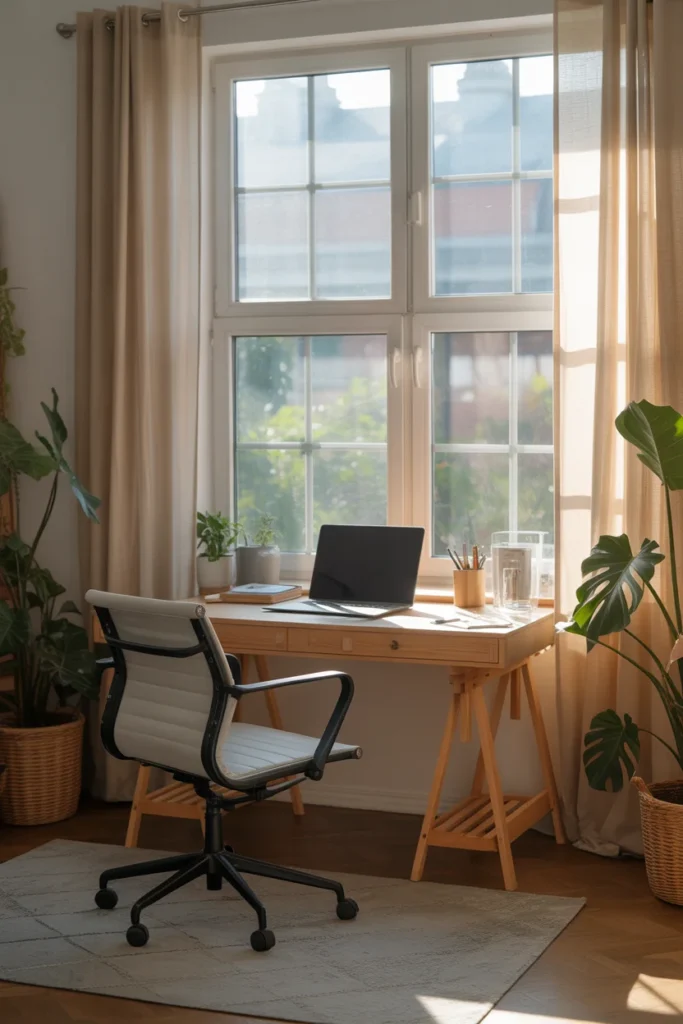
If there’s one upgrade I always recommend, it’s positioning your desk near a window.
Natural light:
- Reduces eye strain
- Improves mood
- Makes the space feel more open
If a window isn’t an option, use layered lighting. A mix of overhead light and a desk lamp works much better than a single harsh source.
5. Keep Your Desk Surface Clear
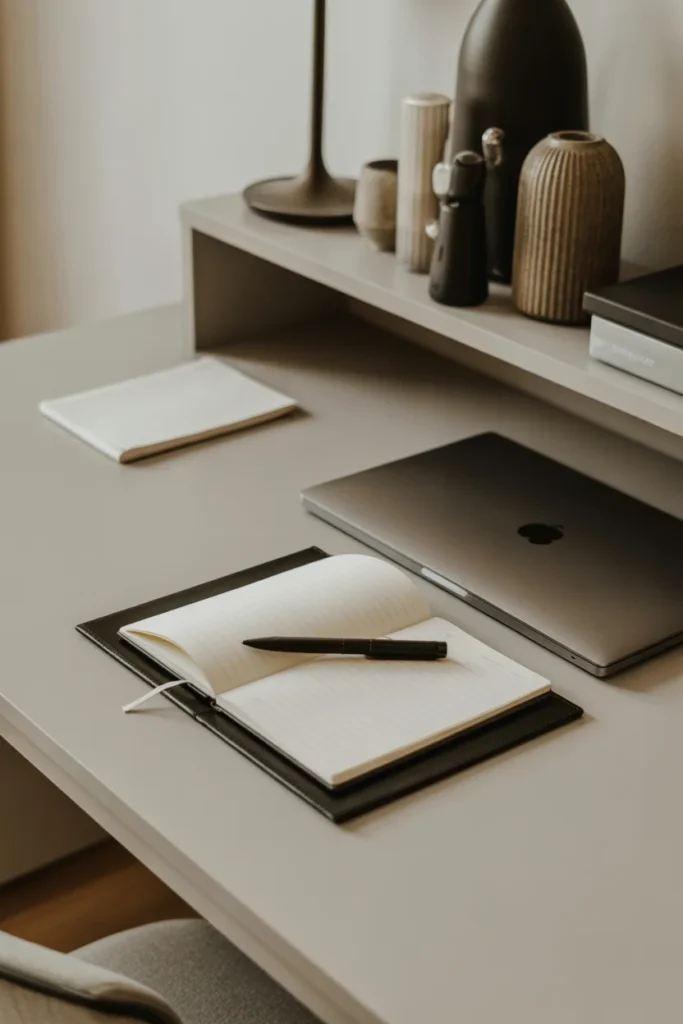
Clutter builds up quickly, especially when you’re working from home.
A clean desk helps you think clearly. I’ve noticed that even a small pile of random items can make it harder to focus.
Try this simple rule:
Only keep what you use daily on your desk.
Everything else should have a designated place nearby.
6. Add Smart Storage Solutions
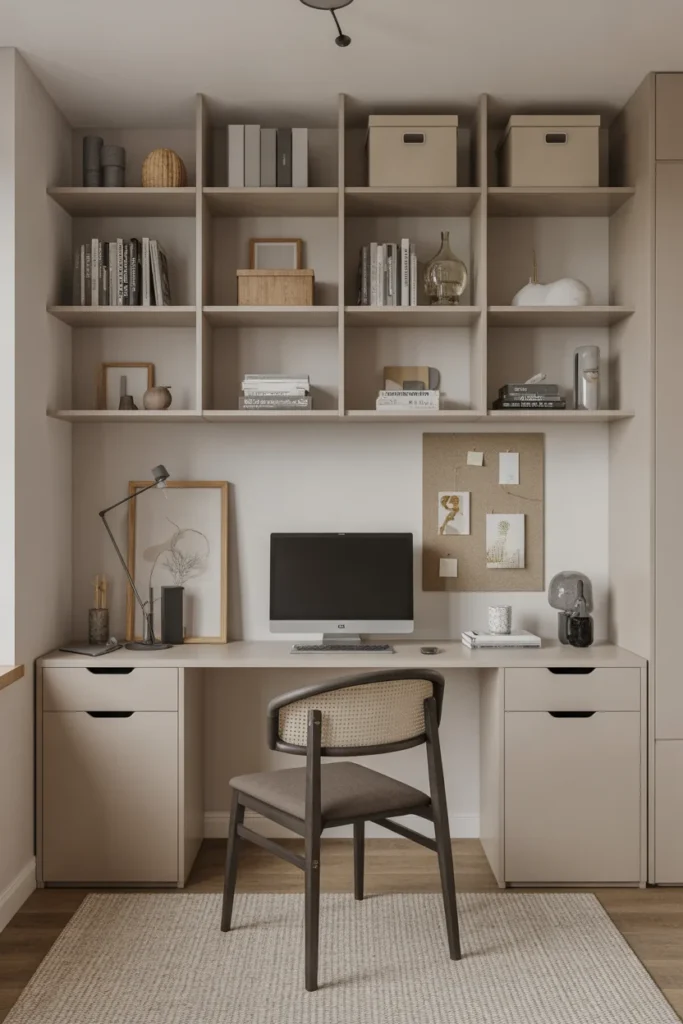
Even a small workspace needs storage.
Instead of letting things pile up, use:
- Floating shelves
- Storage boxes
- Drawer organizers
Vertical storage works especially well in tight spaces. It keeps your essentials within reach without taking up valuable desk space.
7. Personalize Your Space Thoughtfully
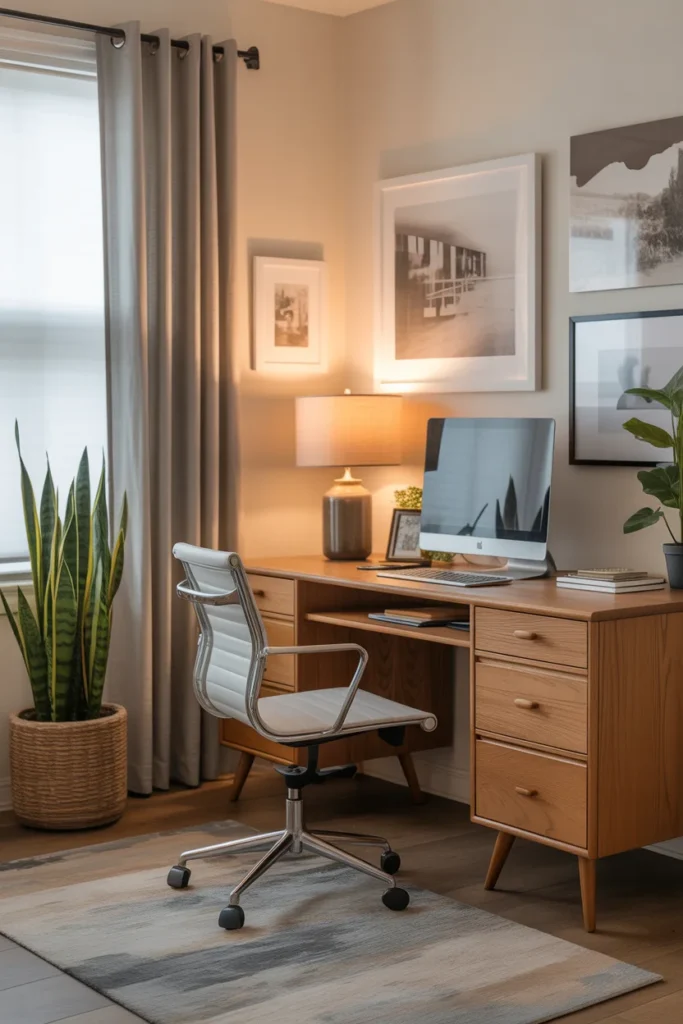
This is where your home office starts to feel like yours.
You don’t need to go overboard. A few meaningful touches are enough:
- A framed photo
- A small plant
- A piece of art you love
I’ve found that when a space feels personal, you naturally spend more time there. That leads to better consistency in your work.
8. Use Color to Set the Mood
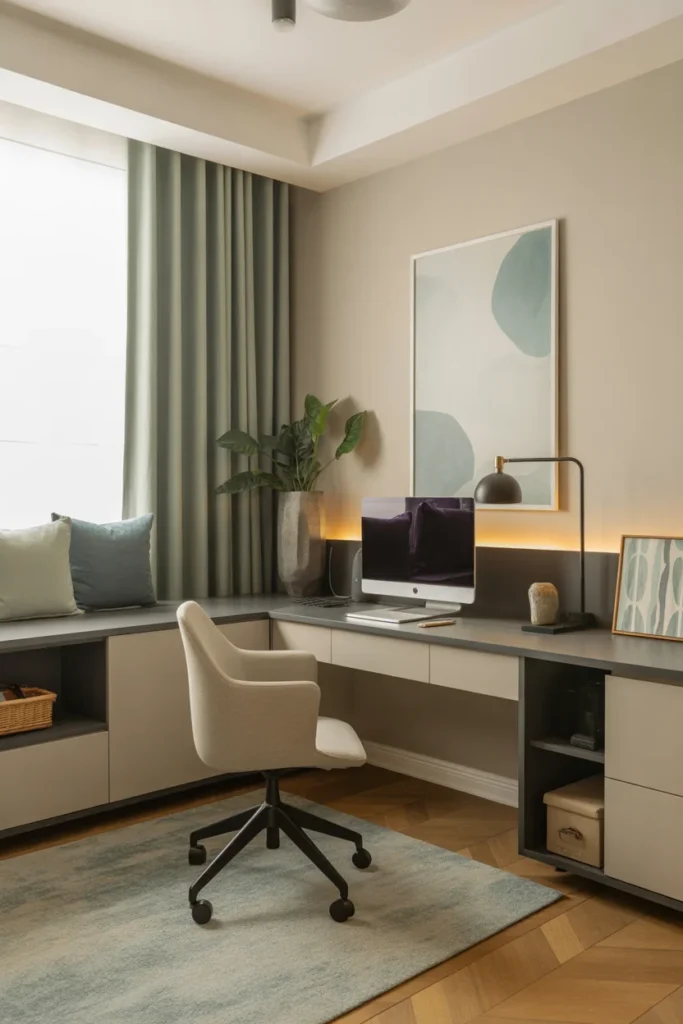
Color has a subtle but real impact on how you feel while working.
Soft, neutral tones tend to create a calm environment. If you prefer something more energizing, small accents in brighter colors can help.
You don’t need to repaint the whole room. Even things like:
- A desk mat
- Cushions
- Wall art
can shift the mood of your workspace.
9. Manage Cables and Tech Clutter
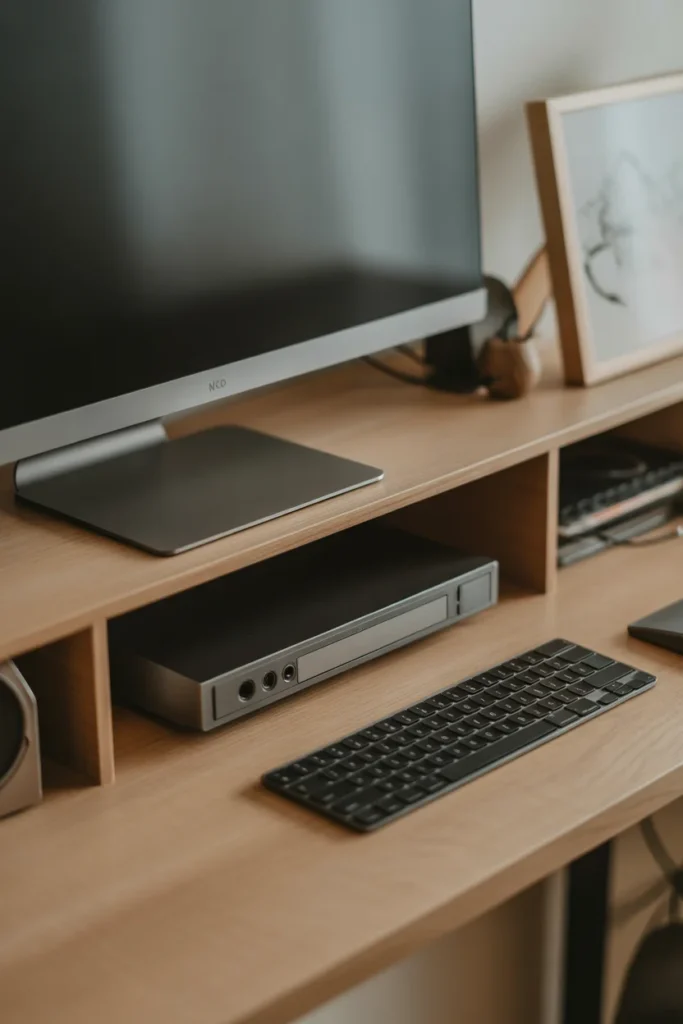
Loose wires can make even a well designed space feel messy.
A few simple fixes can make a big difference:
- Cable clips to keep cords in place
- A box to hide power strips
- Wireless accessories if possible
Once you clean this up, your desk instantly looks more organized and easier to use.
10. Create a Routine Around Your Space

This might sound unrelated to decor, but it’s closely connected.
When you use your workspace consistently for work and nothing else, it becomes a mental trigger. You sit down and your brain switches into focus mode.
Try to avoid:
- Eating meals at your desk
- Watching shows in the same spot
Keep the purpose clear. It helps you stay productive without forcing it.
11. Add a Touch of Greenery
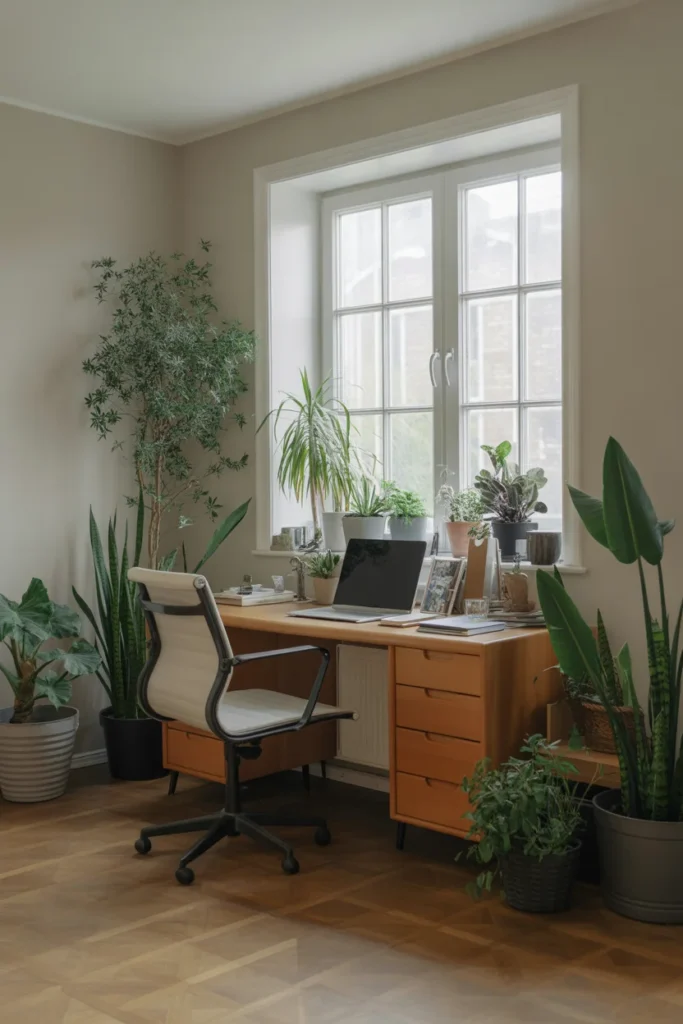
Plants are one of the easiest ways to improve a workspace.
They:
- Make the space feel alive
- Add a sense of calm
- Break the monotony of screens and furniture
If you’re not great with plants, go for low maintenance options like snake plants or pothos. Even one small plant can make a difference.
12. Make It Flexible if You Need To
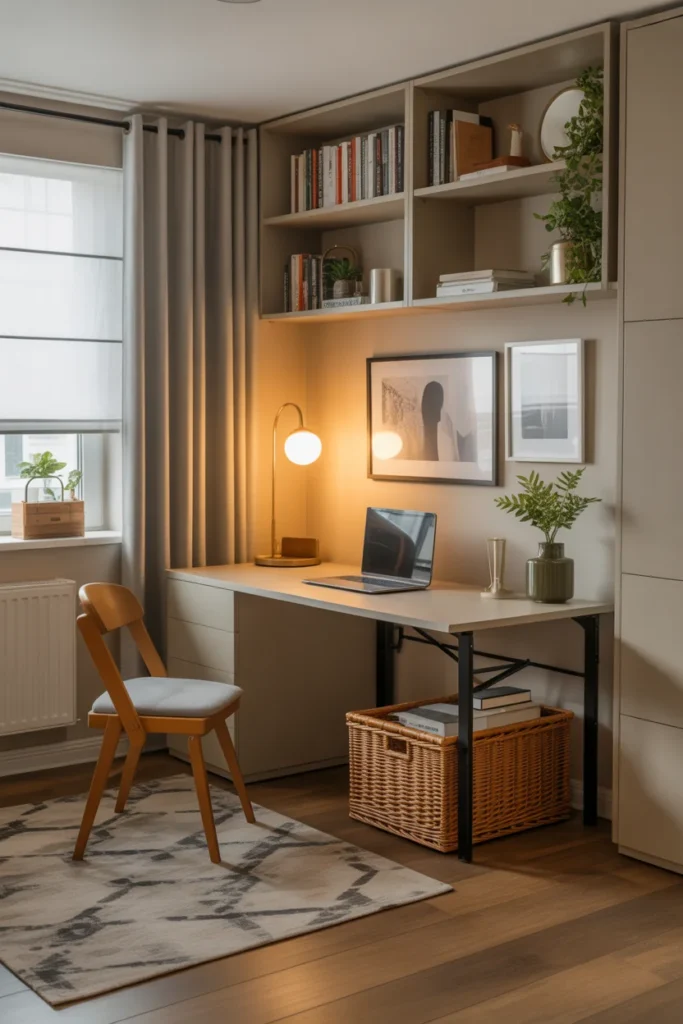
Not everyone can leave their home office set up all day.
If your space has to serve multiple purposes, design it to be flexible:
- Use a foldable desk
- Store your work items in a basket or box
- Choose lightweight furniture that’s easy to move
I’ve worked from spaces that needed to transform daily. With the right setup, it doesn’t feel like a compromise.
Final Thoughts
A productive home office isn’t about having more space. It’s about using your space better.
When your setup supports your work instead of fighting it, everything becomes easier. You focus longer, feel less stressed, and actually enjoy sitting down to get things done.
Start small. Pick one or two ideas from this list and apply them to your space. Once you see the difference, you’ll naturally want to refine the rest.
Your workspace doesn’t have to be perfect. It just has to work for you.