



In This Article Show
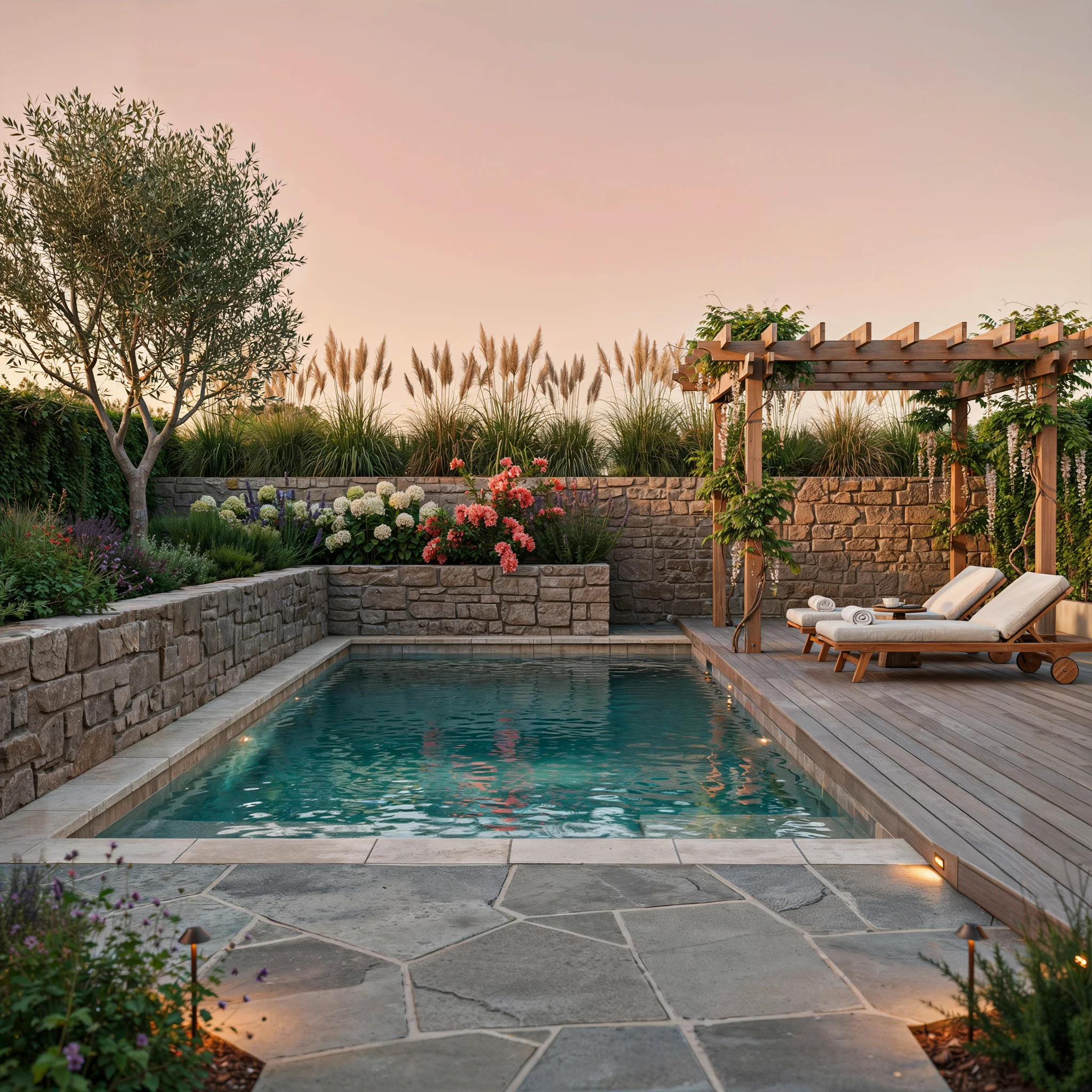
A semi inground pool gives you the best of both worlds. It has the look of an inground pool, often costs less, and adapts beautifully to uneven yards.
I have always loved how these pools can become part of the landscape instead of looking like an add on. With the right decking, plants, and features, it can feel like it has always belonged in your backyard.
These semi inground pool ideas cover decks, planting, water features, and outdoor living zones. I have also added three weekend projects and the safety basics, like barrier rules and GFCI protection for anything electrical. Not sure which type suits you? Read my comparison of semi inground vs above ground pools.
1. Full Surround Deck That Looks Inground
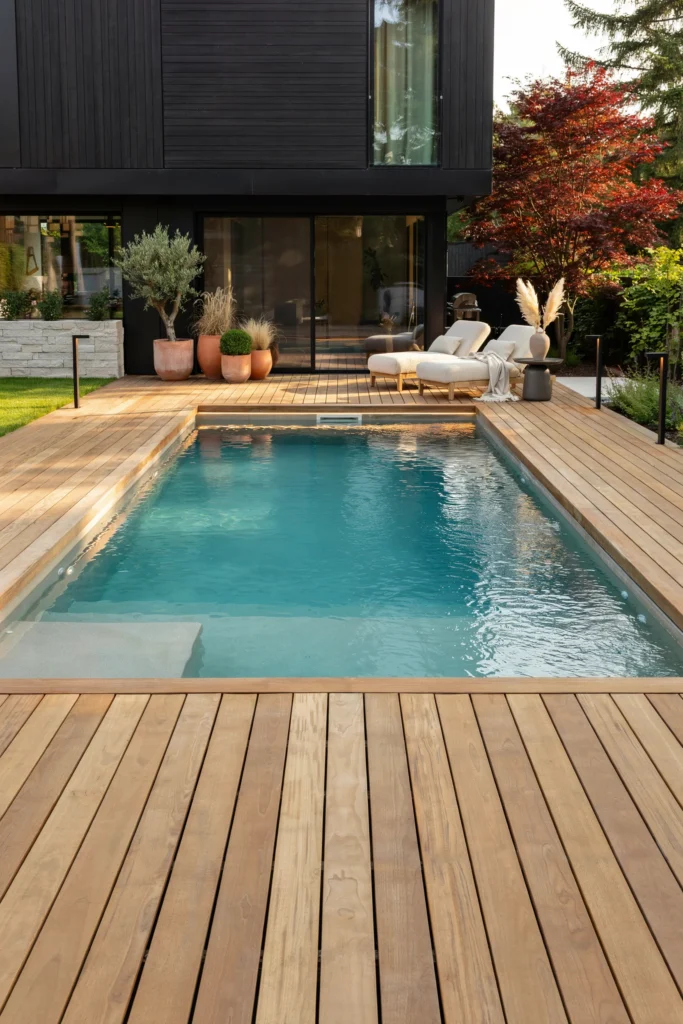
This is the most popular approach, and it works beautifully. A deck all the way around hides the exposed walls, so from above it looks like an inground pool.
Composite decking in a warm wood tone looks natural and holds up well in wet conditions. Plan for drainage under the deck, leave access panels for the pool walls, and use one railing style all around.
Quick checklist: For more tricks, see how to make an above ground pool look inground.
- Make sure the deck framing accounts for water drainage underneath
- Leave access panels so you can reach the pool walls for maintenance
- Use a consistent railing style all the way around to tie it together
- Looks inground
- Composite decking
- Access panels
2. Half Side Deck With a Sun Lounging Zone

If a full deck is not in the budget, deck one or two sides and use planting to hide the rest of the walls.
The deck becomes your sun lounging spot. Face it south if you can, leave room for two or three loungers and a side table, and add an outdoor rug to define the zone.
- Budget friendly
- Sunny side
- Rug defines the zone

3. Raised Deck on the High Side of a Slope
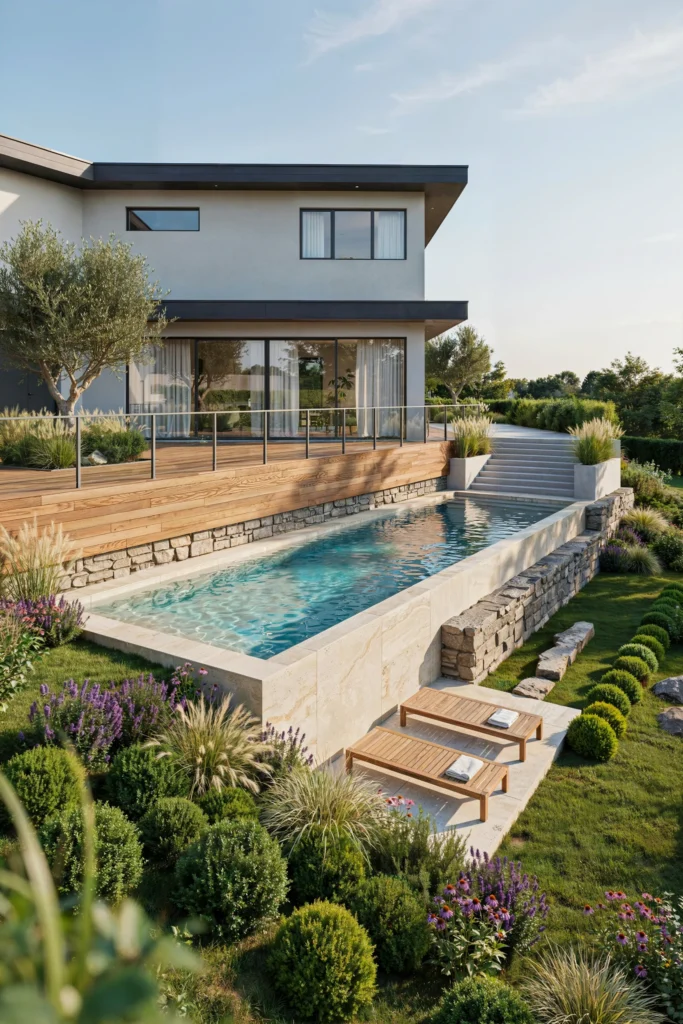
Semi inground pools suit sloped yards because one side can be buried while the other sits above grade.
Build a raised deck on the uphill side so you step down into the pool. The more exposed downhill side faces away from the main view and is easy to screen with plants or stone. These sunken above ground pool ideas use the same trick.
- Made for slopes
- Step down entry
- Easy screening
4. Stone or Brick Patio Wrapped Around the Walls
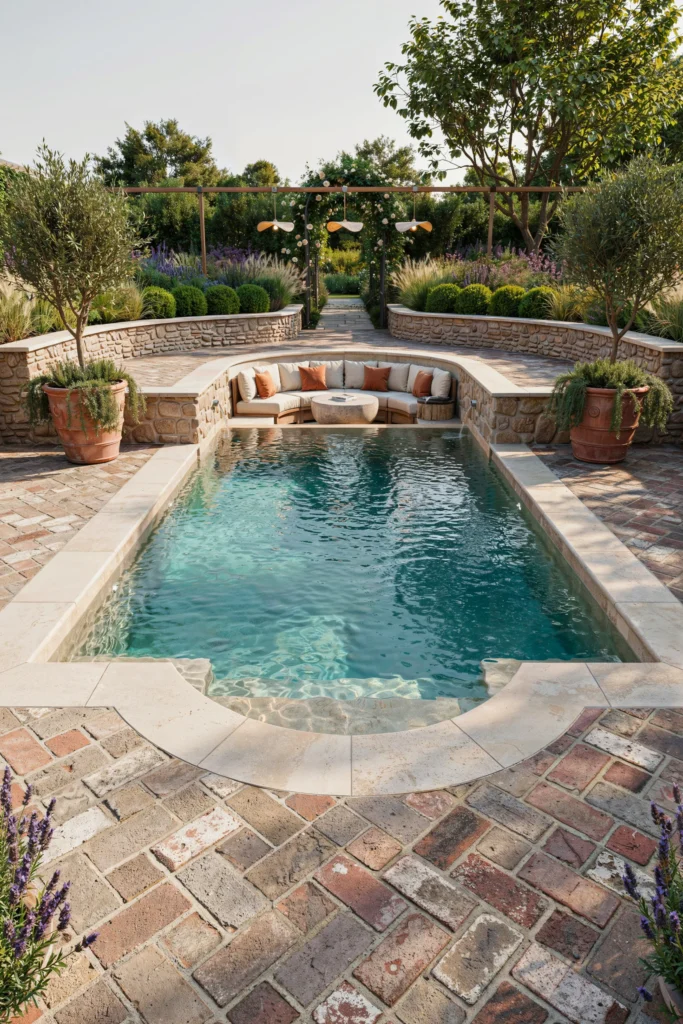
Instead of decking, wrap the pool with a stone or brick patio. It looks especially good if your home already has stone or brick details.
Bluestone, travertine, and flagstone age beautifully. Face the exposed walls with matching stone veneer for a custom look, and choose a textured finish so wet stone is not slippery. For more stone choices, see these backyard stone patio ideas.
- Cohesive look
- Stone veneer
- Textured finish
5. Multi Level Deck for Dining and Lounge Zones

A multi level deck carves out separate zones so the space does not feel like one flat surface.
Put dining on the upper level near the kitchen, bench seating or planters on a middle step, and loungers on the pool level. Each level feels like its own room.
Quick checklist:
- Upper level: dining table and chairs, close to the house and the kitchen
- Mid level: transition step with built in bench seating or planter boxes
- Pool level: loungers, towel hooks, and easy pool access
- Separate zones
- Family friendly
- More function
6. Build the Pool Into Existing Landscaping
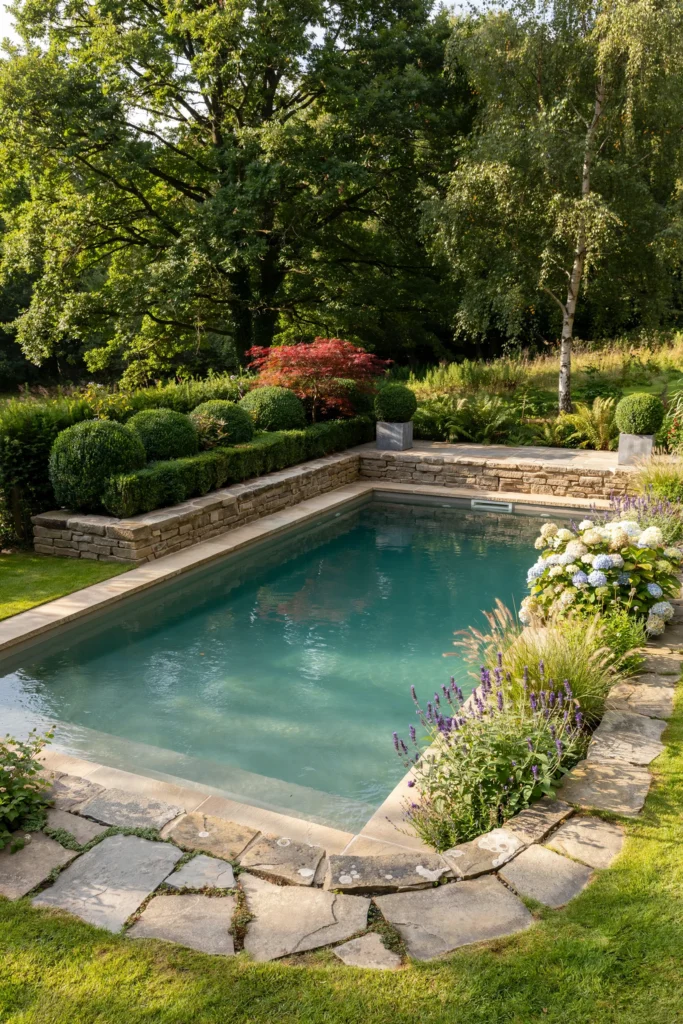
Before you rearrange everything, look at what is already in your yard. Mature trees, garden beds, and slopes can all work in your favor.
Nestle the pool against a slope or bed so planting frames it on one or two sides. Avoid placing it right under big trees, since falling leaves and roots can damage the liner.
- Less building
- Natural look
- Avoid big trees
7. Planting Beds Along the Pool Base

A narrow bed along the base, even 18 inches wide, softens the exposed walls in a big way.
Ornamental grasses, lavender, creeping thyme, hostas for shade, and black eyed Susans all do well. Skip plants with thorns, messy fruit, or invasive roots near the pool.
Quick checklist:
- Ornamental grasses , they move in the breeze and add texture
- Lavender , tolerates heat and reflected light from the water
- Creeping thyme , spreads nicely and spills over edges
- Hostas , great for shadier spots on the north side of the pool
- Black eyed Susans , low maintenance and cheerful around summer pools
- Softens walls
- Easy plants
- No thorns
Project Card · 1 afternoon · Easy
Materials Needed
- Edging strips
- Garden soil and compost
- Ornamental grasses and lavender
- Creeping thyme for the front
- Mulch
How to Make It
- Mark an 18 inch bed along the pool base with edging.
- Loosen the soil and mix in compost, keeping clear of the liner.
- Plant grasses at the back and lavender in the middle.
- Tuck creeping thyme along the front edge so it spills over.
- Mulch lightly and water deeply to settle the roots.
8. Tall Grasses and Screening Plants for Privacy
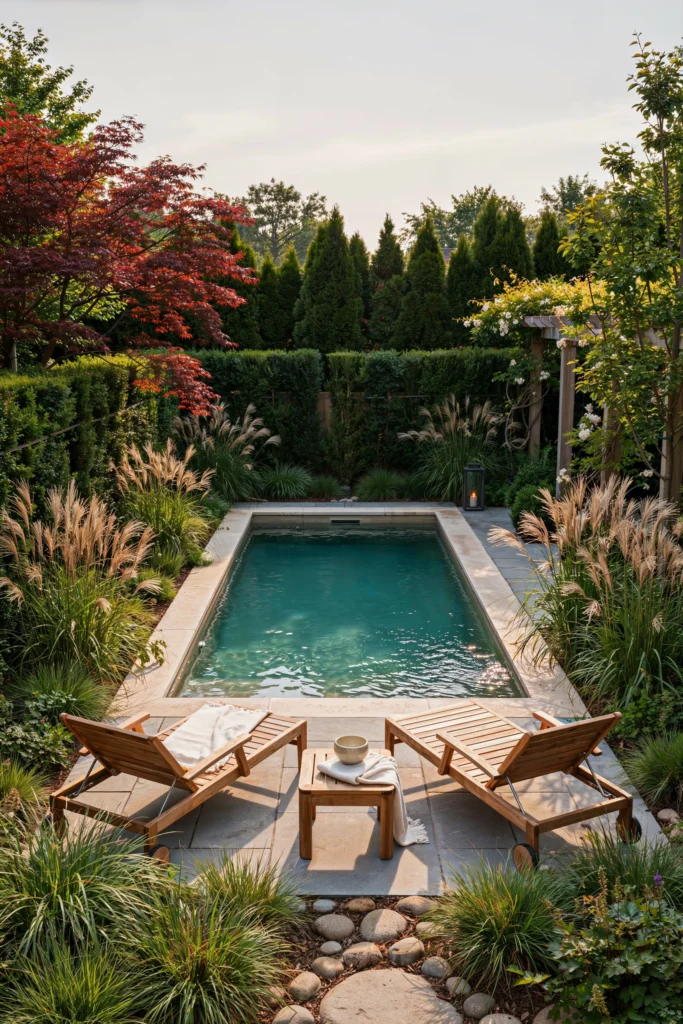
Sides that face neighbors or the street usually need screening. Tall grasses and columnar shrubs work best.
Feather reed grass grows to about five feet and makes a soft screen. Arborvitae or bamboo in containers gives a more permanent wall. Two staggered rows block far more than one.
- Soft screen
- Staggered rows
- Bamboo in pots
9. Vines and Hanging Plants on a Pergola
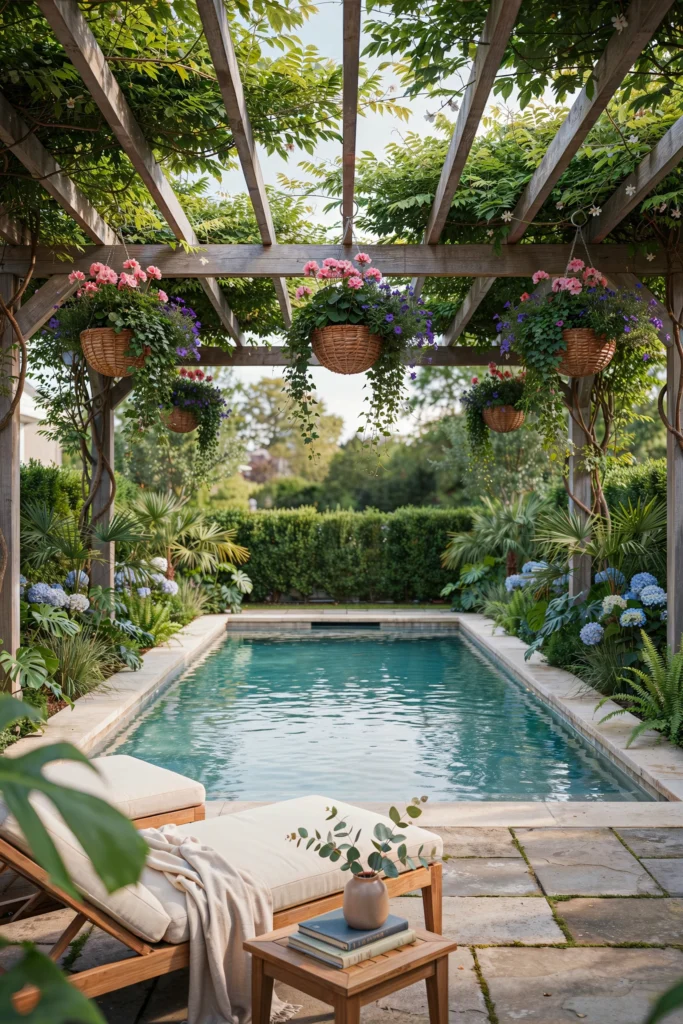
A pergola next to the pool gives climbing plants something to grow on, adding shade and privacy overhead.
Clematis and jasmine are good choices. For a lighter look, hang potted ferns from the rafters. Keep wisteria in check, since it gets heavy and its seeds are toxic to pets. Fast growers such as climbing jasmine cover a pergola within a season or two.
- Overhead shade
- Climbing vines
- Pet aware choices
10. Native Plants for an Easy Natural Look
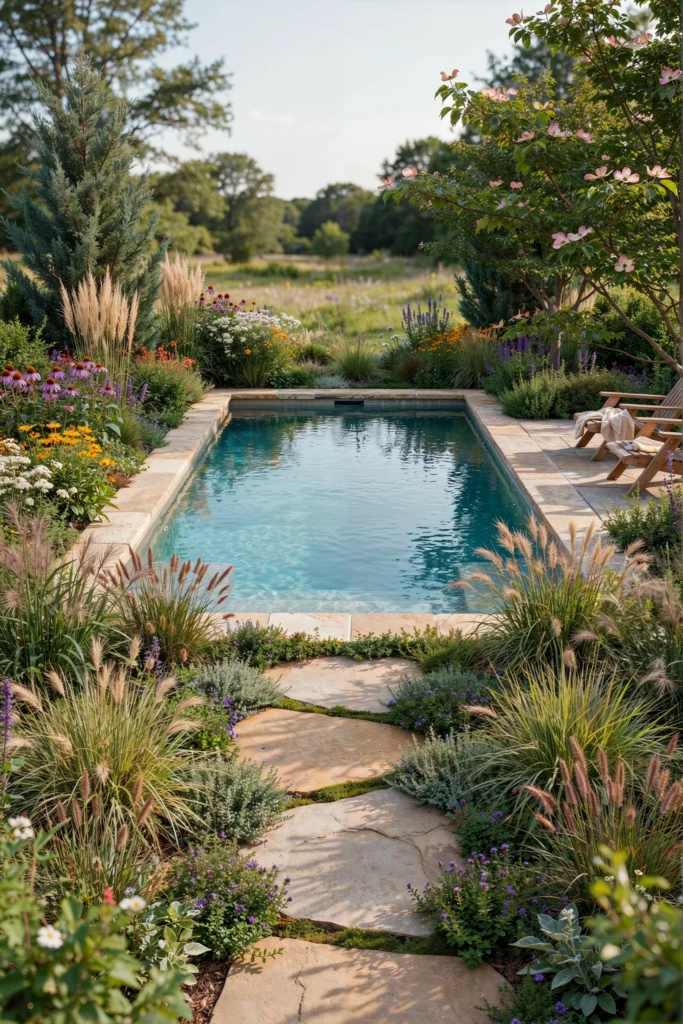
Native plants are adapted to your climate, need less water and fertilizer, and look like they belong.
Switchgrass, coneflowers, wild bergamot, and native ferns all work near pools. They also attract pollinators, so deadhead flowers that drop petals near the water.
Quick checklist:
- Switchgrass (Panicum virgatum)
- Coneflowers (Echinacea)
- Wild bergamot
- Native ferns for shadier spots
- Less watering
- Pollinators
- Natural look
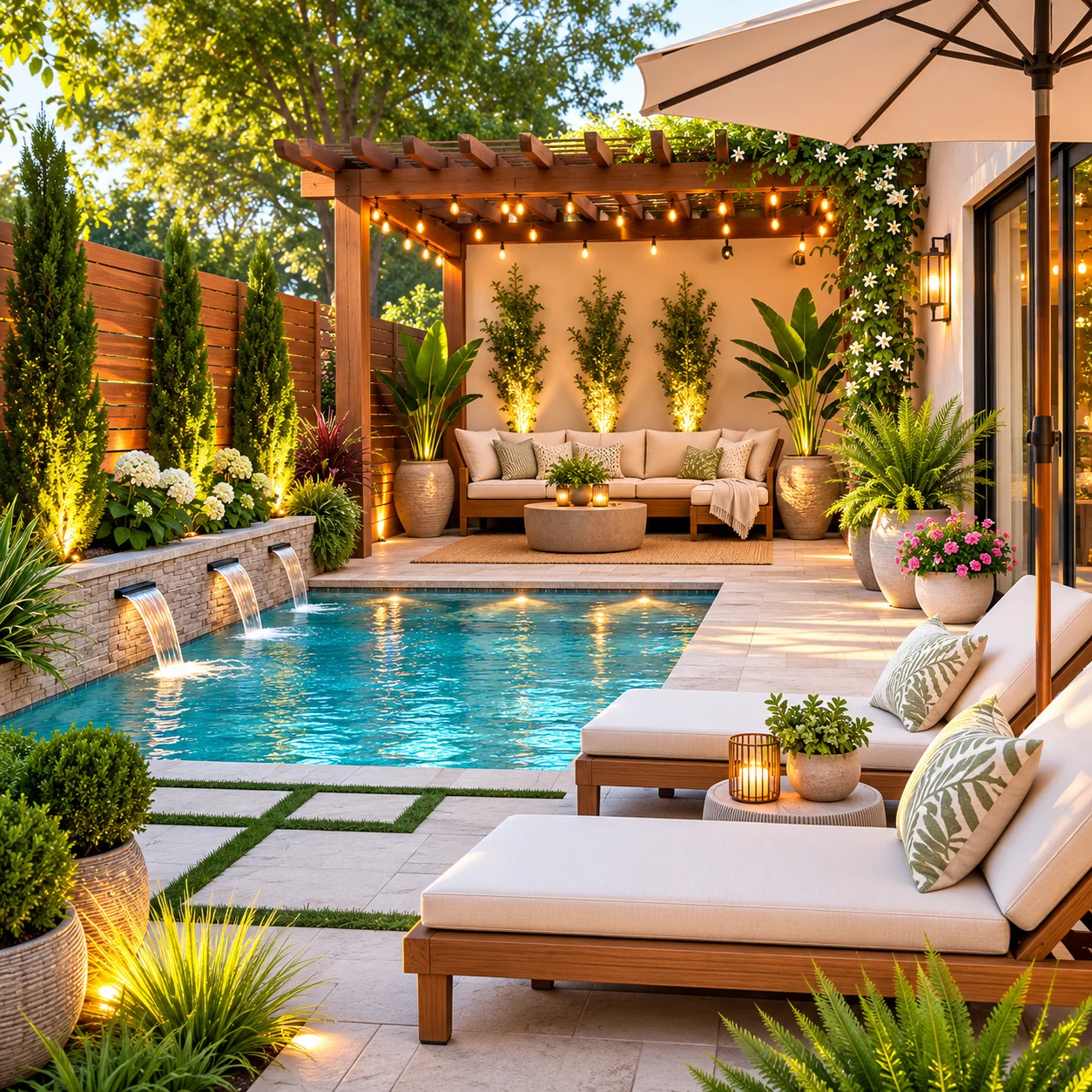
11. Overflowing Water Feature Over Exposed Walls
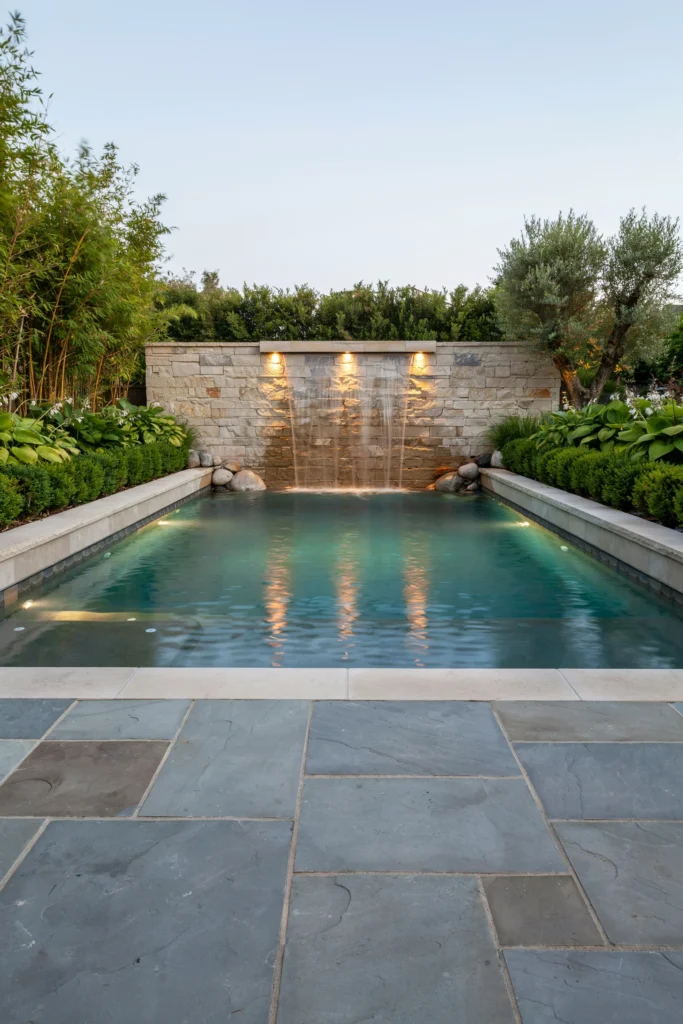
An overflow feature turns the exposed wall into something you want to show off. Water flows down into the pool with sound, movement, and a resort feel.
The simplest version is a spillway at the top of the wall connected to a recirculating pump. It works best on the tallest wall, usually the downhill side.
- Resort feel
- Uses the wall
- Pump driven

12. Waterfall Built Into a Slope or Retaining Wall

If there is a slope near the pool, build a waterfall into the retaining wall. It looks expensive but can be done on a reasonable budget.
Stack boulders or use a preformed unit, then run a pump line up through the wall. Plant ferns, hostas, and creeping jenny around it. The sound also hides street noise.
- Uses the slope
- Masks noise
- Moisture plants
13. Integrated Planter Boxes in the Deck
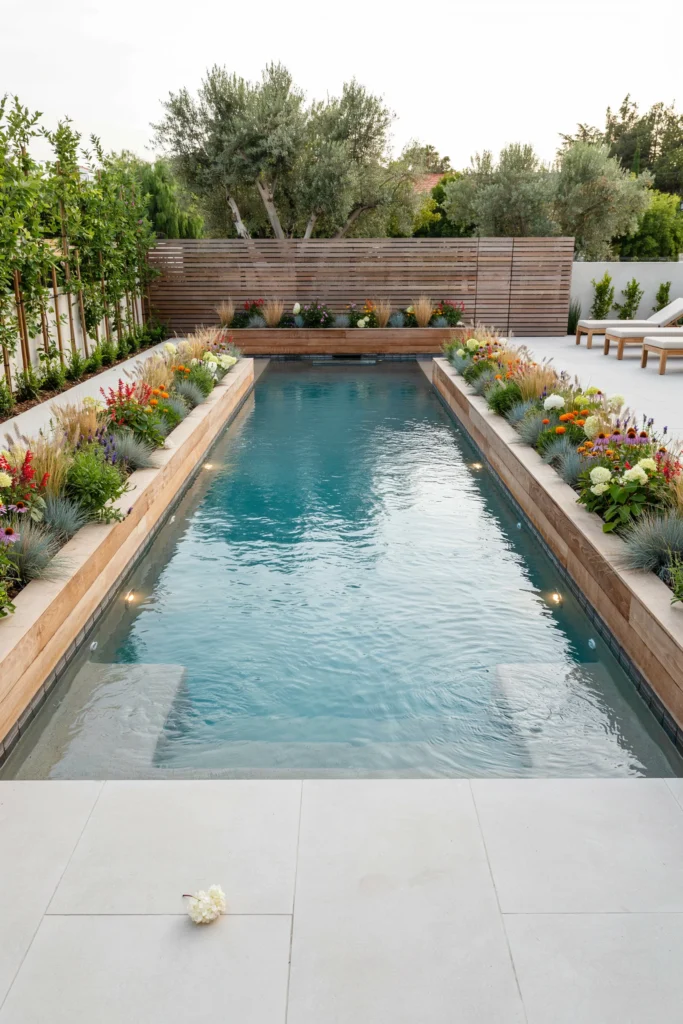
Planter boxes built into the deck look intentional rather than added on. Plant herbs near dining, flowers by the loungers, and grasses at the corners.
Line each box, point drainage away from the pool, and keep plants low so they do not block views or drop debris. Untreated cedar is a great choice for edibles.
- Built in look
- Herbs nearby
- Drain away from pool
Project Card · 2 hours · Easy
Materials Needed
- Cedar raised planter
- Landscape fabric liner
- Potting mix
- Herbs or low flowers
- Staple gun
How to Make It
- Choose a spot on the deck away from the pool’s splash zone.
- Assemble the planter and staple fabric inside the bed.
- Make sure drainage points away from the pool and deck boards.
- Fill with potting mix and plant herbs or low flowers.
- Water gently so runoff does not reach the pool.

14. Night Lighting in Water Features and Steps

Lighting takes a pool from nice during the day to beautiful at night. Most people underinvest here and then wonder why the space feels flat after dark.
Combine underwater LEDs, small step lights, an uplight on the waterfall, and low path lights. A hardwired low voltage system is reliable, and every fixture near water needs GFCI protection. Solar step lights mark each step clearly without new wiring near the water.
Quick checklist:
- Underwater pool lights , LED options in warm white or soft blue create a great effect
- Step lighting , small recessed lights on each step riser for safety and ambiance
- Water feature uplighting , aim a spotlight at the waterfall or spillway from below
- Path lighting , low fixtures along the walkway leading to the pool
- Safer steps
- Beautiful at night
- GFCI protected
Project Card · 1 afternoon · Moderate
Materials Needed
- Low voltage landscape lighting kit
- Transformer with timer
- Shovel for shallow wire trench
- GFCI outdoor outlet (installed by a pro)
How to Make It
- Sketch where you want path, step, and uplighting.
- Mount the transformer near a GFCI outlet.
- Lay the cable along the path in a shallow trench.
- Connect each light and test before burying the wire.
- Set the timer so the lights turn on at dusk.

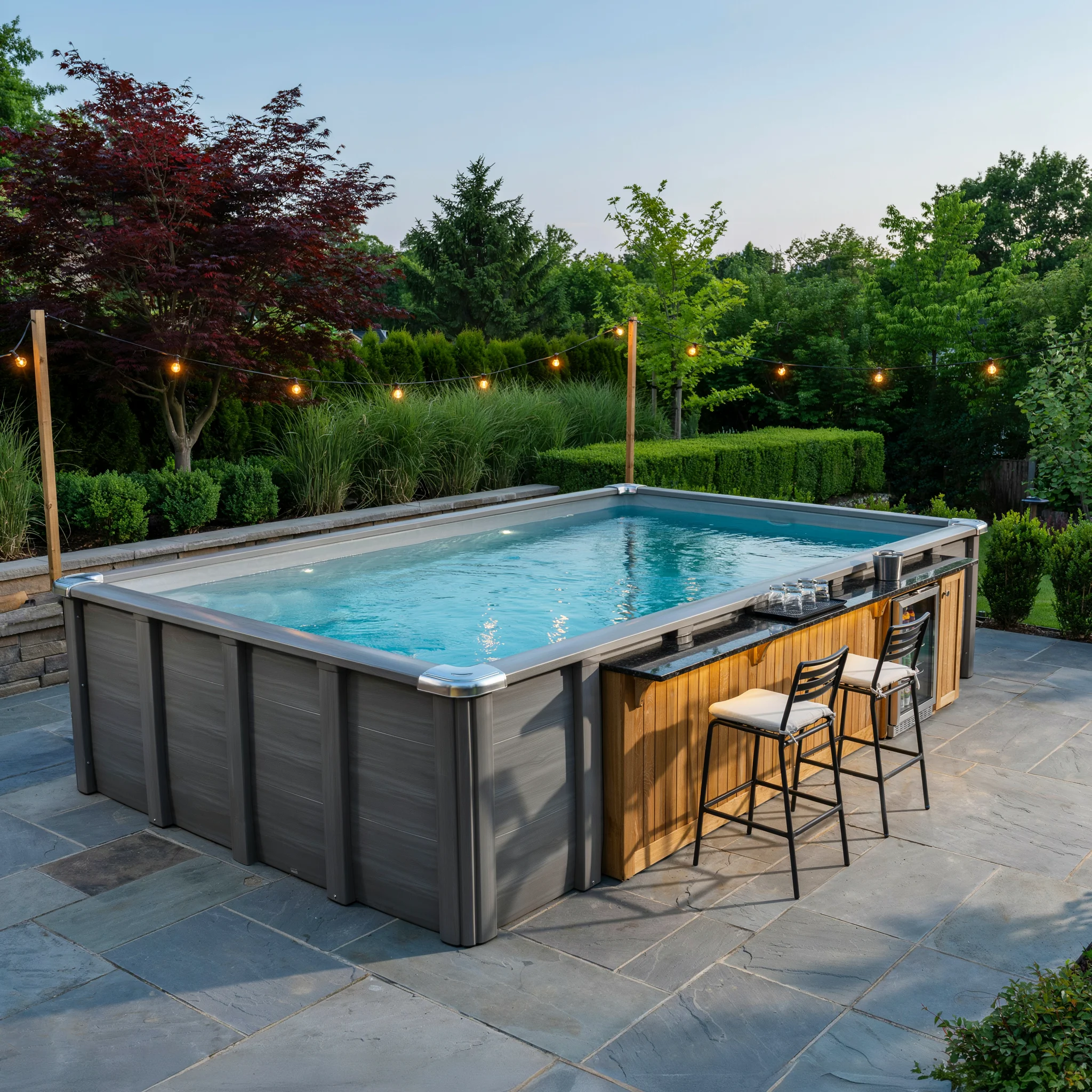
15. Poolside Bar With Countertop and Seating

A bar along one side of the deck is the upgrade that gets used the most. Even a four foot counter with a few stools makes a big difference.
Use a waterproof top like concrete, porcelain, or sealed stone. Face it toward the pool so parents can watch kids swim, and have a licensed electrician add any outlets or a fridge. All weather bar stools stand up to wet swimsuits and summer sun. These above ground pool bar ideas have more layouts to try.
- Most used upgrade
- Faces the water
- Licensed electrician

16. Dining Area That Doubles as a Sunbathing Zone

In smaller yards, one space needs to do two jobs. A dining zone that turns into a sunbathing spot is a smart fix.
Use light chairs you can move aside after meals. A shade sail overhead blocks the sun at lunch and can be taken down when you want full sun. Anchor it to solid posts, not the house gutter or the pool frame.
- Two in one
- Movable chairs
- Anchor to solid posts

17. Yoga or Fitness Zone on the Deck
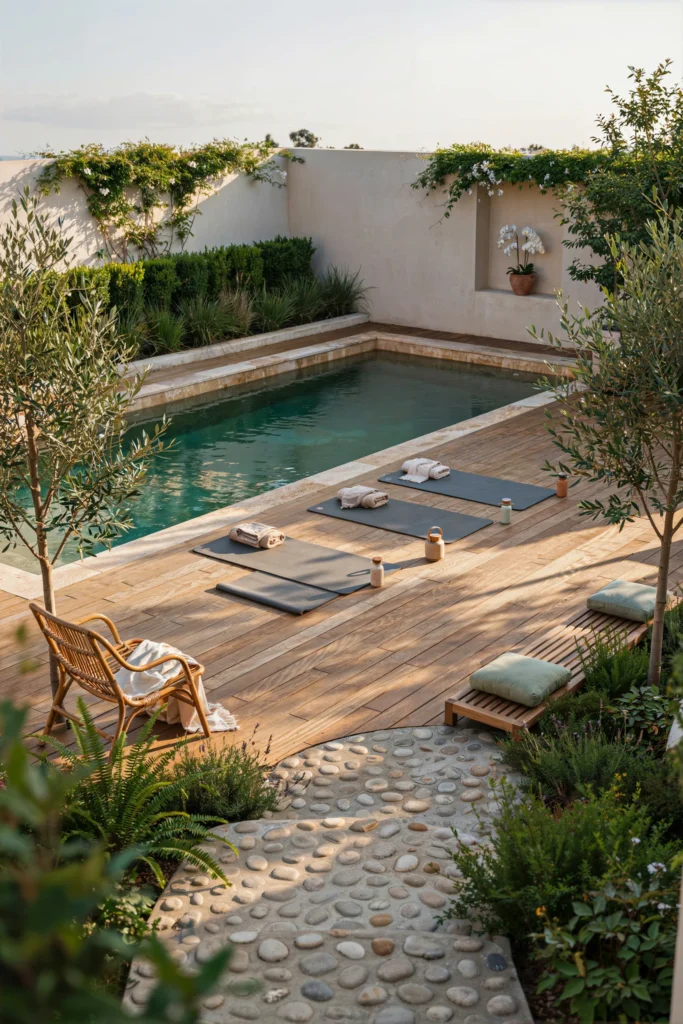
If you exercise regularly, set aside a corner of the deck. A few minutes of stretching before a swim is a great routine.
You need a flat, non slip area about six by six feet, a quick drying mat, and a weatherproof basket for blocks or bands.
- Morning routine
- Non slip
- Small footprint
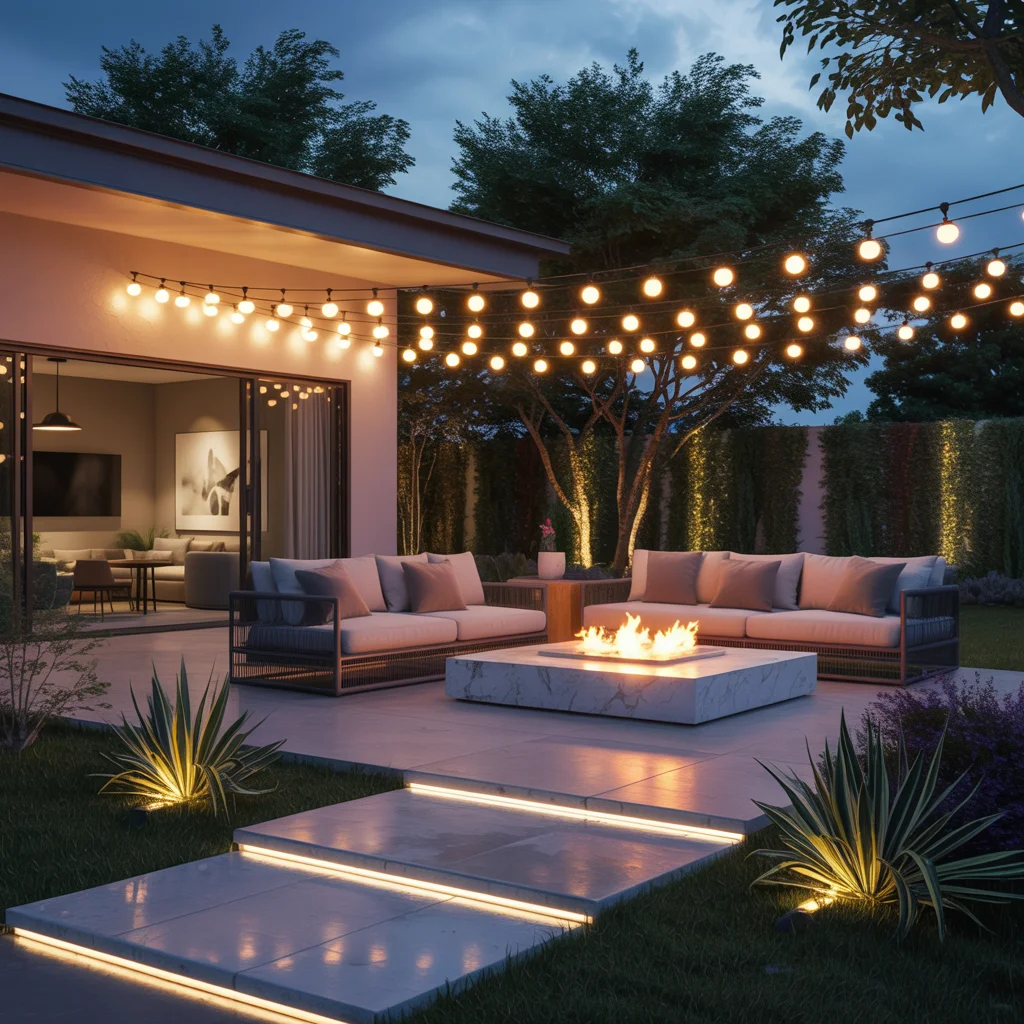
18. Fire Pit Zone Next to the Pool

A fire pit keeps everyone outside longer on cool evenings.
Keep it at least ten feet from the pool edge and the deck, and check local fire rules. A gas fire table is cleaner, easy to shut off, and has no flying embers.
- Longer evenings
- Ten feet away
- No embers
19. Oval or Round Pool as a Garden Centerpiece

Pool shape matters more than most people think. Oval and round pools feel organic and make a great focal point in a garden style yard.
Place the pool at the center of a circular bed layout and run paths outward like spokes. Plant each section with a different texture or color.
- Organic shape
- Garden focal point
- Radiating paths
20. Semi Inground Pool on a Slope With Tiered Landscaping
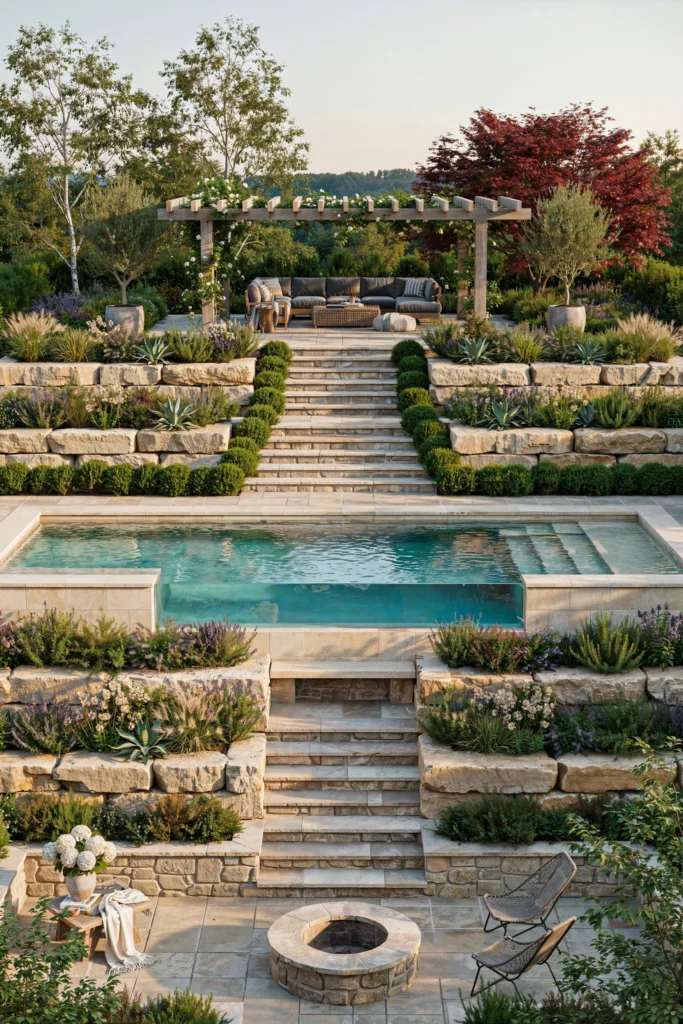
Sloped yards are ideal for these pools. Terraces that step down from the house to the pool make the most of the grade.
Use the top terrace for dining, the middle for planting or lawn, and the bottom for the pool deck. Tall retaining walls should be designed by a pro, and trailing plants soften the edges.
Quick checklist:
- Top terrace: outdoor dining or kitchen area
- Middle terrace: planting beds or lawn
- Pool terrace: pool deck, loungers, and water access
- Uses the grade
- Three terraces
- Pro designed walls
Semi Inground Pool Landscaping Tips
A few tips come up again and again from designers and homeowners:
- Finish decks, patios, and walls before you plant
- Choose plants with shallow, non invasive roots
- Be honest about how much upkeep you want
- Keep mulch and soil from washing into the pool
- Install a barrier with a self closing, self latching gate
- Have a licensed electrician handle anything near water
Planning Checklist Before You Dig
A semi inground pool is part landscaping project and part construction project. A little planning saves a lot of money and trouble later.
Work through this list before the first shovel goes in:
- Confirm the pool model is rated for partial burial and note the maximum depth
- Call your local utility locate service so you do not hit buried lines
- Check permit, fence, and gate rules for your area
- Plan drainage so rain flows away from the pool walls
- Decide where the pump, filter, and power will sit, with easy access
- Leave room for a deck, steps, and a path from the house
Safety Around a Semi Inground Pool
Because the pool sits lower, it can be easier for small children to reach the water. Treat it like an inground pool when it comes to safety.
Use a code compliant barrier with a self closing, self latching gate, keep a cover or alarm in place when the pool is not in use, and make sure every electrical outlet near the water has GFCI protection installed by a licensed electrician.
Frequently Asked Questions
What is a semi inground pool?
It is a pool that is partly set into the ground, with some of the wall above grade. It is sturdier than a typical above ground pool and works well on sloped yards.
Are semi inground pools cheaper than inground pools?
Usually yes, because they need less digging and fewer materials. The final cost depends on decking, site work, and features, so get a few local quotes.
How do you hide the walls of a semi inground pool?
Use a deck, a stone patio with veneer, planting beds, or a water feature over the exposed wall. Many people combine two of these.
Can you put a semi inground pool on a slope?
Yes, it is one of the best options for sloped yards. Bury the uphill side and finish the downhill side with a deck, stone, or terraces.
Do semi inground pools need a fence?
In most areas, yes. Local codes usually require a barrier with a self closing, self latching gate around any pool.
Final Thoughts on Semi Inground Pool Ideas
A semi inground pool can look every bit as built in as a full inground pool. Decks, stone, planting, and water features all help it blend into the yard.
Start with the structure and safety, then add the zones and lighting you will actually use. With a little planning, your pool becomes the heart of the backyard.