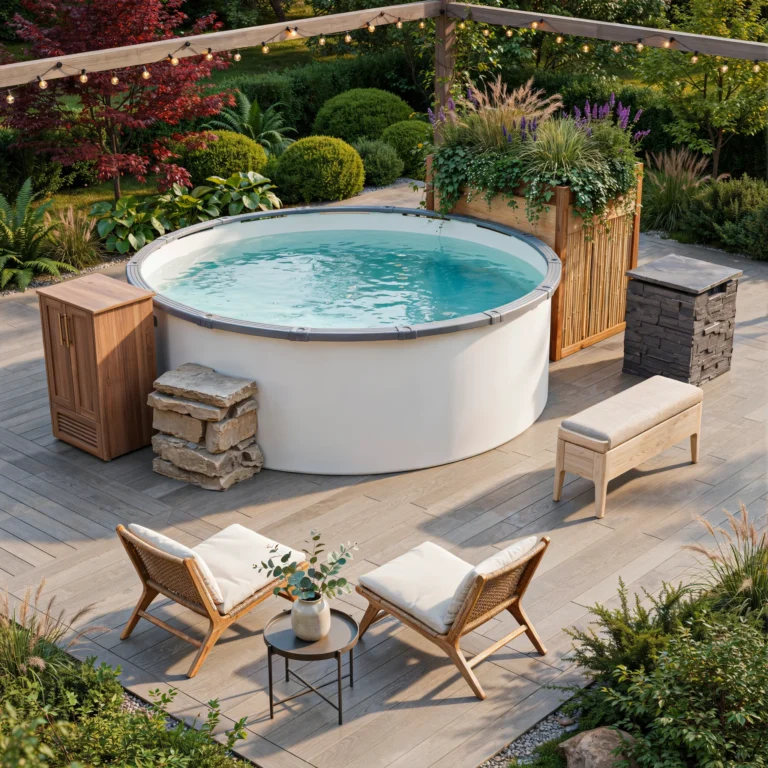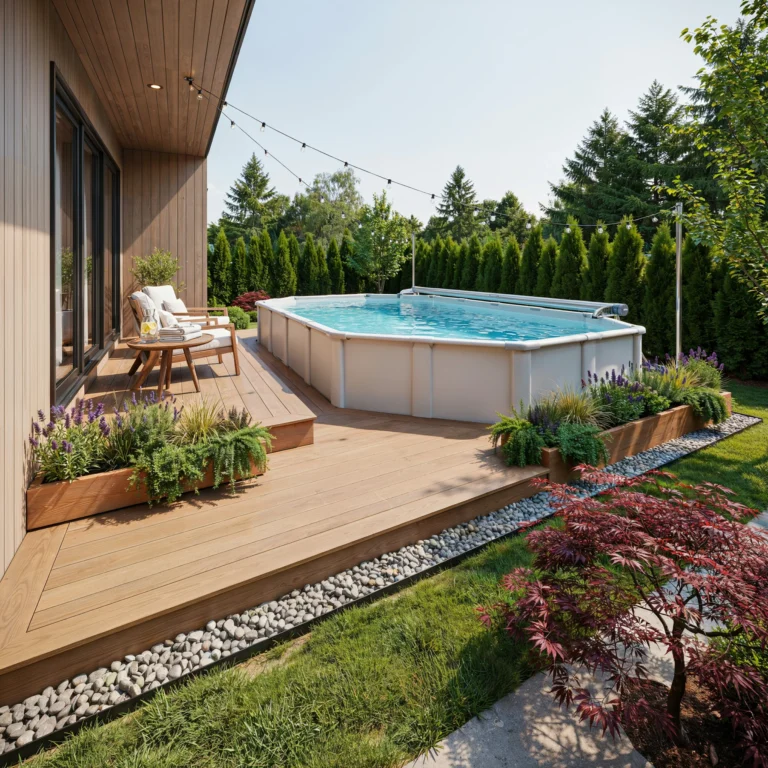
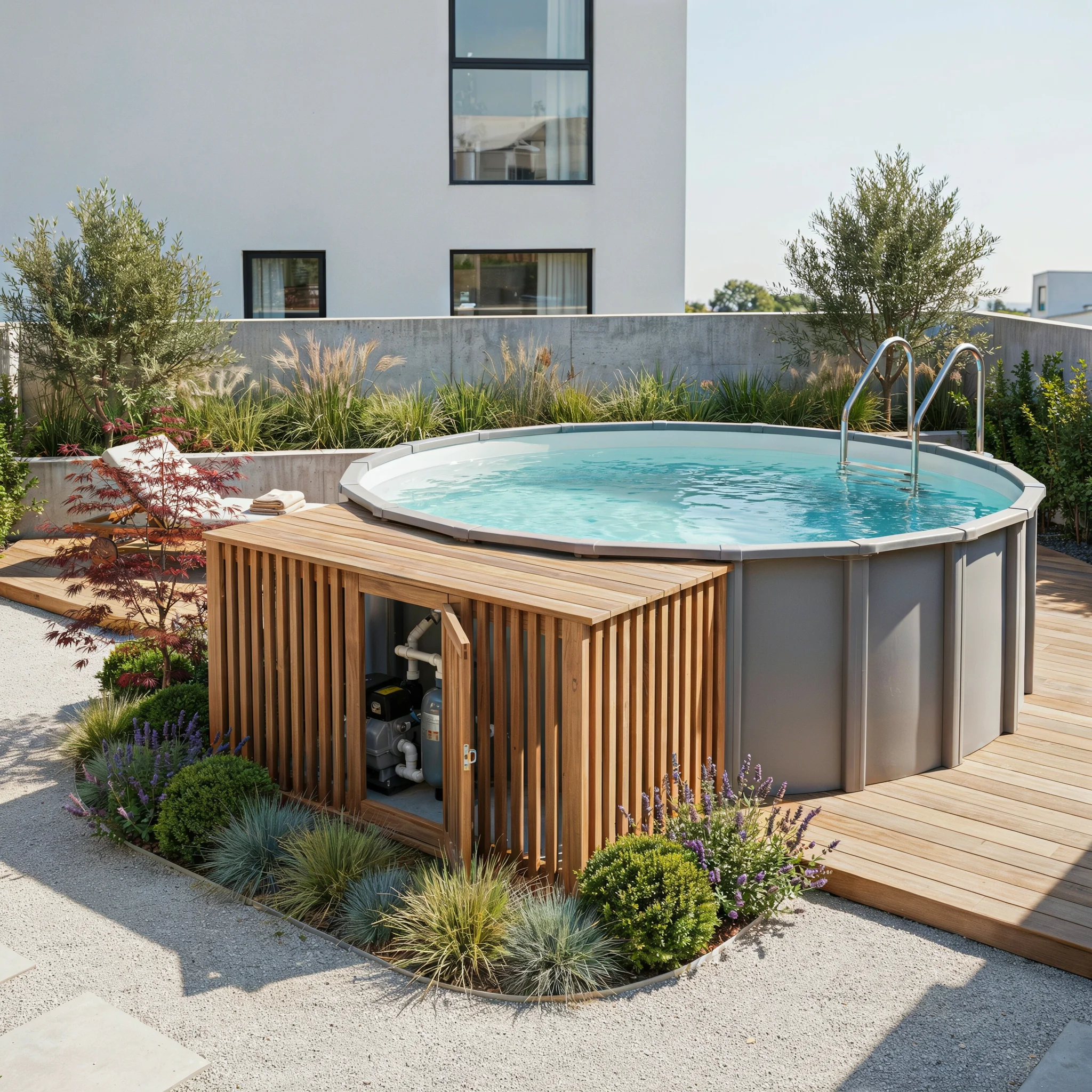
How to Hide an Above Ground Pool Pump (6 Easy Ideas That Actually Work)
Your above ground pool is a summer staple, but the pump sitting next to it? Not exactly a backyard showpiece. Whether it is the constant hum, the tangle of hoses, or just the industrial look of it all, hiding the pump is one of the easiest ways to give your outdoor space a cleaner, more polished feel.
Here are six practical ways to do it without blocking airflow or making maintenance a headache.
Why Hiding Your Pool Pump Is Worth the Effort
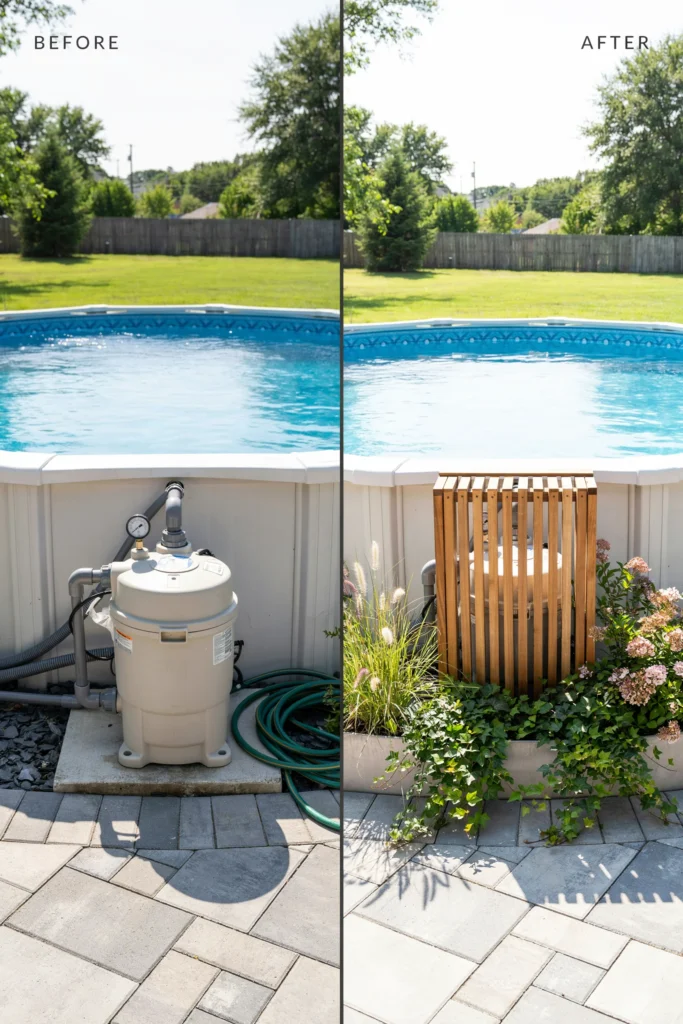
Most people think of pump concealment as a purely cosmetic fix, but there are a few other good reasons to make it a priority.
Aesthetics. An exposed pump drags down the look of an otherwise tidy backyard. Hiding it ties the whole pool area together and makes the space feel more intentional.
Safety. Exposed equipment creates tripping hazards, especially for kids running around the pool. Enclosing the pump removes that risk.
Noise reduction. A simple wooden box or lattice enclosure can noticeably muffle the sound of a running motor, which makes a real difference if your pool is close to a patio or seating area.
Equipment protection. Shading or enclosing the pump shields it from direct UV exposure and weather, which can extend the lifespan of the motor and hoses over time.
HOA requirements. Many neighborhood associations require pool equipment to be screened from street view. A simple enclosure keeps you compliant without a lot of effort.
Before You Start: A Few Things to Keep in Mind
Before you build, plant, or buy anything, keep these practical points in mind.
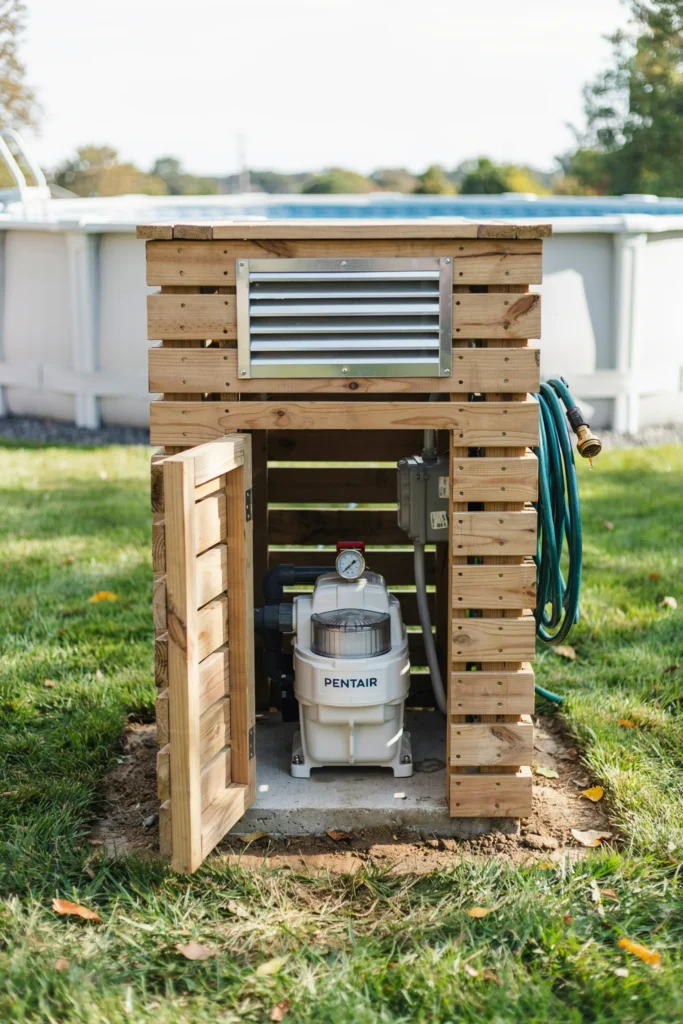
- Ventilation comes first. Whatever you use to hide the pump must allow air to circulate freely. A sealed enclosure will cause the motor to overheat and burn out.
- Plan for access. You will need to clean the filter, adjust settings, and winterize the system. Make sure your solution includes a door, removable panel, or enough open space to reach everything comfortably.
- Check local codes. If you are building a permanent structure, confirm that no permits are required in your area before you start.
- Keep hoses unkinked. Some enclosures or plantings can accidentally crimp the hoses running to and from the pump. Run them with gentle curves rather than sharp bends.
- Watch for moisture buildup. Enclosed spaces that trap moisture can cause rust on metal components and mold on wood. Choose materials that breathe and allow drainage.
1. Build or Buy a Pool Equipment Enclosure

A dedicated enclosure is the most polished solution, and it does not have to be complicated to build or expensive to buy.
Pre-built options are widely available at home improvement stores and on Amazon. Lattice-style enclosures are the most common, typically made from vinyl or wood, and they assemble in under an hour. Look for ones with a hinged door or removable panel so you can access the equipment easily.
DIY wooden box is a weekend project that gives you full control over the size and look. The basic build involves four slatted side panels (for ventilation) and a hinged top or front panel for access.
How to Build a Simple Pump Enclosure
- Measure the footprint of your pump and filter equipment, adding at least 6 inches of clearance on all sides.
- Cut four side panels from cedar or pressure-treated pine. Use horizontal slats with half-inch gaps between each board for airflow.
- Assemble the frame with exterior screws and corner brackets.
- Attach a hinged door on the front or a lift-off top panel for access.
- Sand, prime, and paint or stain to match your fence or deck.
Best wood choices: Cedar is naturally rot-resistant and looks great. Pressure-treated pine is more affordable and equally durable. Vinyl panels require almost no maintenance and will not rot or warp.
2. Use Lattice Panels or Fence Screening
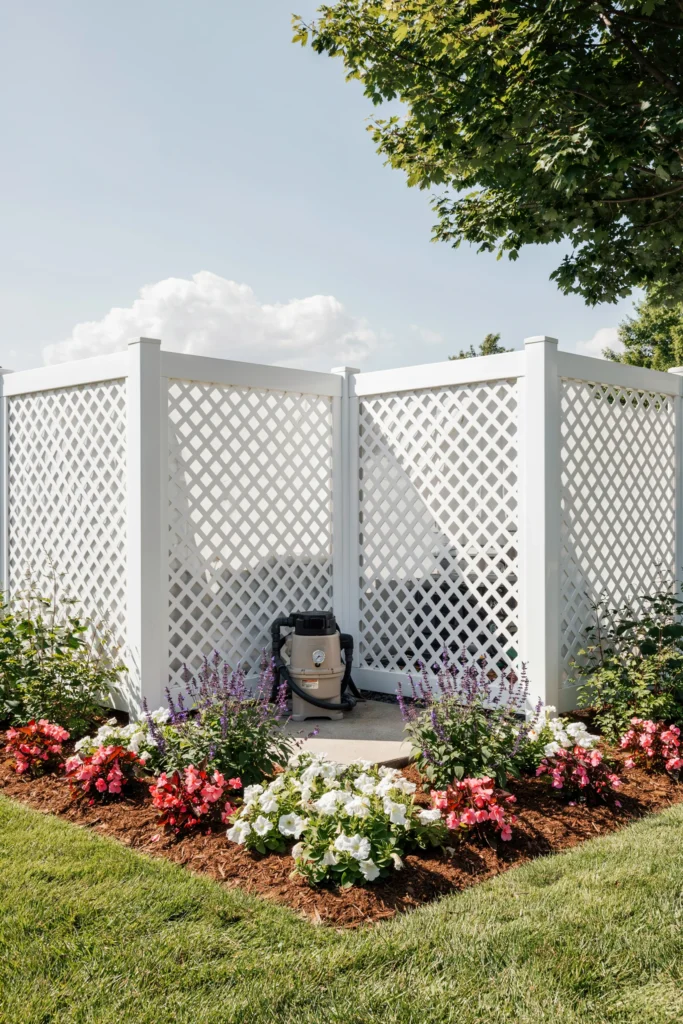
If you want something quick and inexpensive, lattice panels are your best friend. They are available at any hardware store, require almost no tools to install, and look tidy without drawing attention to themselves.
To set them up, stake three panels into the ground around the pump (leaving the front open for access) or mount them to a simple 2×4 frame for more stability. Leave at least 6 to 8 inches of clearance between the lattice and the equipment on all sides.
Bonus: Lattice doubles as a trellis. Training a climbing plant like jasmine, morning glory, or clematis up the panels adds a decorative touch that makes the whole setup look intentional rather than improvised.
Choose vinyl lattice for a clean, low-maintenance look or natural wood lattice if you prefer a warmer, garden-style feel. Both are easy to paint or stain.
See Also: 20 Semi Inground Pool Ideas That Blend Seamlessly Into Your Landscaping
3. Surround It with Strategic Landscaping
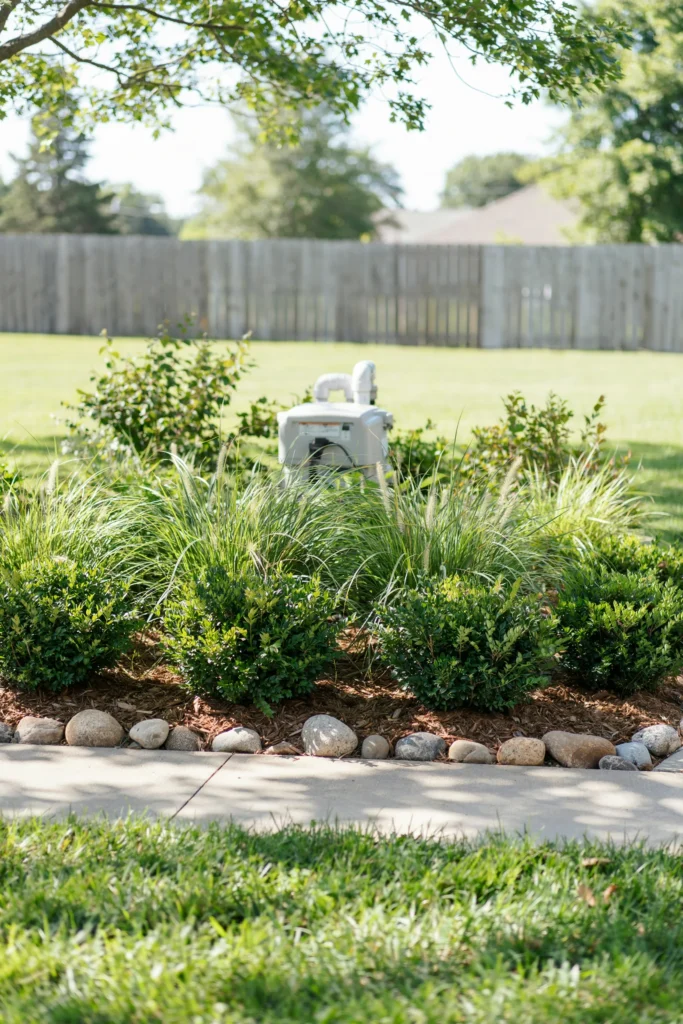
Plants are one of the most natural-looking ways to screen pool equipment, and the right choices require almost no upkeep once established.
The key is giving the pump enough breathing room. Keep plants at least 18 to 24 inches away from the equipment on all sides to maintain adequate airflow and allow access for maintenance.
Best Plants for Hiding Pool Equipment
- Arborvitae – Fast-growing, dense, and evergreen. Works year-round and reaches 4 to 6 feet tall relatively quickly.
- Boxwood – Compact and easy to shape. Good for a manicured look and stays green all year in most climates.
- Karl Foerster ornamental grass – Grows 4 to 5 feet tall, adds texture and movement, and requires almost zero care once established.
- Skip laurel – A versatile shrub that grows dense and tall, excellent for full screening in warmer climates.
- Potted plants – If you want flexibility, cluster large planters (think 12 to 16-inch pots) around three sides of the pump. You can move them for winterizing or maintenance anytime.
Raised garden beds built around three sides of the pump area are another clean option. They keep the front accessible while creating a defined, attractive border that looks like a planned garden feature rather than a cover-up.
4. Repurpose Outdoor Structures
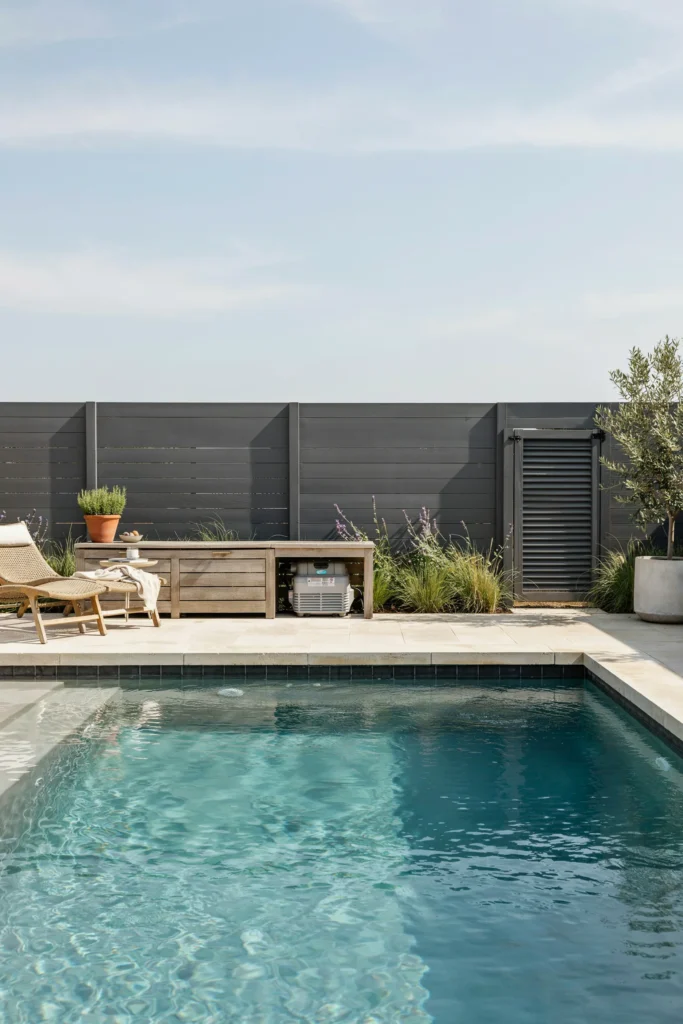
Sometimes the best solution is something you already have or can adapt with minimal work.
A small garden shed placed near the pump area is the all-in-one option. It hides the pump, filter, and any extra equipment (chemicals, hoses, nets) in a single structure. Look for sheds with built-in ventilation or add a louvered vent to one wall.
Wooden pallets standing upright make a surprisingly effective screen. Sand them down, paint or stain them in a color that matches your space, and anchor them with garden stakes. They are free or nearly free and easy to reposition.
Outdoor storage benches placed near the pump serve double duty as seating and a visual barrier. They work best when the pump is close to a patio or deck.
Pergola side panels or shade sails can soften or partially obscure the view of the equipment from a distance without requiring a full enclosure.
5. Use a Decorative Pump Cover

For a quick solution that requires no building, decorative pump covers are worth a look. The most popular option is the faux rock cover, a hollow fiberglass or resin shell designed to look like a natural boulder. They are available in several sizes and finishes, and a good one is genuinely difficult to spot as artificial from a few feet away.
What to Look for in a Pool Pump Cover
- Ventilation holes or slots on the sides or bottom. This is non-negotiable. A cover without airflow will damage your pump.
- UV-resistant material. Cheap covers fade and crack within a season. Look for ones rated for outdoor use with UV stabilizers in the material.
- Size compatibility. Measure your pump, filter, and any attached hoses before ordering. The cover needs to fit over everything with room to spare.
- Access panel or removable section. Some covers hinge open or have a removable back panel. This makes filter cleaning much less of a chore.
Faux rock covers are available through pool supply stores, Amazon, and specialty outdoor retailers. Prices range from around 60 dollars for basic models to over 200 dollars for large, more realistic versions.
6. Paint or Camouflage the Equipment
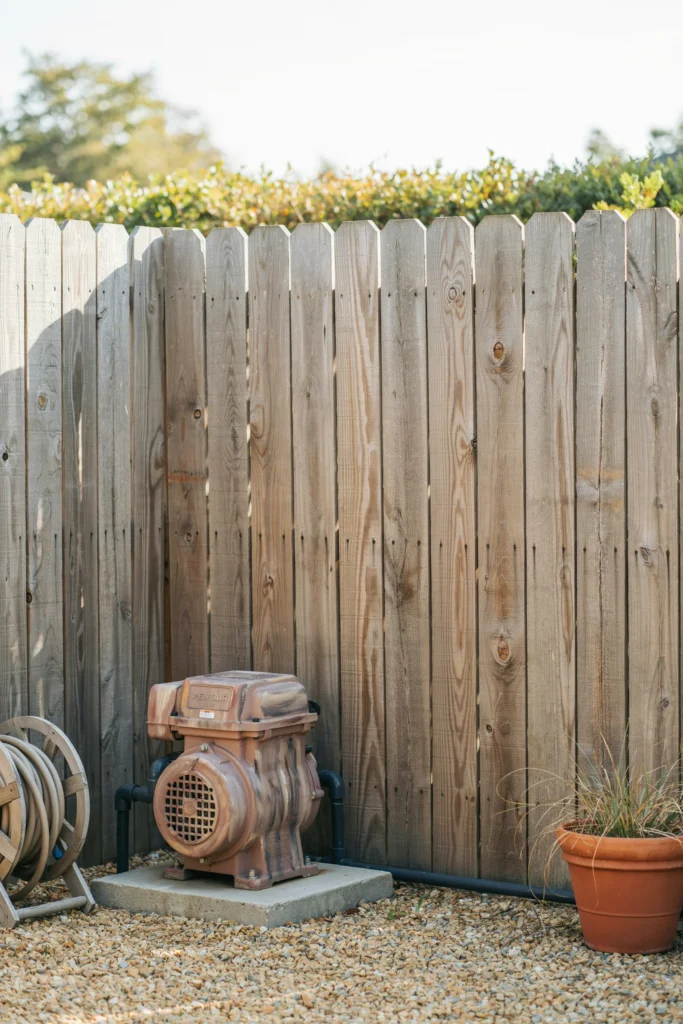
When hiding is not realistic due to space or layout constraints, camouflage is the next best option.
A coat of exterior spray paint in a neutral tone that matches your fence, deck, or house exterior makes the pump blend into the background instead of drawing the eye. Flat or satin finishes work best since they reflect less light.
For the hoses and pipes, weatherproof pipe covers or foam insulation sleeves in a matching color clean up the look considerably. They also protect the hoses from UV degradation, so it is a practical upgrade, not just cosmetic.
Finally, labeling your pipes with small weatherproof tags (inlet, outlet, filter return) keeps things functional and organized, which makes the whole setup look intentional rather than cobbled together.
Final Thoughts
Hiding your above ground pool pump does not have to be complicated or expensive. Whether you build a simple wooden enclosure, cluster some plants around the equipment, or drop a faux rock cover over the whole thing, even a basic solution makes a noticeable difference in how your backyard looks and feels.
The right approach depends on your budget, your backyard layout, and how permanent you want the solution to be. Start with what you have, keep ventilation and access in mind, and your pool area will look like a deliberate, well-designed space rather than a collection of equipment someone forgot to tuck away.
Frequently Asked Questions
Can I completely enclose my above ground pool pump?
Yes, but only if the enclosure has adequate ventilation. The motor generates heat and needs consistent airflow to operate safely. Use slatted sides, louvered panels, or ventilation gaps to ensure air can circulate freely.
How far should plants be from a pool pump? Keep plants at least 18 to 24 inches away from the equipment on all sides. This maintains airflow, prevents debris buildup around the motor, and leaves enough room to access the equipment for maintenance.
What is the best way to hide an above ground pool pump on a budget?
Lattice panels from a hardware store are the most affordable option, often costing less than 30 dollars for a basic setup. A DIY wooden box using scrap lumber is another low-cost solution that looks clean and professional with a coat of paint.
Will covering my pool pump void the warranty?
It depends on the manufacturer. Some warranties specify that the motor must have unobstructed airflow, which means a poorly ventilated cover could technically affect your coverage. Check the documentation before building a permanent enclosure.
Can I use a storage shed to hide pool equipment?Yes, a small outdoor shed is one of the most effective all-in-one solutions. Make sure it has at least one louvered vent or ventilation panel to prevent heat buildup, and leave the front of the shed accessible for regular maintenance.