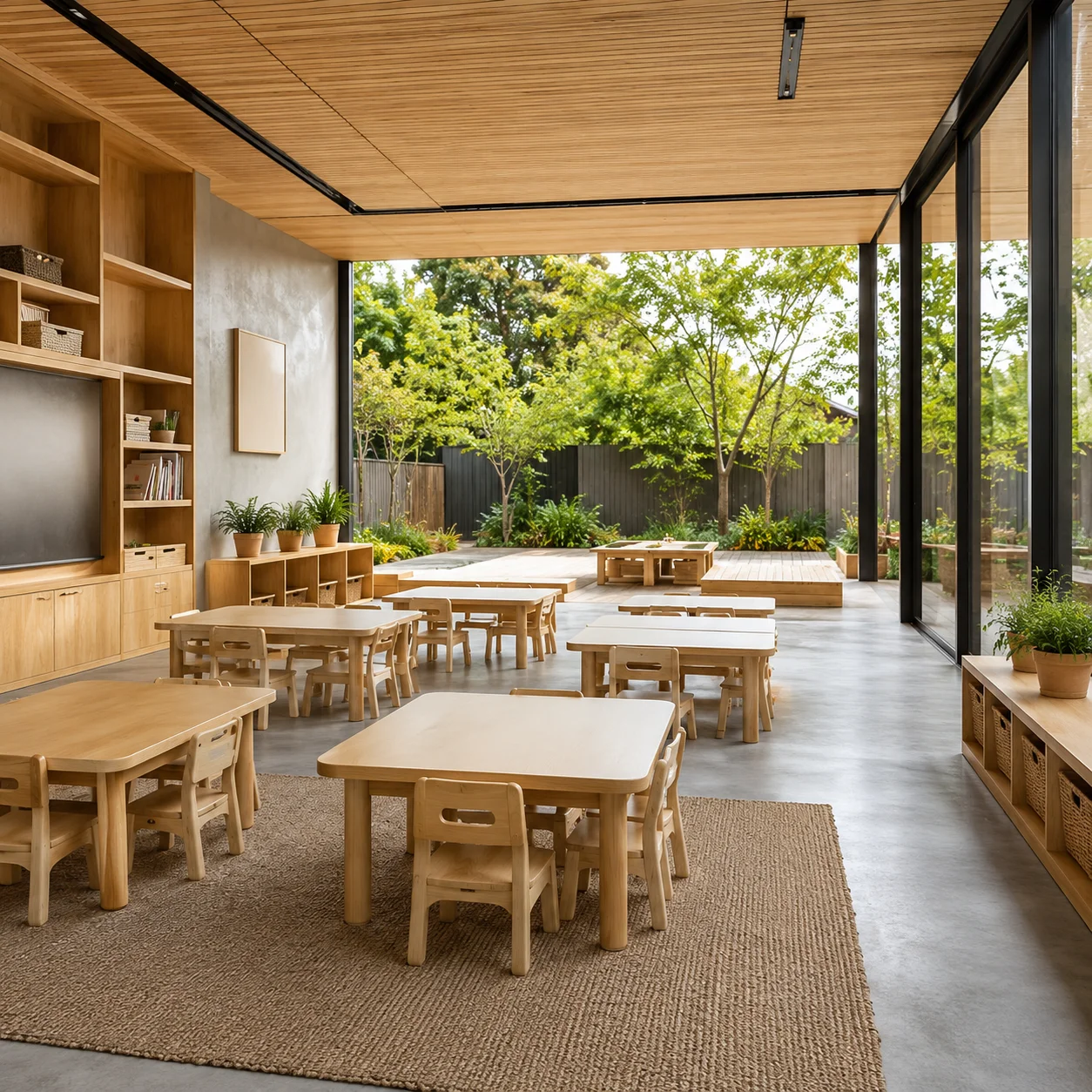
10 Minimal Classroom Layouts with Indoor-Outdoor Flow
A classroom should inspire curiosity, creativity, and comfort. Over the years, I have noticed that the best learning spaces are not always the ones filled with colorful decorations. Instead, simple layouts with a strong connection to nature often create a calmer and more engaging environment.
By combining minimal design with indoor-outdoor flow, you can create a classroom that feels open, organized, and inviting for both students and teachers.
1. Bright Open Layout with Large Glass Doors
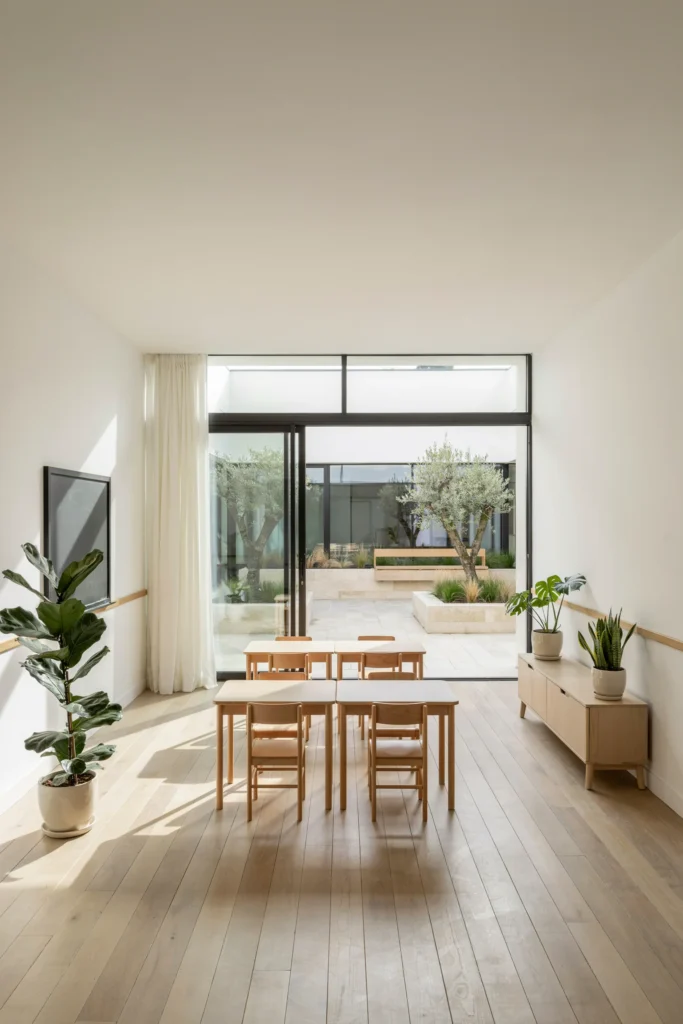
One of my favorite classroom layouts is a bright, open space with large glass doors that connect directly to an outdoor learning area. Natural light completely changes the atmosphere of a classroom. It makes the room feel larger, fresher, and more welcoming.
When I first visited a classroom designed this way, I immediately noticed how relaxed the students seemed. Instead of feeling confined by four walls, they could easily look outside and enjoy views of trees, gardens, or open skies. Even during indoor lessons, the connection with nature created a peaceful learning environment.
Keep the indoor space simple with clean furniture lines and neutral colors. Large glass doors become the main design feature, allowing sunlight to brighten every corner.
A few ideas include:
- Use white or light wood furniture.
- Keep window treatments minimal.
- Place indoor plants near the entrance.
- Choose lightweight chairs that can move outdoors easily.
- Add simple storage cabinets to reduce visual clutter.
This layout works especially well for preschool classrooms, elementary schools, and creative learning spaces.
2. Flexible Learning Zones
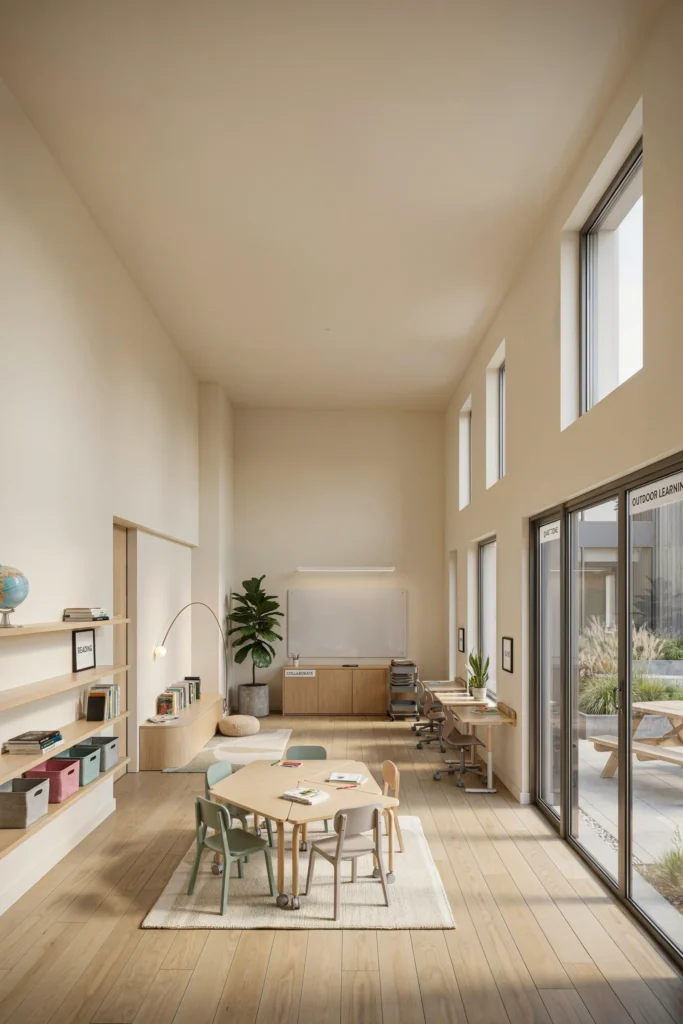
Not every lesson requires students to sit at desks all day. Flexible learning zones allow students to move between different activities without making the classroom feel crowded.
I have always appreciated classrooms that divide the room into purposeful areas instead of filling every inch with furniture. Students naturally stay more engaged when they have different places to work.
A minimal classroom can include several simple zones:
Collaborative Learning Area
Arrange movable tables where students can work together on projects or discussions.
Quiet Study Corner
Create a calm area with comfortable floor cushions or small desks for independent work.
Teacher Instruction Space
Keep this area open with enough room for demonstrations and whole-class discussions.
Outdoor Extension
Continue one learning zone outside using weather-resistant seating, picnic tables, or simple benches.
The beauty of flexible learning zones is that the classroom can easily adapt throughout the day. Morning reading sessions, science activities, and group discussions all happen in spaces designed for each purpose.
Choose furniture with wheels whenever possible. Mobile bookshelves and lightweight tables make rearranging the classroom much easier.
3. Nature-Inspired Classroom Design
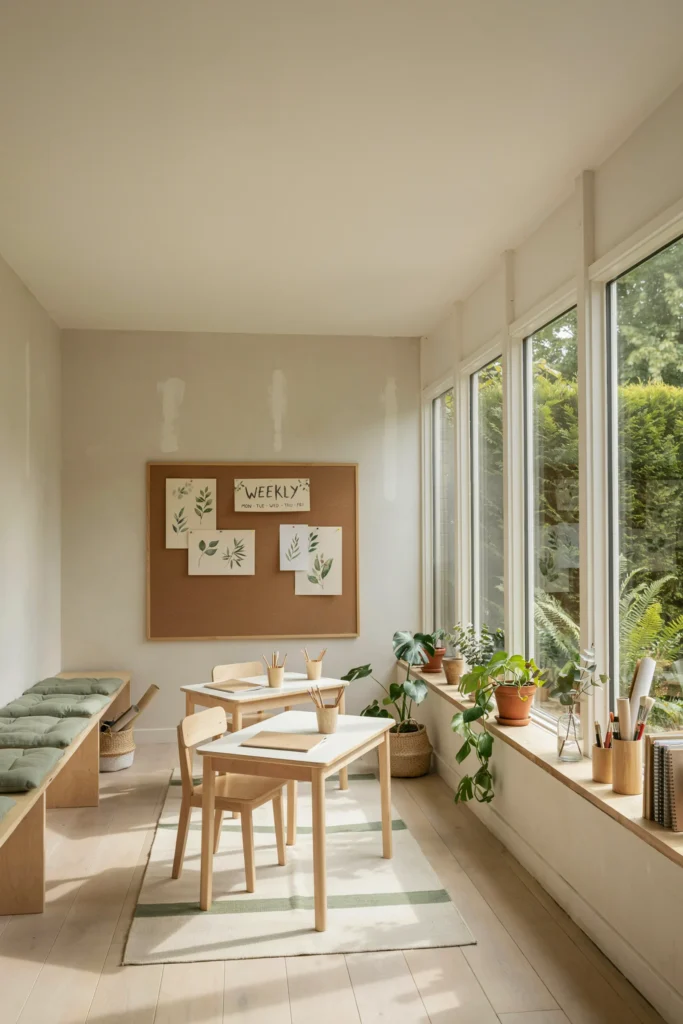
Bringing nature into the classroom goes far beyond adding a few plants. A nature-inspired classroom uses natural materials, calming colors, and outdoor views to create a peaceful environment.
In my experience, classrooms that embrace nature tend to feel less stressful for everyone. Even simple changes can make a noticeable difference.
Start with a neutral color palette such as:
- Soft white
- Warm beige
- Light gray
- Sage green
- Natural wood tones
Wood furniture adds warmth without overwhelming the space. Woven baskets provide attractive storage while keeping supplies organized.
Plants are another easy addition. Snake plants, pothos, peace lilies, and spider plants require little maintenance while making the classroom feel more alive.
Natural textures also play an important role. Consider using:
- Cotton rugs
- Wooden shelves
- Bamboo organizers
- Linen curtains
- Cork bulletin boards
Large windows help blur the line between indoors and outdoors. If possible, position student desks to face natural scenery instead of blank walls.
The overall goal is not to decorate every corner. Instead, allow natural elements to become the primary design feature.
4. Indoor Reading Nook Connected to an Outdoor Reading Garden

Reading becomes much more enjoyable when students have peaceful spaces to relax with a book.
One classroom I visited included a cozy reading nook beside sliding glass doors that opened directly into a small reading garden. Students could choose whether to read indoors or outside, depending on the weather. It was one of the most inviting learning spaces I had ever seen.
To create a similar setup, start with a simple indoor reading corner.
Include:
- Low bookshelves
- Soft cushions
- Bean bags
- Floor rugs
- Warm lighting
Outside, extend the experience with comfortable seating beneath shade structures or trees.
The outdoor reading area may include:
- Wooden benches
- Raised garden beds
- Gravel walking paths
- Small pergolas
- Outdoor bookshelves with weather protection
This design encourages students to associate reading with relaxation rather than obligation.
Minimal styling keeps both spaces peaceful and distraction free.
5. Minimal Classroom with Foldable Furniture
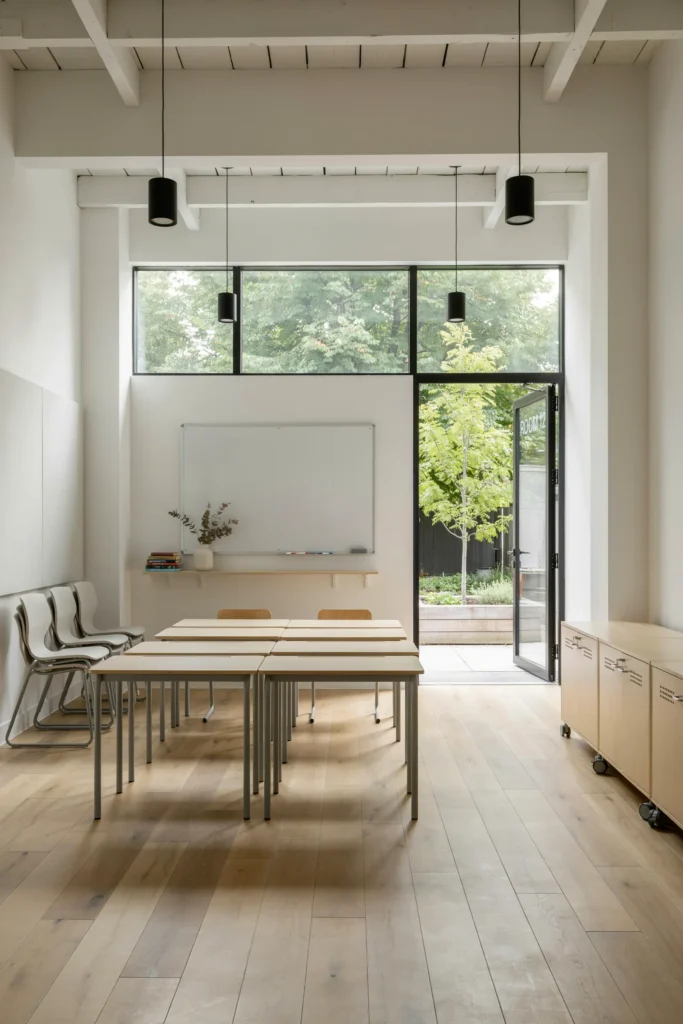
One of the easiest ways to maximize classroom space is by choosing foldable furniture.
Traditional classrooms often feel crowded because furniture stays in one position throughout the day. Foldable tables and chairs create a completely different experience.
I have seen teachers transform an ordinary classroom into an open activity space in just a few minutes simply by folding away unused furniture.
This layout works particularly well for schools that host multiple activities in the same room.
Benefits include:
- More open floor space
- Easier classroom cleaning
- Faster room reconfiguration
- Better movement during group activities
- Improved flexibility for indoor and outdoor lessons
Choose furniture that is both lightweight and durable.
Some excellent options include:
- Folding student desks
- Nesting tables
- Stackable chairs
- Mobile storage carts
- Folding whiteboards
Keep permanent furniture to a minimum. Built-in storage along one wall helps maintain a clean appearance while leaving the center of the classroom open.
When outdoor learning begins, students can quickly carry lightweight furniture outside without disrupting the lesson.
A simple layout also reduces distractions. Students can focus on learning instead of navigating around unnecessary furniture or decorative items.
Minimal classrooms do not feel empty. Instead, every piece serves a purpose, making the learning environment more comfortable, functional, and adaptable throughout the school day.
6. Open Art Studio Layout
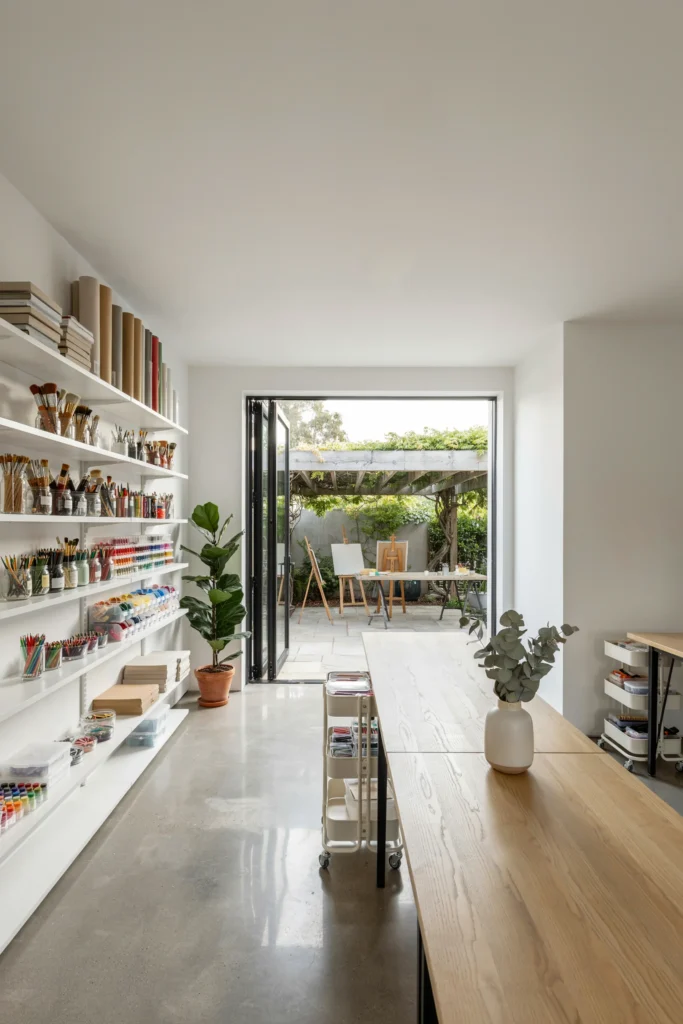
Art classrooms naturally encourage creativity, but they can also become cluttered very quickly. A minimal open art studio layout keeps supplies organized while giving students plenty of room to create. Adding direct access to an outdoor workspace makes the experience even better.
One of the most inspiring art classrooms I have visited had large sliding doors that opened onto a covered patio. Students could paint, sketch, or work with clay outside whenever the weather allowed. The extra space also made cleanup much easier.
Keep the indoor layout simple with clearly defined workstations.
Include:
- Long shared worktables
- Open shelving for frequently used supplies
- Closed cabinets for paints and tools
- Easy-to-clean flooring
- Rolling carts for art materials
Outside, add sturdy tables, washable seating, and a shaded area so students can comfortably work in natural light. An outdoor sink is also a helpful addition if space and budget allow.
By reducing unnecessary decorations, the artwork itself becomes the highlight of the classroom.
7. Montessori-Inspired Indoor-Outdoor Classroom

A Montessori-inspired classroom focuses on independence, exploration, and hands-on learning. Connecting the classroom to an outdoor space supports these principles by giving children more opportunities to discover and learn through experience.
What I appreciate most about this style is how intentional everything feels. Every shelf, activity, and piece of furniture has a purpose.
Choose child-sized furniture and keep materials within easy reach.
Some essential features include:
- Low wooden shelves
- Natural wood furniture
- Open floor space
- Hands-on learning materials
- Simple storage baskets
The outdoor area can become an extension of the classroom with activities such as:
- Gardening
- Nature observation
- Water play
- Sand exploration
- Outdoor storytelling
Avoid overcrowding either space. Children benefit from having room to move freely and choose activities independently.
8. Scandinavian Minimal Classroom
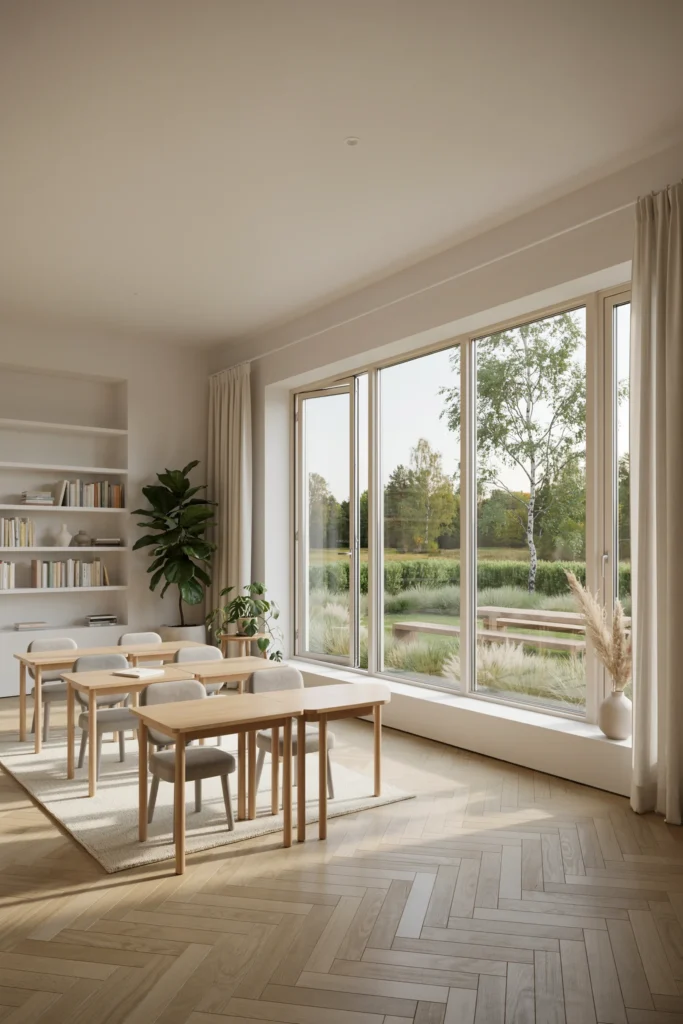
Scandinavian design has always appealed to me because it balances simplicity with warmth. It proves that a classroom can feel welcoming without being filled with bright colors and excessive decorations.
Start with a soft, neutral color palette.
Popular choices include:
- White
- Light gray
- Beige
- Soft green
- Natural wood finishes
Large windows play an important role by bringing in plenty of daylight. If the classroom opens directly to an outdoor space, keep the transition as seamless as possible.
Furniture should remain functional and uncomplicated.
Add warmth with:
- Wool or cotton rugs
- Wooden bookshelves
- Indoor plants
- Simple pendant lighting
- Soft reading cushions
The outdoor learning area can follow the same design style by using wooden benches, gravel pathways, and simple garden beds.
The result is a calm learning environment that encourages focus without feeling cold or empty.
9. STEM Classroom with Outdoor Exploration Area
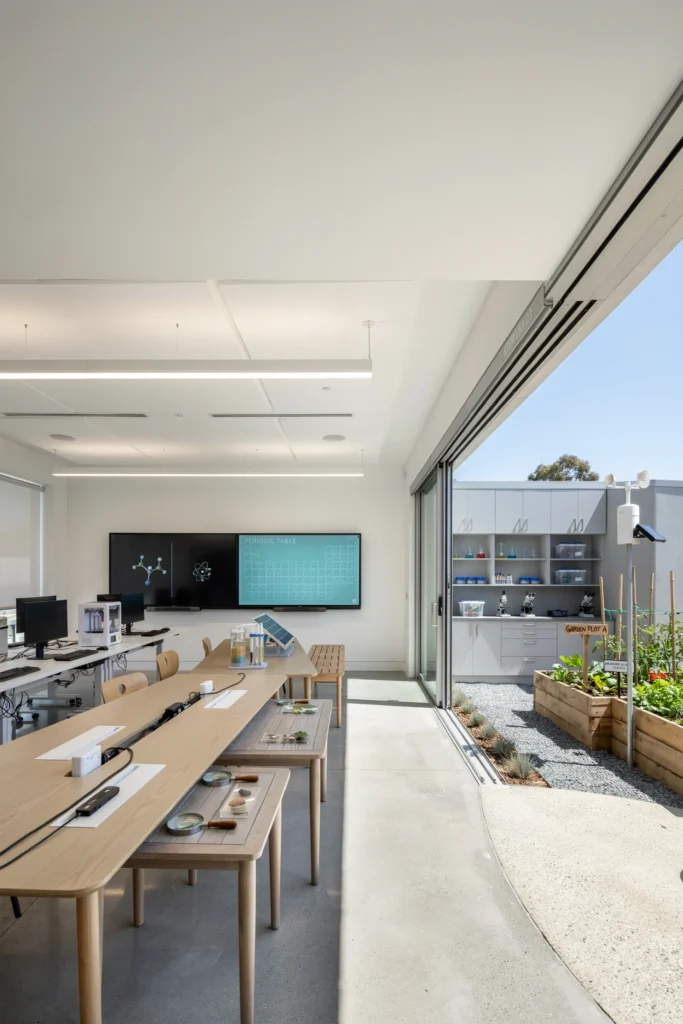
Science and technology lessons become much more engaging when students can test ideas outside the classroom.
I once observed a STEM classroom where students moved between indoor experiments and outdoor investigations throughout the day. Instead of simply reading about nature, they collected samples, measured weather conditions, and observed plants firsthand.
Design the indoor classroom with flexible workstations.
Include:
- Collaborative tables
- Charging stations
- Whiteboards
- Storage for equipment
- Open floor space for demonstrations
Outside, create an exploration area with features like:
- Raised garden beds
- Weather stations
- Measuring tools
- Observation tables
- Small planting areas
Students can easily transition between classroom discussions and real-world investigations.
Keeping the layout minimal ensures that equipment stays organized and workspaces remain clear for experiments.
10. Multi-Purpose Classroom with Sliding Outdoor Access
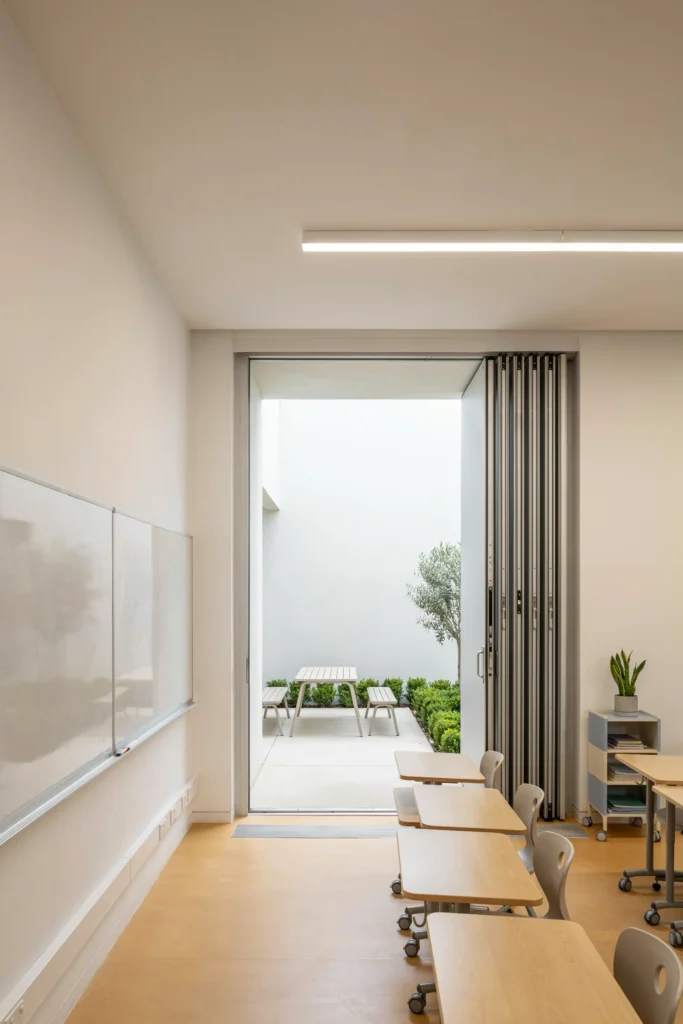
Many schools use one classroom for several different activities throughout the day. A multi-purpose layout makes this much easier.
Sliding glass doors are one of the most practical additions because they instantly expand the usable learning space.
I have seen classrooms transform from lecture spaces into workshop areas within minutes simply by opening the doors and rearranging lightweight furniture.
Choose versatile furniture such as:
- Stackable chairs
- Folding tables
- Mobile whiteboards
- Rolling storage units
- Modular seating
Inside, keep walkways open and avoid overcrowding the room.
Outside, provide flexible seating that can support reading sessions, science lessons, group discussions, or creative projects.
This design allows teachers to adapt the classroom without major changes or complicated setups.
Essential Design Tips for Indoor-Outdoor Classroom Layouts
A successful indoor-outdoor classroom is not just about adding a door to the outside. Every design decision should improve comfort, safety, and functionality.
Here are a few practical tips that I have found especially useful:
Prioritize Natural Light
Large windows and glass doors brighten the classroom while reducing the need for artificial lighting during the day.
Keep Furniture Minimal
Every piece should have a clear purpose. Too much furniture limits movement and makes the classroom feel smaller.
Use Durable Materials
Choose furniture and flooring that can handle frequent movement between indoor and outdoor spaces.
Create Clear Pathways
Students should be able to move safely between learning areas without obstacles.
Add Greenery
Indoor plants and outdoor gardens create a relaxing atmosphere while strengthening the connection with nature.
Choose Flexible Storage
Mobile storage units help keep supplies organized without permanently occupying valuable floor space.
Plan for Weather
Covered outdoor areas allow learning to continue even during light rain or intense sunshine.
Maintain Visual Consistency
Using similar colors and materials indoors and outdoors helps both spaces feel connected.
Conclusion
A minimal classroom with indoor-outdoor flow creates more than just an attractive learning environment. It encourages movement, supports creativity, and helps students feel more connected to the world around them.
From bright classrooms with large glass doors to flexible STEM spaces and peaceful reading gardens, each layout offers a unique way to combine simplicity with functionality. In my experience, the most successful classrooms are the ones that remove unnecessary distractions and make room for meaningful learning experiences.
Small changes such as introducing natural light, choosing flexible furniture, or adding an outdoor extension can make a lasting difference for both teachers and students.
FAQs
What is an indoor-outdoor classroom?
An indoor-outdoor classroom is a learning space that connects the indoor classroom with an outdoor area. Students can easily move between both environments for activities such as reading, science experiments, art projects, gardening, and group discussions. This layout encourages active learning while strengthening the connection with nature.
How do you create a minimal classroom layout?
Start by removing unnecessary furniture and decorations. Choose functional pieces, use neutral colors, maximize natural light, and include smart storage solutions. Leave enough open space for movement and arrange furniture to support different learning activities.
What are the benefits of outdoor learning spaces?
Outdoor learning spaces provide many advantages, including:
- Better student engagement
- More opportunities for hands-on learning
- Improved creativity
- Increased physical movement
- Greater connection with nature
- A calmer learning environment
These spaces also offer teachers greater flexibility when planning lessons.
What furniture works best in flexible classrooms?
Flexible classrooms benefit from furniture that is easy to move and store.
Popular options include:
- Folding tables
- Stackable chairs
- Mobile storage carts
- Rolling bookshelves
- Lightweight desks
- Modular seating
These pieces allow the classroom to adapt quickly for different learning activities.
How can small classrooms include indoor-outdoor flow?
Even a small classroom can create a strong indoor-outdoor connection. Install glass doors or large windows if possible, use lightweight furniture that moves easily outside, and extend learning into a small patio, garden, courtyard, or covered outdoor area. Keeping the interior uncluttered also helps the classroom feel larger and more open.