


In This Article Show
Kids read more when they actually want to sit down. A reading corner with warm wood tones, soft textures, and a little greenery gives them a reason to settle in and stay. These ideas work for real classrooms and real budgets.
Whether you are setting up a corner from scratch or refreshing what you already have, here is what actually looks good and functions well.
1. Window Seat Reading Nook with Floating Shelves
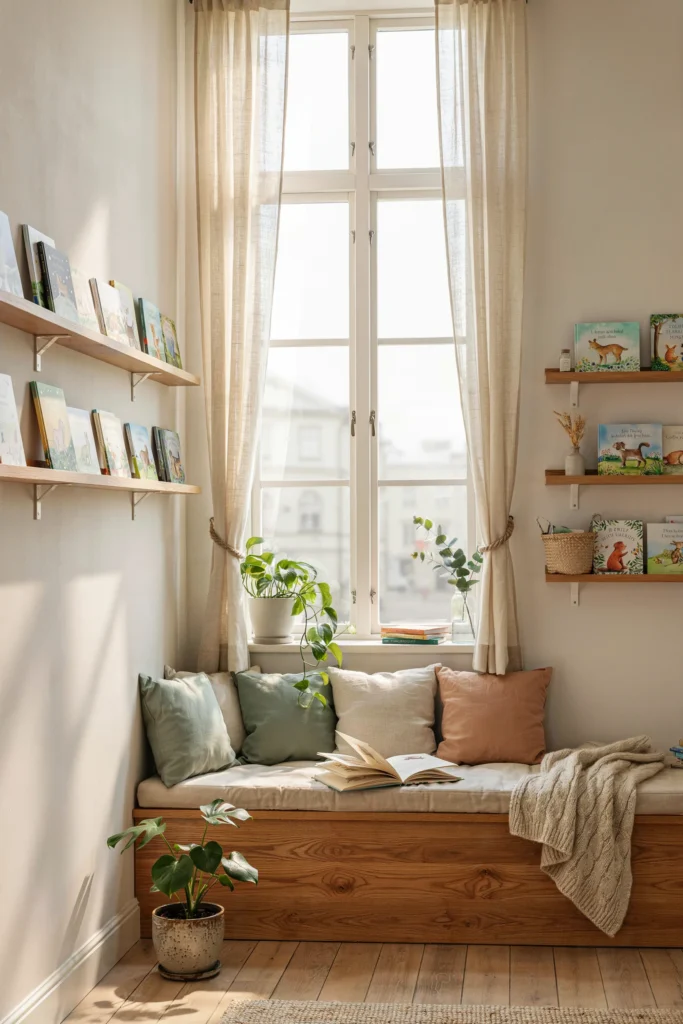
If your classroom has a window, you already have the best spot in the room. A built-in or freestanding window seat turns that dead space into the most requested reading spot in class.
Add a cushion in a warm neutral tone, like oatmeal, sage, or dusty rose, and pair it with two or three floating wood shelves on either side. Keep the shelves low enough that kids can reach their own books without asking for help. That independence matters more than it sounds.
A few things that make this work:
- Face-out book display on at least one shelf so covers are visible
- A small potted plant on the windowsill, something low-maintenance like a snake plant or aloe
- A woven basket underneath the seat for overflow books or cozy blankets
The light from the window does a lot of the styling work for you. Natural light makes wood tones look warmer and the whole corner feels less institutional and more like somewhere a kid actually wants to be.
2. Low Wooden Crate Library with Potted Ferns
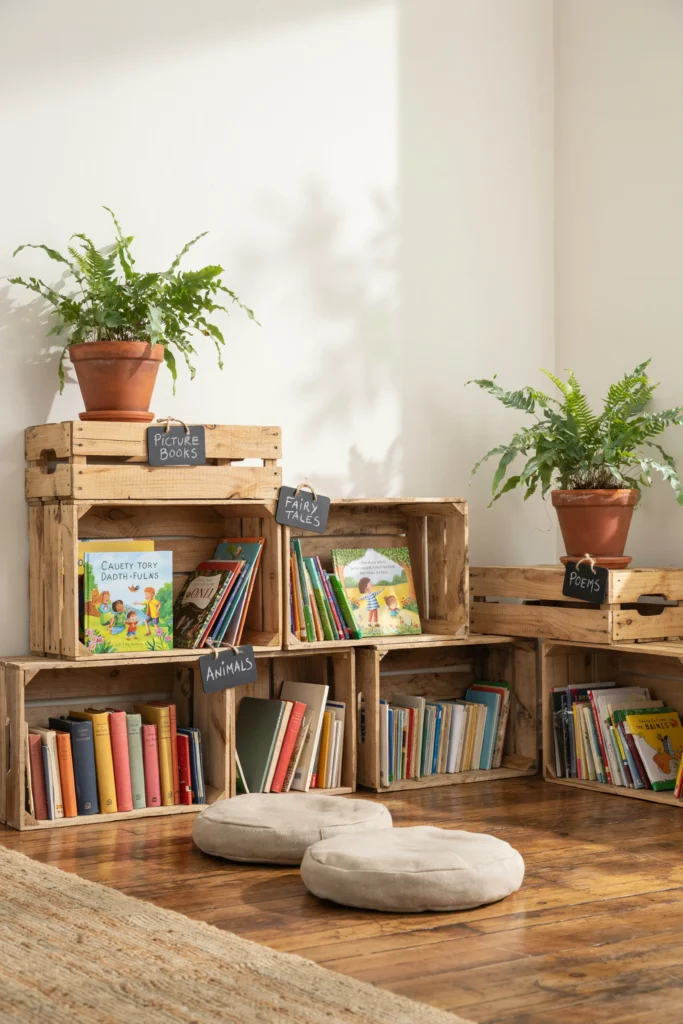
Wooden crates stacked or arranged at child height create an instant library feel without the cost of custom shelving. You can find them at craft stores, or use painted wine crates if you want more color variation.
The key is to keep them low, no higher than the shoulder height of your youngest student. When kids can see and reach everything, they browse more and read more.
Potted ferns work especially well here because they drape slightly and soften the edges of the crates. A few ideas for making this setup feel cohesive:
- Paint or stain the crates the same color for a cleaner look, or leave them raw for a more rustic finish
- Label each crate with a simple category using a chalkboard tag or a handwritten card
- Add a small floor cushion or two in front so kids have a spot to sit and flip through books before choosing
Boston ferns and maidenhair ferns both do well indoors, but if you want something that practically takes care of itself, a bird’s nest fern is your best bet.
3. Scandinavian Corner with a Pine Bookstand and Hanging Plant
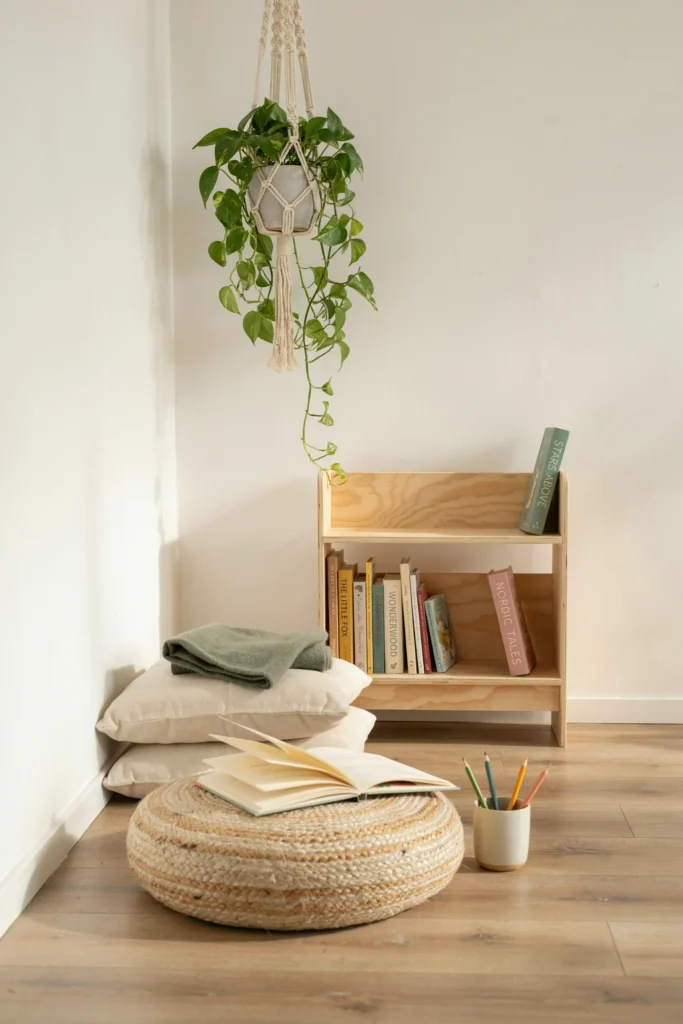
Scandinavian design works so well in classrooms because it is clean, calm, and easy to maintain. A pine bookstand, which is that simple A-frame style display you often see in Montessori rooms, holds books upright and face-out at a low angle. Kids can see the covers and pull books out without anything falling over.
Pair it with a hanging plant in a simple macramé or cotton rope hanger. A trailing pothos or a small string of pearls both look great here without needing much light or attention.
Keep the surrounding area simple:
- A light-colored jute rug
- A floor cushion or small foam seat in white or natural linen
- One or two framed botanical prints on the wall above
The restraint is the point. Too much going on around the bookstand and kids stop noticing it. Keep it minimal and the reading corner becomes a calm destination instead of just another busy corner of the room.
4. Tree-Stump Stools + Timber Bookshelves (Playful Natural Look)
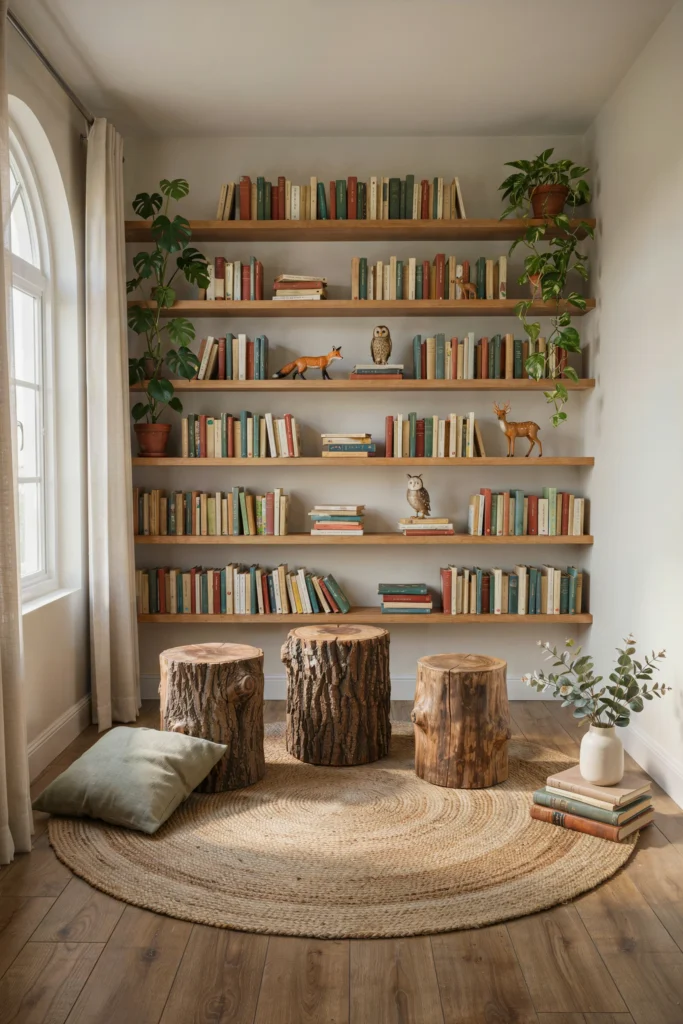
This one has a lot of energy, in the best way. Real or faux tree-stump stools paired with a raw-edge timber bookshelf creates a look that feels like reading in a forest clearing. Kids respond to it immediately.
You do not need actual stumps. There are affordable resin versions that look convincing, weigh almost nothing, and stack easily when you need the space. If you do want real wood, look for smooth-sanded cross-section slices at home decor stores or lumber yards.
For the bookshelf, a live-edge wood shelf or a simple plank-style unit in pine or walnut works well. Stack a few stumps at different heights and group them near the shelf so kids can grab a book and sit without moving across the room.
Add a few touches to complete the look:
- A branch hung horizontally on the wall above with lightweight books or nature-themed bookmarks hanging from twine
- A small terrarium on the bottom shelf with moss and pebbles
- A simple handmade sign that says something like “Reading Roots” or “Story Grove”
It is playful without being loud, and the natural materials keep it feeling grounded.
5. Modular Wooden Seating Circles with Succulent Centerpieces
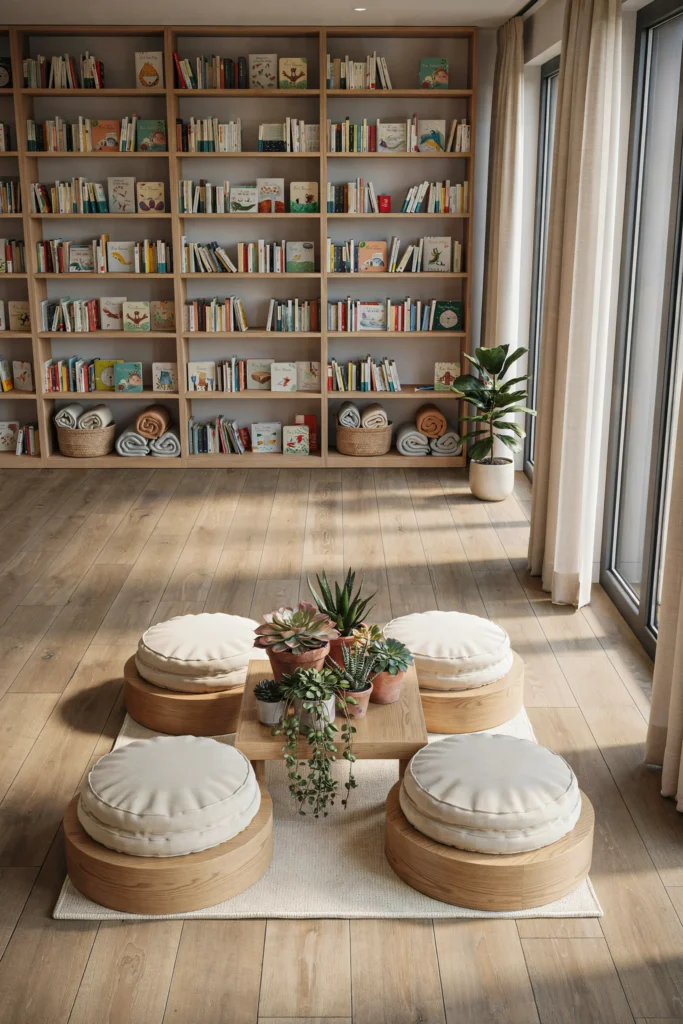
Modular seating in a reading area gives you flexibility. Wooden seating circles, sometimes called wobble seats or wooden floor discs, can be arranged in any configuration and moved easily when you need the space for something else.
Group five or six of them in a loose cluster with a small low table or flat tray in the center. A tray of succulents works perfectly here because they are small, drought-tolerant, and visually interesting without taking up much space. Echeveria, haworthia, and jade plants all work well in classroom light.
What makes this setup functional:
- Seating circles at the same height so no one is looking up or down
- A small rotating book display or magazine rack just outside the circle so books are within arm’s reach
- A soft rug underneath to define the space and make it feel separate from the rest of the classroom
The wooden discs do not need cushions, but if you want to add them, thin felt or foam pads in natural colors hold up well through daily use.
6. Rustic Ladder Book Display with Trailing Ivy

A leaning ladder shelf is one of the easiest and most affordable ways to add vertical storage and a natural element to a reading corner. A simple pine or bamboo ladder, either purchased or DIY, leans against the wall and holds books, small plants, and a few classroom supplies across its rungs.
Trailing ivy is the ideal plant for this setup. Let it grow from a pot on the top rung and allow it to drape down naturally over the books. English ivy and golden pothos both cascade well and look full quickly.
A few things that make the ladder corner feel intentional rather than thrown together:
- Keep books organized by spine color or wrap them in brown kraft paper for a cohesive, gallery-style look
- Add one small framed print or a simple chalkboard message on the rung at eye level
- Place a floor cushion directly beneath the ladder so the seating and display feel connected
This setup works in corners that are too narrow for traditional shelving. It takes up almost no floor space and still delivers a strong visual moment.
7. Montessori Low Shelves, Wooden Mats, and Small Potted Herbs

Montessori reading corners are built around accessibility and calm. Everything is at the child’s level, clearly organized, and easy to return after use. The environment does a lot of the teaching.
Low open shelves, no taller than 24 to 30 inches, are the foundation. Books are stored spine-up or face-out so kids can identify them independently. Each shelf holds only as many books as can be clearly seen, which means regular rotation rather than cramming.
Wooden floor mats, similar to thin cork or bamboo mats, define individual reading spaces on the floor. A child can roll one out, sit down with a book, and roll it back up when finished. That sense of ownership over the space makes a real difference in how kids engage.
For the plants, small potted herbs add a sensory element that fits the Montessori philosophy well. Basil, mint, or rosemary in small terracotta pots are all safe, smell wonderful, and give kids something to observe and care for over time.
Keep the color palette:
- Natural wood tones throughout
- Muted greens from the herbs
- White or cream walls so nothing competes with the materials themselves
8. Canopy Reading Tent with Wooden Frame and Macramé Plant Hangers

A canopy tent transforms a corner into a destination. Kids who might otherwise wander walk into a tent and stay. The enclosure creates a sense of calm that open spaces sometimes do not.
A wooden frame tent, either DIY with PVC-free dowels or a store-bought version in natural wood, gives you something to hang things from. Drape a lightweight linen or cotton canopy over the frame and keep the front open so kids can see in and feel invited.
Hang two or three macramé plant hangers from the top frame at different heights. Small trailing plants like string of hearts or compact ferns work well inside a tent because they do not need direct sun. The hanging plants bring the canopy area to life without making it feel cluttered.
Inside the tent:
- A few floor cushions or a small bean bag in a neutral fabric
- A low wooden tray with three or four book choices
- A small battery-powered LED light so it feels like a special, slightly secret space
Keep the outside of the tent area simple so the tent itself stays the focal point.
9. Mini Library Cart on Wooden Casters with Terracotta Plants

A rolling library cart in wood or wood-finish adds mobility that fixed shelving cannot. You can wheel it to a different part of the room for read-aloud time, tuck it away during other activities, or pull it to wherever the reading corner needs to be that week.
Wooden carts with three shelves work well here. Stock the top shelf with the current book selection. Use the middle shelf for return books or works in progress. The bottom shelf can hold a few small terracotta pots with low-maintenance plants like cacti, small aloe, or air plants in simple terracotta or wood holders.
Terracotta pairs naturally with wood and gives the whole cart a warm, earthy look. It does not take much. Three or four small pots with variation in height and texture is enough.
A few details worth adding:
- A small chalkboard or label slot on each shelf for category names
- A book return bin attached to the side with a simple clip or hook
- One trailing plant that drapes slightly over the top shelf edge for visual interest
The cart becomes a visual anchor for the reading area even when it is not perfectly positioned against a wall.
10. Built-In Bench with Under-Seat Storage and Tall Planters

If you have the wall space and budget for a more permanent solution, a built-in bench is the most functional reading corner you can create. It solves the seating problem, the storage problem, and the visual anchor problem in one structure.
The bench sits against the wall, typically 16 to 18 inches deep and 14 to 16 inches off the floor. The seat lifts to reveal storage underneath, which is perfect for extra books, cushions, or seasonal materials. A simple pine or plywood build painted white or left in a natural finish both look great in a classroom.
Flank the bench with two tall planters in ceramic or terracotta. Plants that work well at height:
- Fiddle-leaf fig for a bold, leafy presence
- Tall snake plant for something low-effort
- Bamboo in a narrow planter for a lighter, airier look
Add cushions on the bench seat and a backrest cushion against the wall. Keep the fabric simple and washable. A few throw pillows in muted earth tones pull the natural palette together without adding visual noise.
Above the bench, a run of floating shelves with books stored face-out completes the setup.
11. Nature Study Corner: Wood Display Table + Pressed-Leaf Wall

This one leans into curiosity. A nature study corner is part reading area, part science station, and kids love it because it feels like a real place where real investigation happens.
The centerpiece is a low wooden display table, something solid and simple with a flat surface. Arrange natural objects on it: pinecones, smooth river stones, pressed leaves under glass, small seed pods, bark samples, or feathers. Label each item with a handwritten tag on kraft paper. The display changes with the seasons, which keeps it fresh.
Behind the table, a pressed-leaf wall panel made on a sheet of light-colored craft paper or mounted between two thin wood frames brings the nature theme vertical. Pressed leaves in shades of green, gold, and rust look striking arranged asymmetrically and adhered with small dots of glue.
Pair the display table with two or three low stools and a small shelf of related books nearby, field guides, nature poetry, illustrated books about plants and animals. The reading and the observing connect naturally.
Add a living plant to one corner of the table, a small moss terrarium or a succulent in a clay pot, to bring the display to life.
Styling and Color Palette
Every idea in this list works best when the colors stay consistent. The natural materials do most of the work, but a clear palette keeps the whole space feeling cohesive rather than busy.
Wood tones: Mix light pine with medium oak or walnut. Avoid too many dark finishes in a small corner because they make the space feel heavy. Two wood tones maximum.
Greens: Stick to muted, natural greens rather than bright or yellow-green foliage. Sage, olive, and deep forest green all work well alongside wood without competing with it.
Neutral base: Walls, rugs, and cushion fabrics in white, cream, oatmeal, or warm beige give wood and greenery room to breathe. Avoid stark cool whites, which flatten the warmth of natural materials.
Accent colors: One or two accent tones go a long way. Terracotta, rust, dusty rose, or soft navy all pair well with this palette. Keep accents in small doses, a pillow, a pot, a label holder.
Texture: This is what separates a reading corner that looks styled from one that looks designed. Layer jute, linen, woven cotton, and unfinished wood alongside smooth ceramic and matte terracotta. The variety of texture is what makes the space feel warm and intentional.
Conclusion
A good classroom reading corner does not need to cost a lot or take weeks to build. Most of these ideas come together with a few pieces of furniture, some inexpensive plants, and a little intention about what goes where and why.
The natural materials, wood, plants, linen, terracotta, do something that plastic and laminate simply cannot. They make the space feel calm and human. Kids read longer in spaces that feel like they were made with care. That is really what all of this comes down to. Build a corner worth sitting in, and the reading takes care of itself.