

In This Article Show
I started making my own dog toys mostly to save money, but it turned out my dog genuinely preferred a lot of the homemade versions over the store bought ones sitting in his toy bin. Most of these use things you probably already have around the house, old tshirts, mismatched socks, empty boxes, so it is one of the more budget friendly projects you can take on for a bored pup. Some of these are quick five minute builds, others take a bit more time if you are sewing or crocheting something more durable. I tried to include a real mix here, puzzle style toys for mental stimulation, chew toys for the more aggressive chewers, and a couple of storage ideas so the toy pile does not take over the living room. Here are fifteen DIY dog toys that kept my own dog entertained and out of trouble.

1. Fleece Braid Tug Toy

Cutting three long strips of fleece fabric and braiding them tightly makes a sturdy tug toy that holds up surprisingly well against regular chewing and pulling. I like using two or three different colors in the braid since it makes the finished toy look more intentional than a single plain strip would. A tip I picked up is knotting both ends securely and trimming any loose threads, fraying edges are the first thing that comes apart with heavy use.
2. No Sew Tshirt Rope Toy
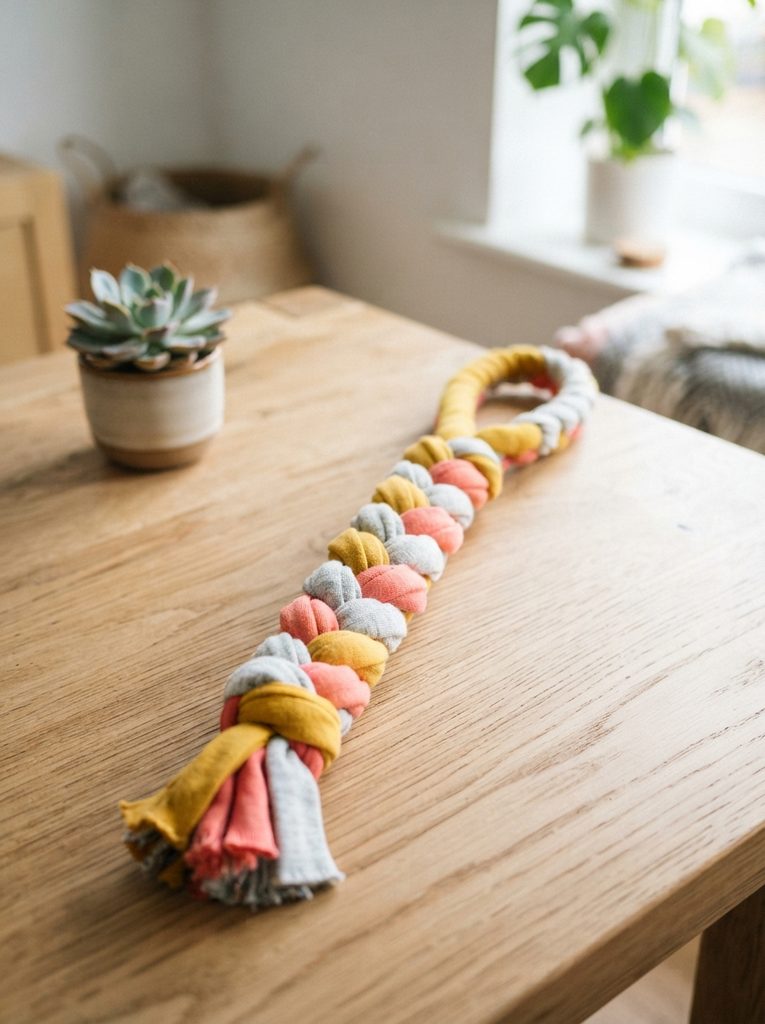
An old tshirt cut into long strips and braided together turns something headed for the donation pile into a genuinely durable chew and tug toy. Honestly this is the easiest project on the whole list since it needs no sewing and no special tools beyond a pair of scissors. In my experience using a heavier cotton tshirt rather than a thin, worn out one makes the finished rope last much longer under regular use.
3. Cardboard Box Puzzle Feeder
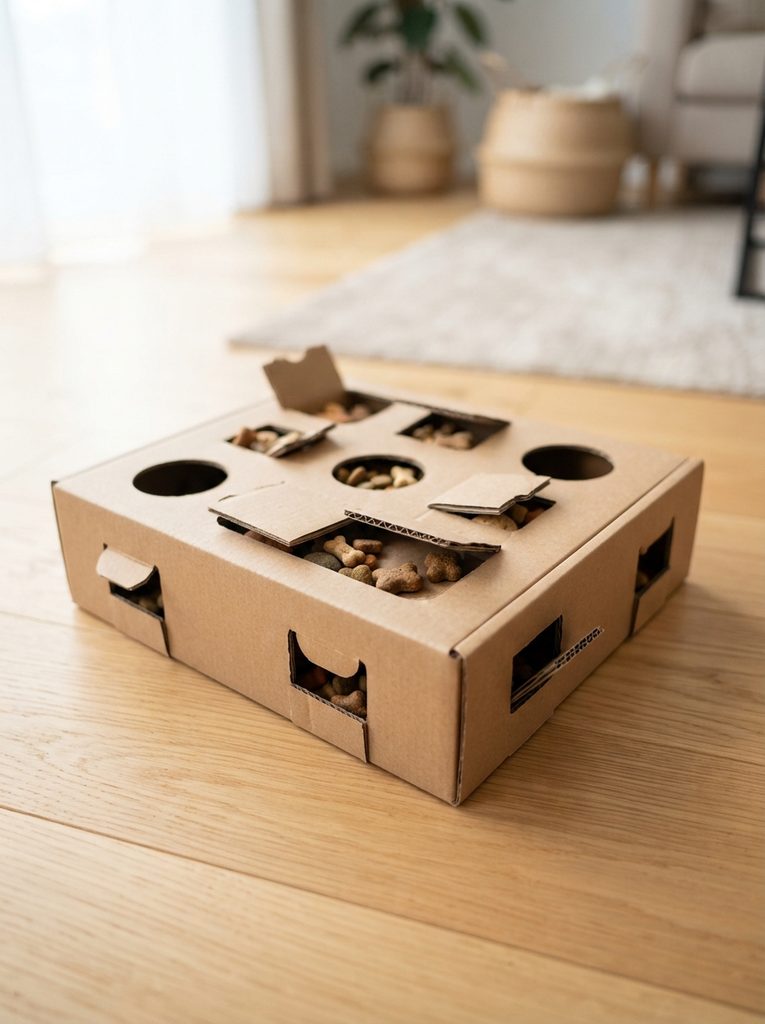
Cutting a few small flaps into a sturdy cardboard box and hiding treats inside turns snack time into a genuine mental workout for a bored dog. A tip here is starting with larger flap openings for a new puzzle box, then making the openings smaller over time as your dog gets better at figuring it out. This is one of the best options for a rainy day when a walk is not really possible but your dog still needs something to do.
4. Sock and Tennis Ball Combo

Tying a tennis ball inside a spare sock gives the ball a bit more grip and bounce unpredictability, which honestly makes fetch more interesting for a lot of dogs. I genuinely think this works best with a longer crew sock rather than a short ankle sock since it gives you more fabric to knot securely around the ball. A practical tip, check the knot regularly since repeated fetch throws can gradually work it loose.
5. Fleece Squeaker Pocket Toy

Sewing a simple fleece pouch and tucking a replacement squeaker inside before closing it up gives you a soft toy your dog can carry around without the stuffing mess of a store bought plush. A tip I picked up is double stitching the seams, especially around the squeaker pocket, since that is usually the first spot to wear through with an enthusiastic chewer. This is a great project if you already have basic sewing skills and some spare fleece scraps.
6. Frozen Treat Puzzle Toy

Filling a hollow rubber toy with a mix of wet food and treats, then freezing it, turns a regular chew toy into a longer lasting activity that keeps a dog busy for a solid stretch of time. In my experience layering different textures inside, like a bit of peanut butter followed by small treats, keeps the toy interesting all the way through instead of just at the start. This is especially useful on hot days since the cold treat doubles as a way to cool down.
7. Denim Chew Bone
Old denim from jeans that no longer fit is genuinely one of the toughest fabrics you can use for a homemade chew toy, standing up well to dogs who go through soft toys quickly. I like sewing the bone shape with a double layer of denim and stuffing it firmly rather than loosely, a firmer stuffed toy tends to hold its shape longer. A tip here is reinforcing the seams with a zigzag stitch instead of a straight stitch for extra durability.
8. Rope Ball on a String
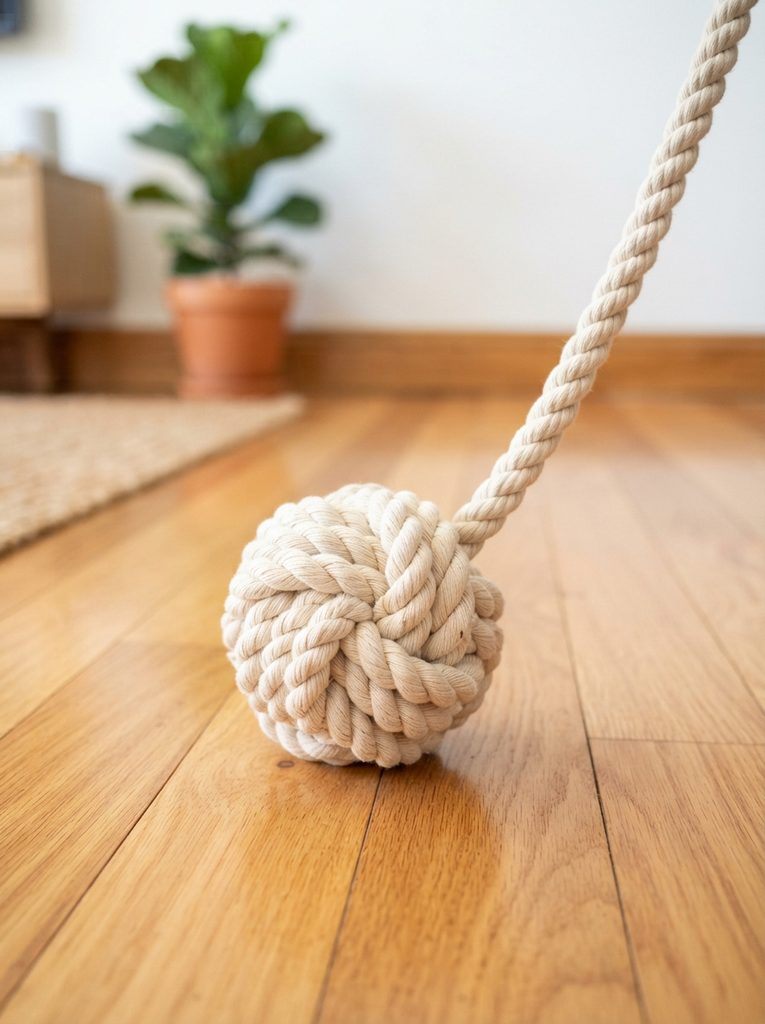
Braiding cotton rope into a small ball shape and attaching it to a longer length of rope gives you a toy that works well for both tug and fetch depending on the mood. Honestly this is one of the more satisfying projects to make since watching the ball shape come together from flat rope strands feels like a real craft accomplishment. A practical tip, singe the cut ends of synthetic rope lightly with a lighter to prevent fraying, natural cotton rope just needs a simple knot instead.
9. Crocheted Fabric Ball
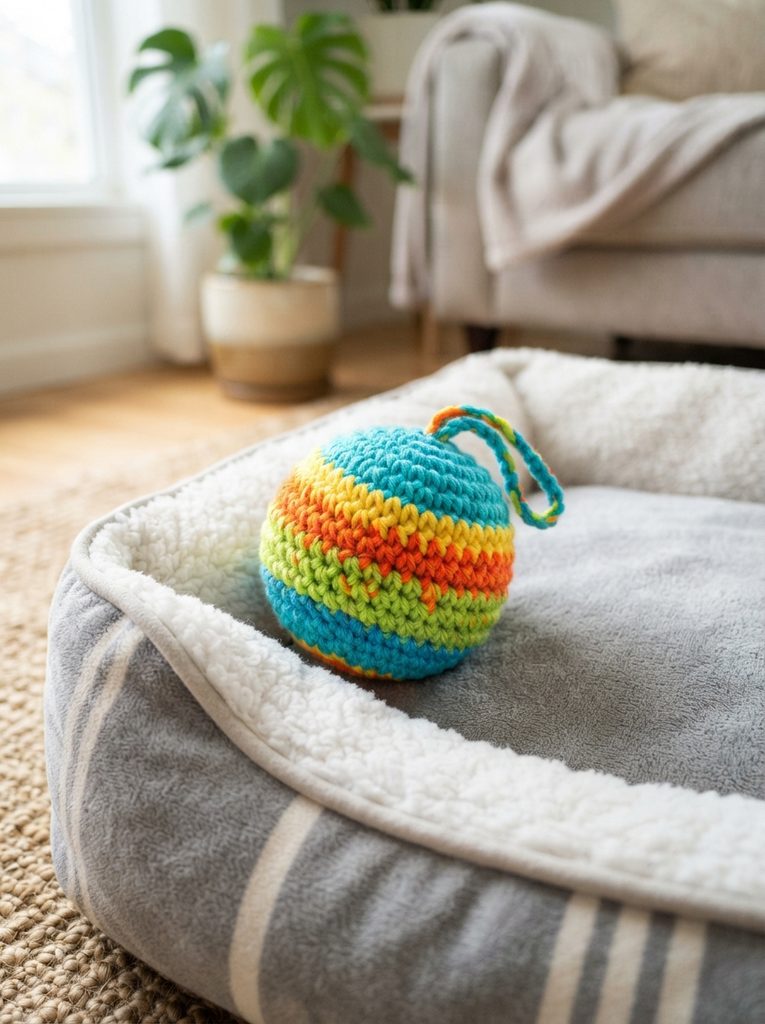
A simple crocheted ball worked in a sturdy cotton yarn gives dogs who prefer softer toys something to carry around and fetch without the squeak or stuffing of a typical plush toy. I genuinely think this project works best with a tighter stitch than you might use for other crochet projects, since a looser weave comes apart faster under a dog’s teeth. This is a nice option if you already crochet and want a quick, useful project between larger ones.
10. Recycled Wine Cork Ball Toy
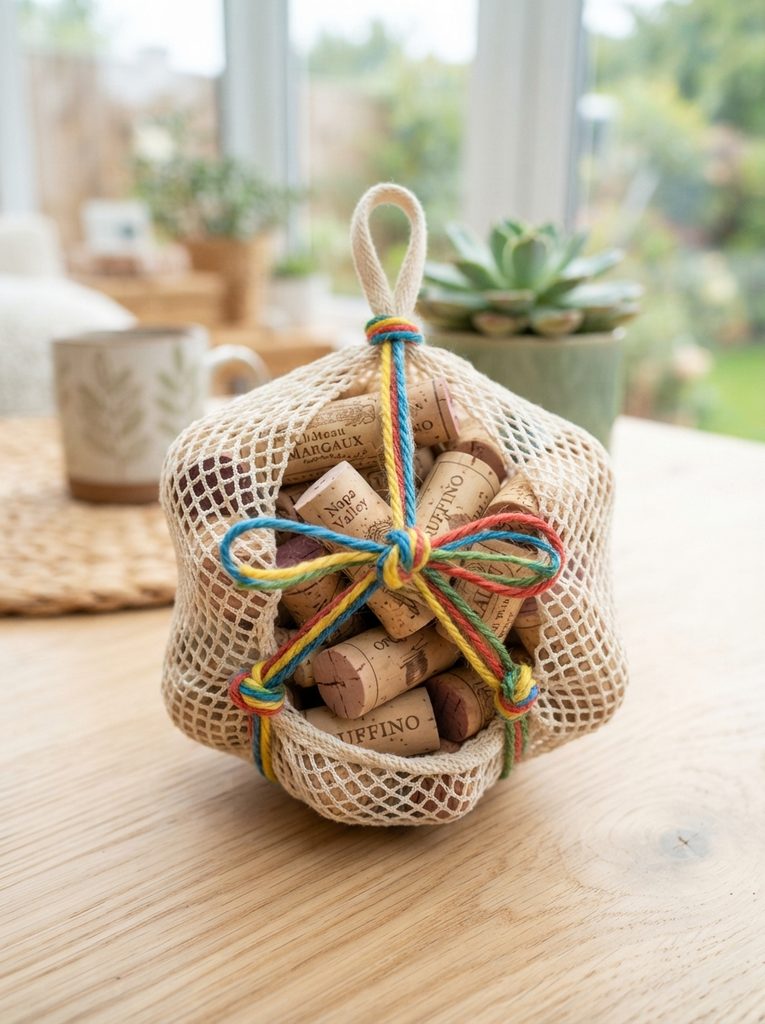
Stuffing a small mesh bag with saved wine corks and tying it off creates a lightweight, bouncy toy that is honestly a fun way to reuse something that usually just gets thrown away. A tip here is checking the bag regularly for wear, especially with dogs who like to chew through the mesh rather than just bat the toy around. This works best as a supervised play toy rather than something left out unattended since cork pieces are not meant to be eaten.
11. Fleece and Rope Boredom Buster

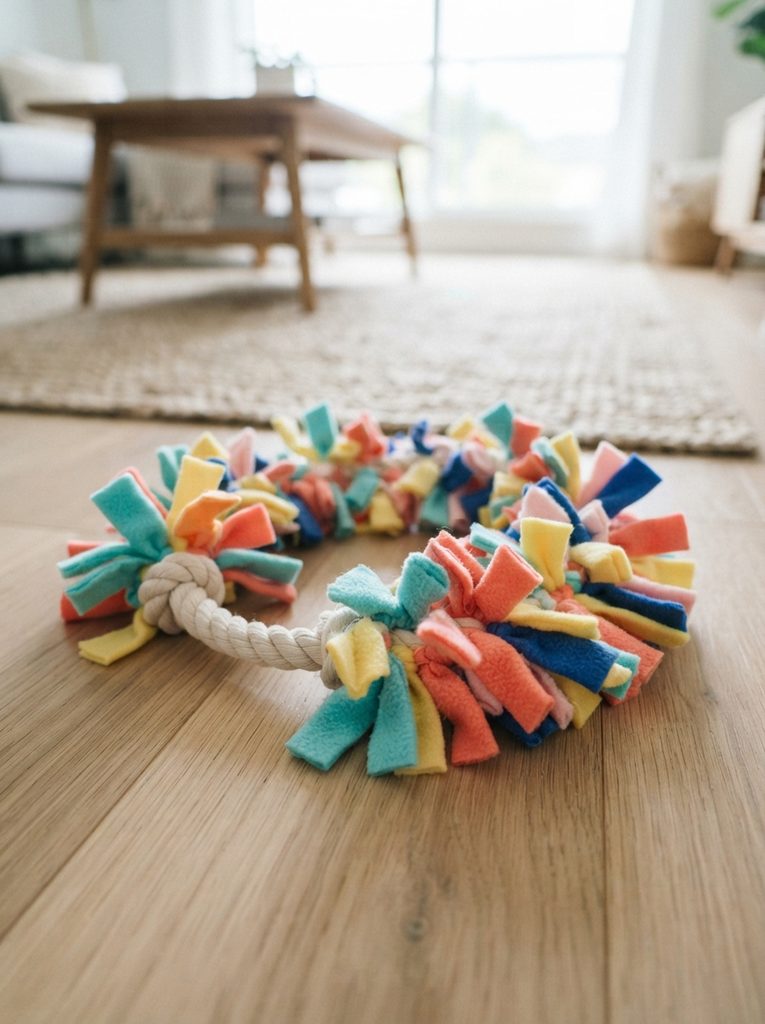
Tying short strips of fleece along a length of rope creates a fringed, textured toy that gives dogs something new to investigate and pull apart during solo play. I like leaving the fleece strips slightly uneven in length since it makes the whole toy more interesting to explore piece by piece. A practical tip, this one works best under supervision at first until you see how your specific dog interacts with the loose fringe pieces.
12. Easy Animal Shelter Donation Toy

Making a batch of the simple no sew fleece or tshirt toys from earlier on this list is a genuinely nice project if you want to donate something useful to a local animal shelter. Honestly shelters often go through toys quickly and appreciate simple, durable options over anything with small parts that could be a choking hazard. A tip here is calling the shelter first to ask what kind of toys they actually need, some shelters have specific guidelines about materials.
13. Wooden Crate Toy Storage

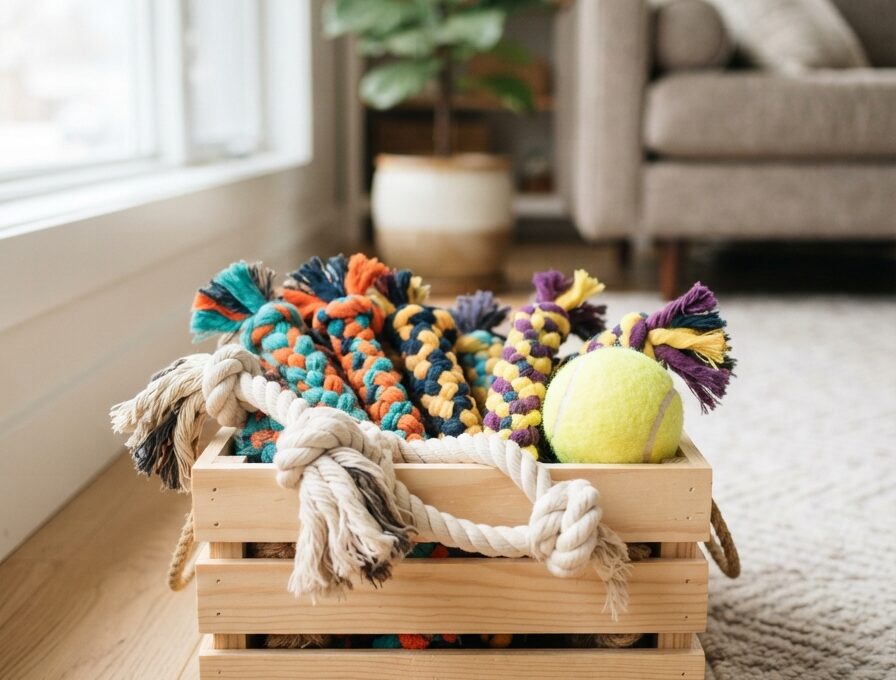
A simple wooden crate gives all your homemade and store bought toys one designated spot instead of scattering across the living room floor throughout the day. I genuinely think an open top crate works better than a bin with a lid since most dogs quickly learn to dig through an open crate for their favorite toy. This also makes cleanup easier since tidying the room just means tossing loose toys back into one spot.
14. Fabric Bin Toy Organizer
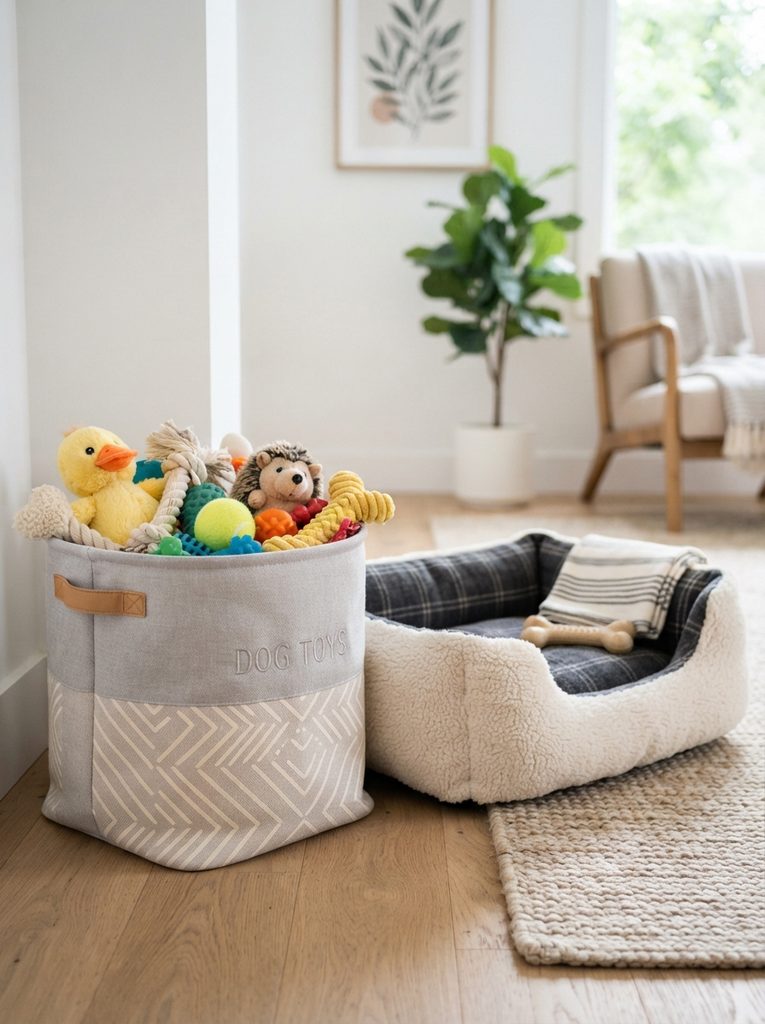
A soft collapsible fabric bin is a lighter, more flexible storage option compared to a rigid wooden crate, and it tucks away easily if you need to fold it flat when not in use. A tip I picked up is choosing a bin in a color or pattern that matches your existing decor, it makes toy storage feel less like clutter and more like an intentional part of the room. This works especially well for smaller apartments where a bulky wooden crate might not fit as easily.
15. Repurposed Cardboard Box Toy Bin
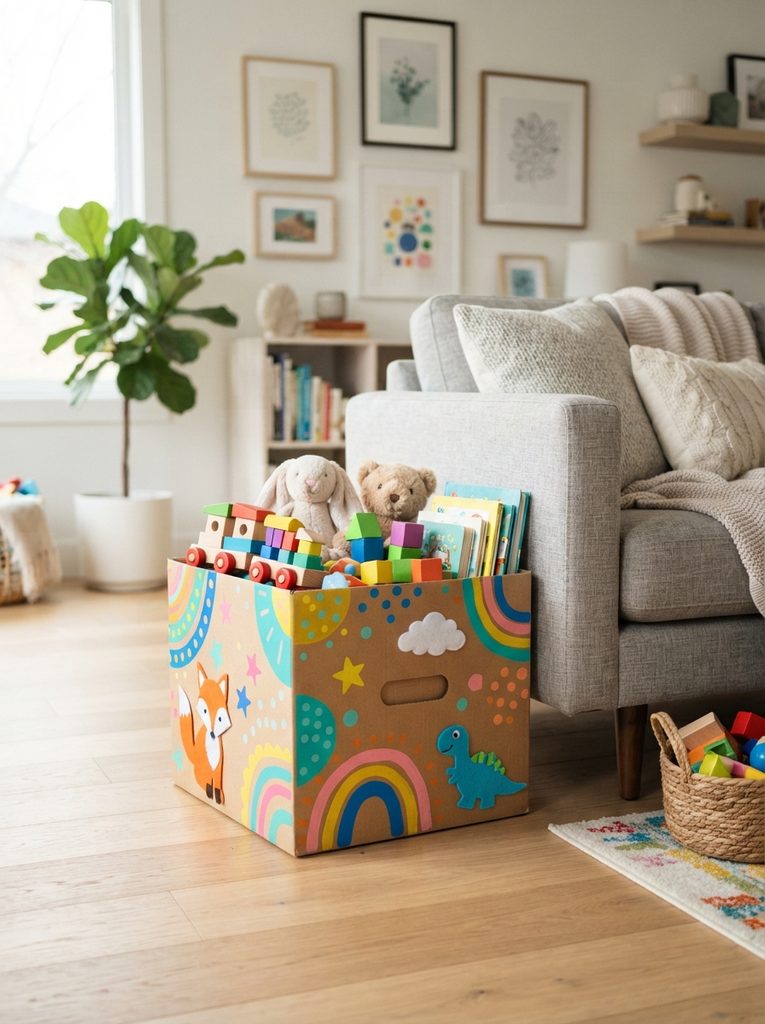
Covering a sturdy cardboard box with fabric or contact paper turns something you would normally recycle into a completely free toy storage solution that still looks decent in a living room. Honestly this is a great starter option if you are not sure yet how much toy storage you actually need, since it costs nothing to try and is easy to replace once you settle on a size. A practical tip, reinforce the bottom corners with packing tape before covering the box, it holds up much better under the daily weight of toys being tossed in and out.
Final Thoughts on DIY Dog Toys
Looking back at all fifteen of these, the biggest thing I learned is that durability really depends on knowing your own dog’s chewing style rather than any single fabric or method being universally best. A gentle chewer does fine with a simple fleece braid, while a more aggressive chewer needs something like the denim bone or a well reinforced fleece pouch to actually hold up. Whichever toys you end up making, having a proper storage spot from the crate or bin ideas keeps the whole collection from taking over the living room floor.