15 Modern Mudroom Ideas That Make Your Entryway Look Instantly More Expensive
Your entryway sets the tone for your entire home. A chaotic mudroom with shoes piled up and bags thrown everywhere tells a story you probably don’t want to tell. But with a few smart changes, that same space can look pulled together, functional, and honestly, like it belongs in a design magazine.
Here are 15 modern mudroom ideas that actually work.
1. Install Built-In Cubbies With Closed Storage
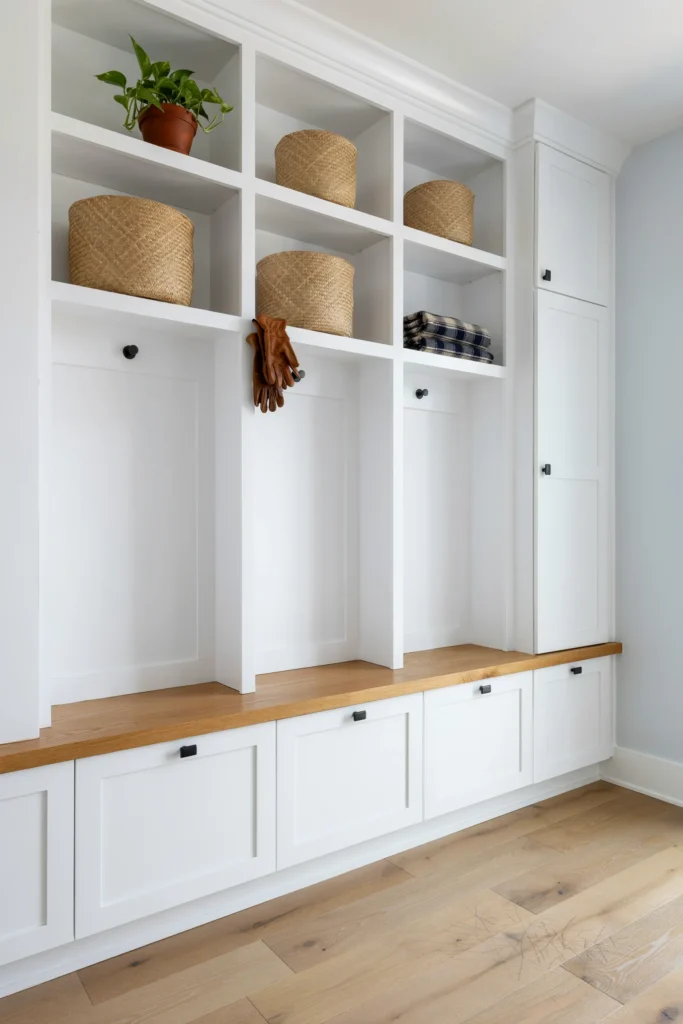
Open shelving looks great in photos but collects clutter fast. Built-in cubbies that combine open hooks with closed cabinet doors give you the best of both worlds.
I did this in my own mudroom a couple of years ago. The bottom cabinets hide the stuff I don’t want visible, like sports gear, dog leashes, and random grocery bags. The open cubbies at eye level hold only what I want people to see, a few baskets and a plant.
What to look for:
- Floor-to-ceiling cabinetry to maximize every inch
- A mix of drawers, doors, and open shelves
- A built-in bench at seat height (about 18 inches)
The result looks custom even if you use IKEA Pax wardrobes and add your own trim and hardware.
2. Choose a Moody, Dark Paint Color
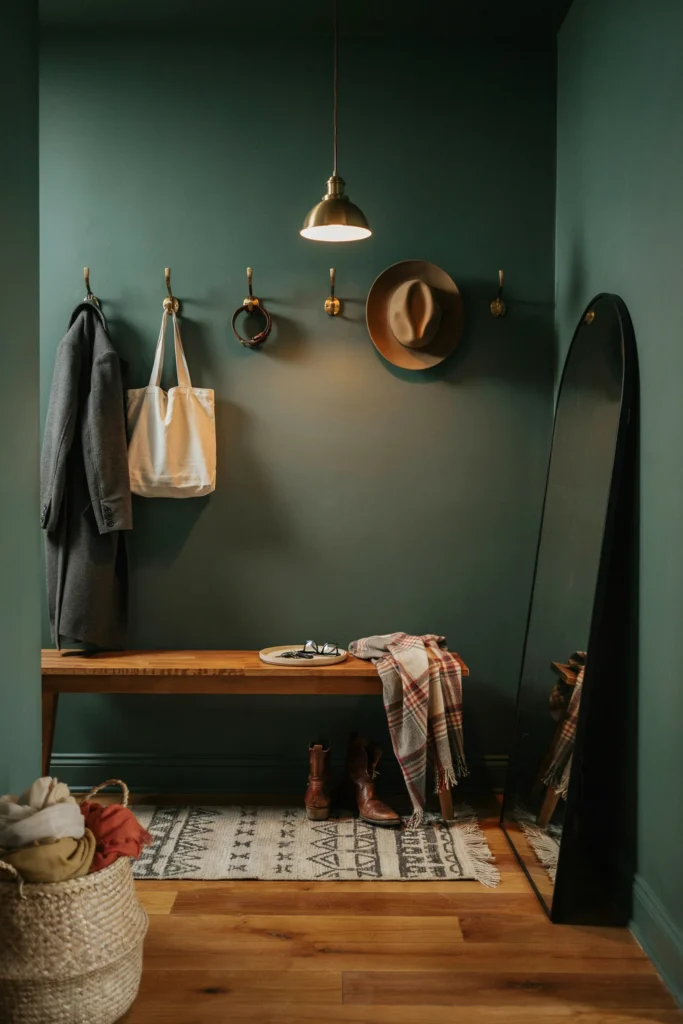
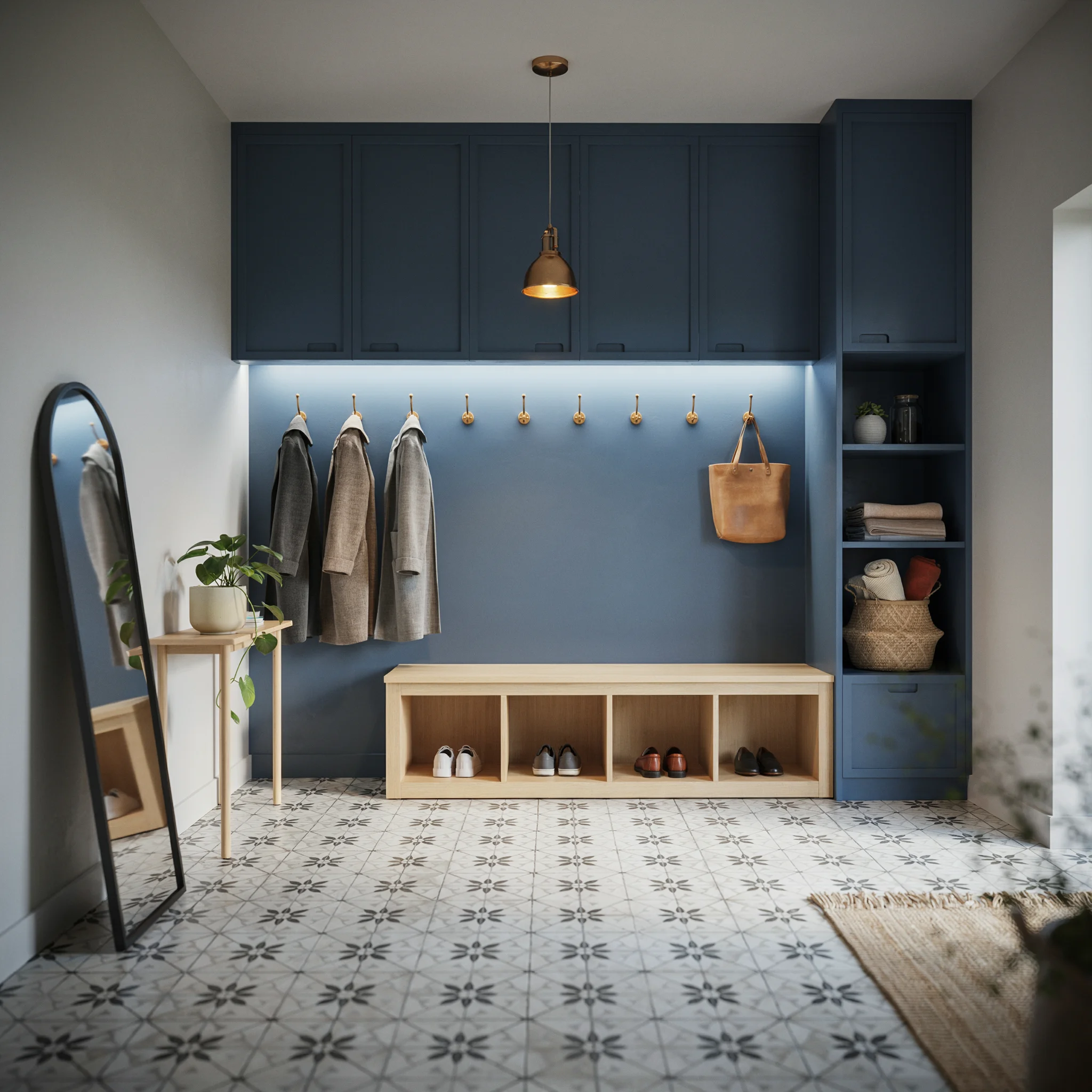
White and gray mudrooms are safe. But nothing makes a small entryway look more intentional and expensive than a deep, moody wall color.
Think navy, charcoal, forest green, or even a rich terracotta. Dark colors hide scuffs and dirt, which is a practical bonus in a mudroom. They also make the space feel like a deliberate design choice rather than an afterthought.
Pair the dark walls with warm brass or matte black hardware and you have a space that looks like it cost three times what it actually did.
3. Add Shiplap or Board and Batten Walls
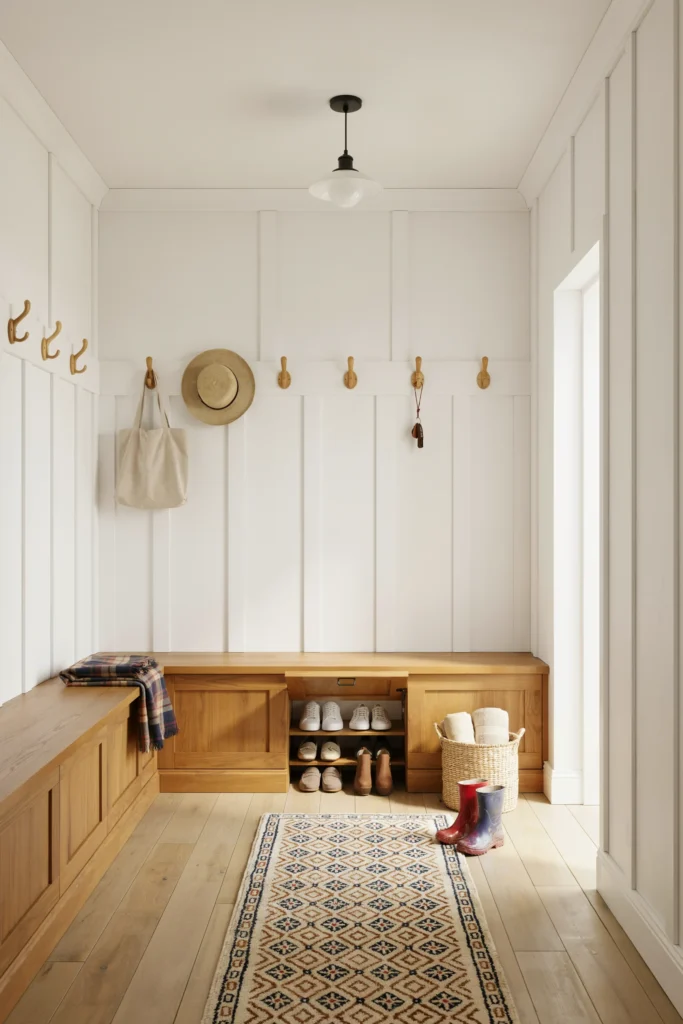
Texture on the walls does something that paint alone cannot. It adds depth and makes a room feel finished and considered.
Board and batten is one of the easiest ways to achieve this. You can DIY it over a weekend with basic trim boards, wood glue, and a nail gun. Paint it all one color, walls and trim together, for a seamless look that reads as high-end.
Shiplap works equally well and gives a slightly more relaxed, cottage-style feel if that fits your home.
4. Use a Durable, Patterned Tile Floor
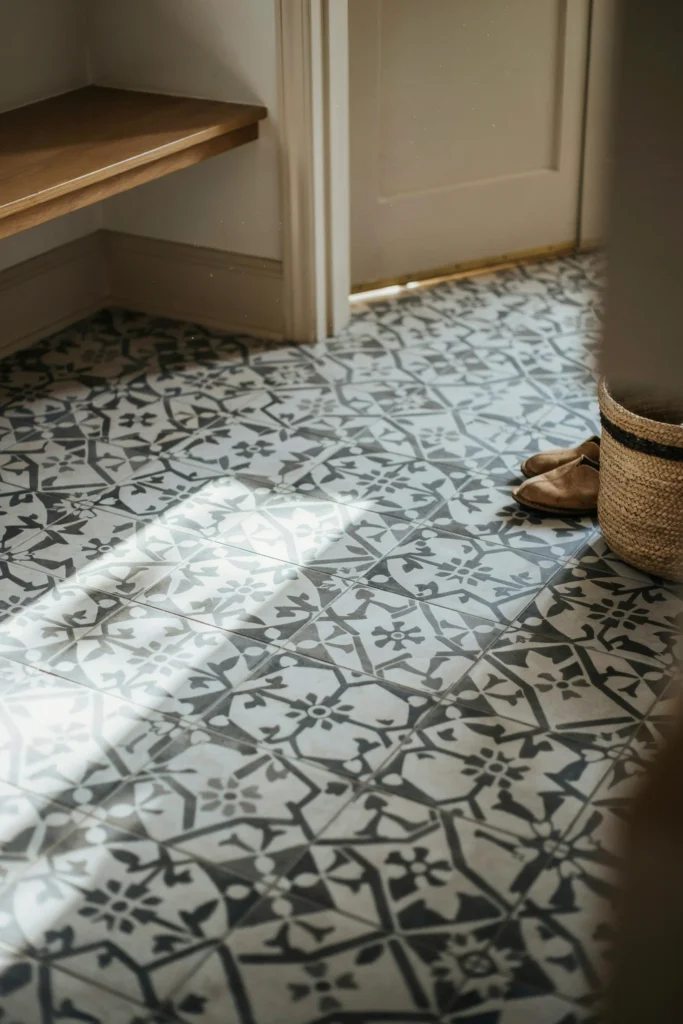
The floor takes the most abuse in a mudroom. Plain tile works fine, but a patterned tile turns it into a focal point.
Encaustic-style cement tiles, black and white checkerboard, or a subtle geometric pattern all photograph beautifully and hold up to heavy foot traffic. Matte finishes hide dirt better than glossy ones, which matters in a mudroom.
Pro tip: Run the tile slightly past the mudroom threshold into the hallway to make the whole entry feel more connected and spacious.
See Also: 14 Entryway Decorating Ideas That Make a Stunning First Impression
5. Bring In a Wooden Bench With Shoe Storage Underneath
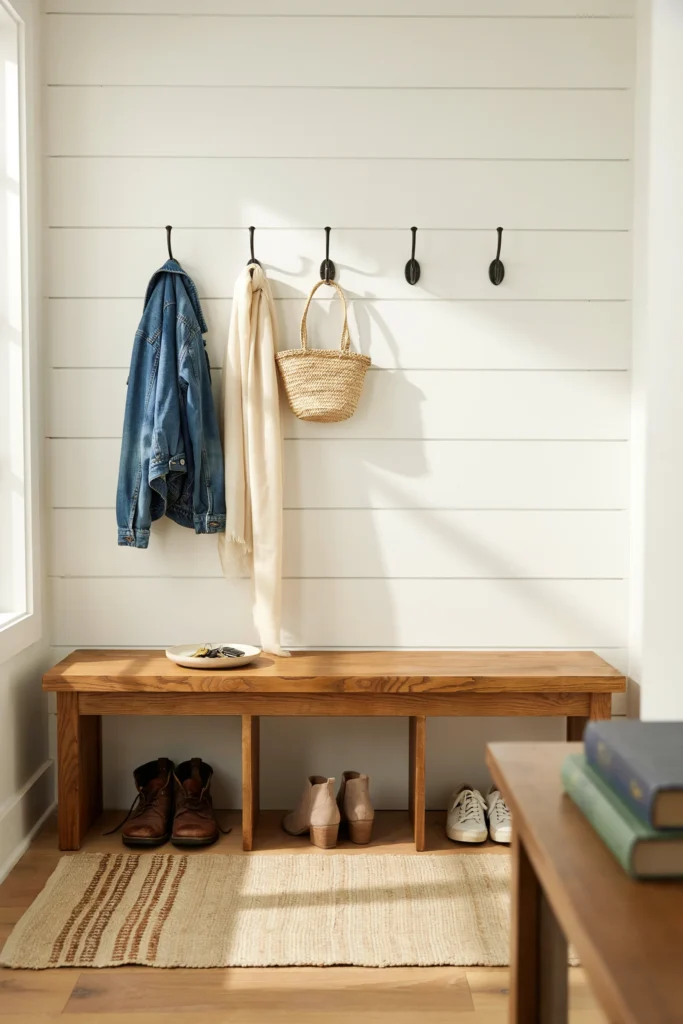
A floating bench looks sleek but offers zero storage. A wooden bench with cubbies, pull-out drawers, or a lift-up seat underneath is far more practical.
I replaced a simple bench with one that has open cubbies below, and it changed how the whole family uses the space. Shoes go in the cubbies. Kids stop throwing them in the middle of the floor. It took about three days for the habit to stick.
Go for solid wood or wood-look finishes over painted MDF in high-traffic spots since it holds up much better over time.
6. Mount a Full-Length Mirror
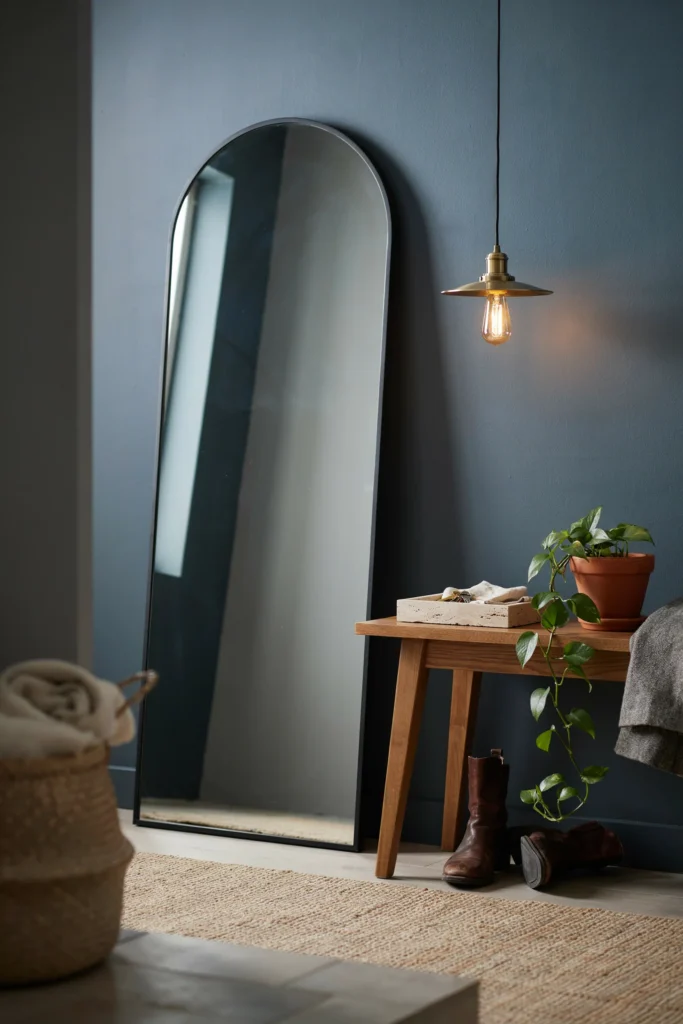
A full-length mirror in the mudroom is one of those ideas that sounds simple but makes a massive difference. It bounces light around the space, makes it feel larger, and is genuinely useful right before you walk out the door.
Lean a large mirror against the wall for an easy, no-installation option. Or mount a framed one for something more permanent and polished. An arched mirror with a thin metal frame looks especially good against a dark painted wall.
7. Use Wallpaper on One Accent Wall
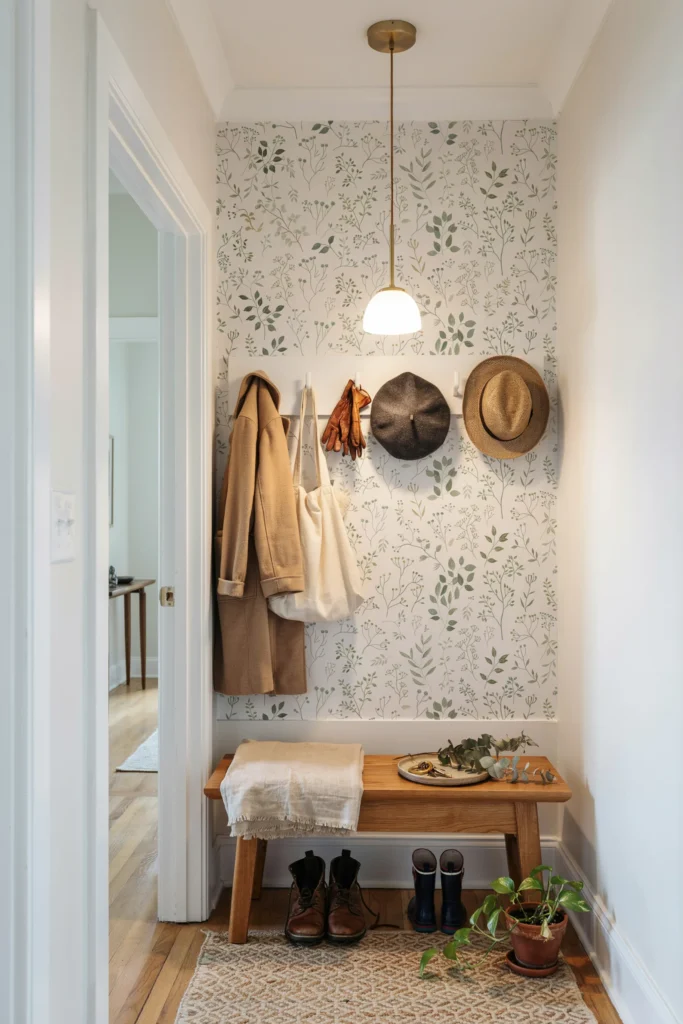
Wallpaper in a mudroom sounds risky. It is not. Because mudrooms are small, you use less of it, which keeps the cost manageable. And it creates an instant focal point that makes the whole space feel designed.
Go for a subtle pattern if you want something timeless. Linen-texture wallpaper, a small botanical print, or a simple geometric all work well. Just avoid anything too trendy if you plan to stay in the home for a while.
8. Hang Hooks at the Right Height (and Enough of Them)
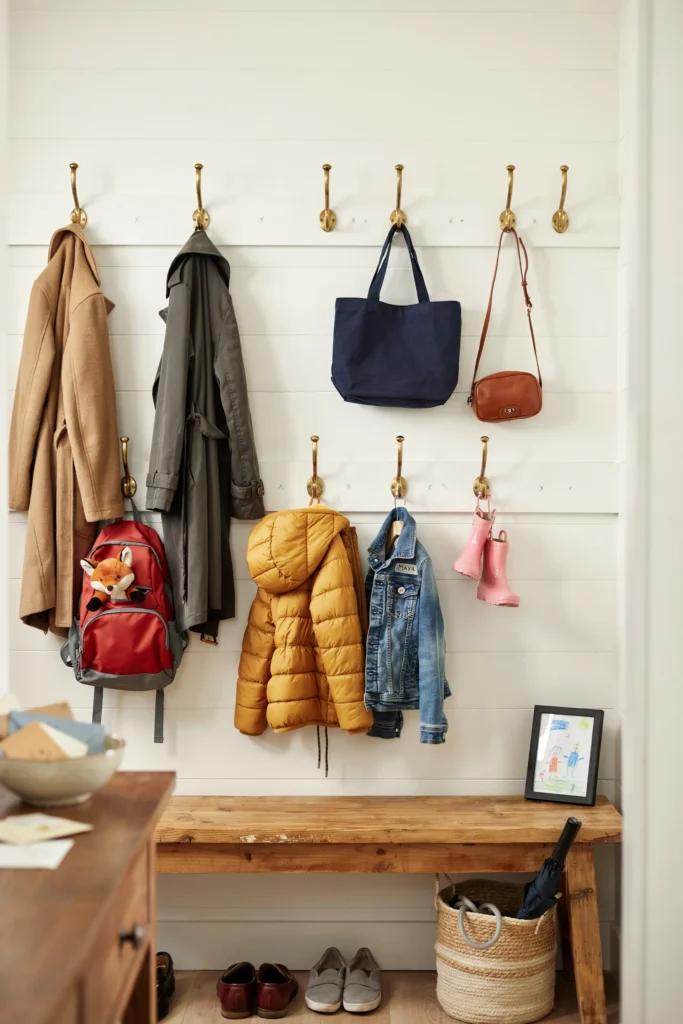
This sounds obvious, but so many mudrooms get it wrong. Hooks hung too high are awkward for kids. Too few hooks mean the overflow ends up on the floor.
The sweet spot for adult hooks is around 60 to 66 inches from the floor. For kids, add a lower row at 40 to 48 inches. Space them at least six to eight inches apart so coats don’t overlap.
What to hang:
- Coats and jackets
- Bags and backpacks
- Dog leashes
- Hats and scarves in a small basket on the hook
Choose hooks with some weight to them. Thin wire hooks look cheap and bend under the weight of heavy winter coats.
9. Add Overhead Lighting That Actually Works
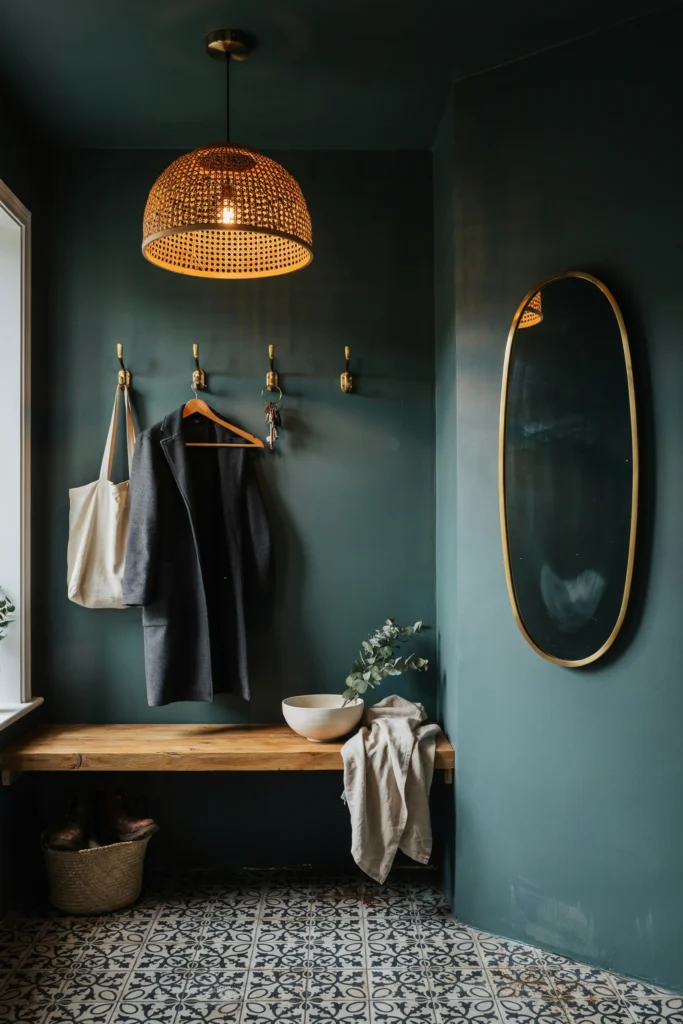
Most mudrooms are lit by a single overhead fixture that does almost nothing. Upgrading your lighting is one of the highest-return changes you can make in this space.
A statement pendant or a semi-flush fixture with warm light makes the entry feel welcoming rather than institutional. If your ceiling is low, a flush mount with an interesting shape or texture still does the job without eating up headroom.
Add a small plug-in sconce on each side of the mirror if you want to go a step further. It looks intentional and provides flattering light.
10. Create a Dedicated Drop Zone With a Small Console Table
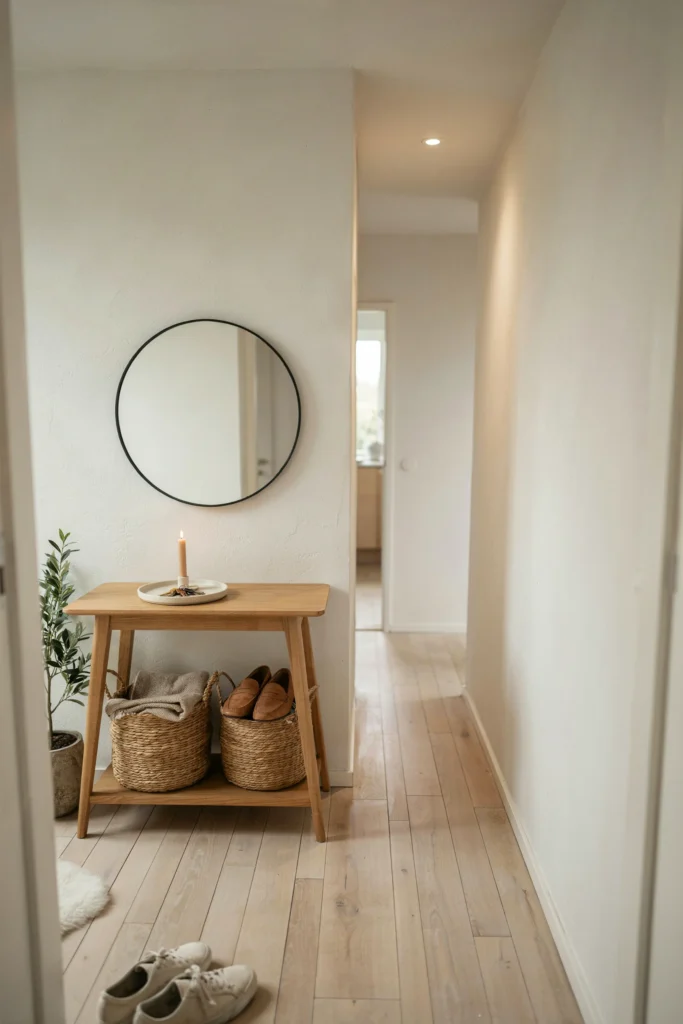
Not every mudroom has room for full built-ins. A console table with a drawer and a few baskets on the shelf below can do a lot of the same work in a fraction of the space.
Use the tabletop for a small tray that catches keys, wallets, and sunglasses. The drawer handles mail and other small items. The baskets below hold scarves, gloves, or pet supplies.
Keep it edited. One small plant, one tray, one or two decorative objects. Anything more and it starts to look cluttered.
11. Install Open Floating Shelves for Baskets
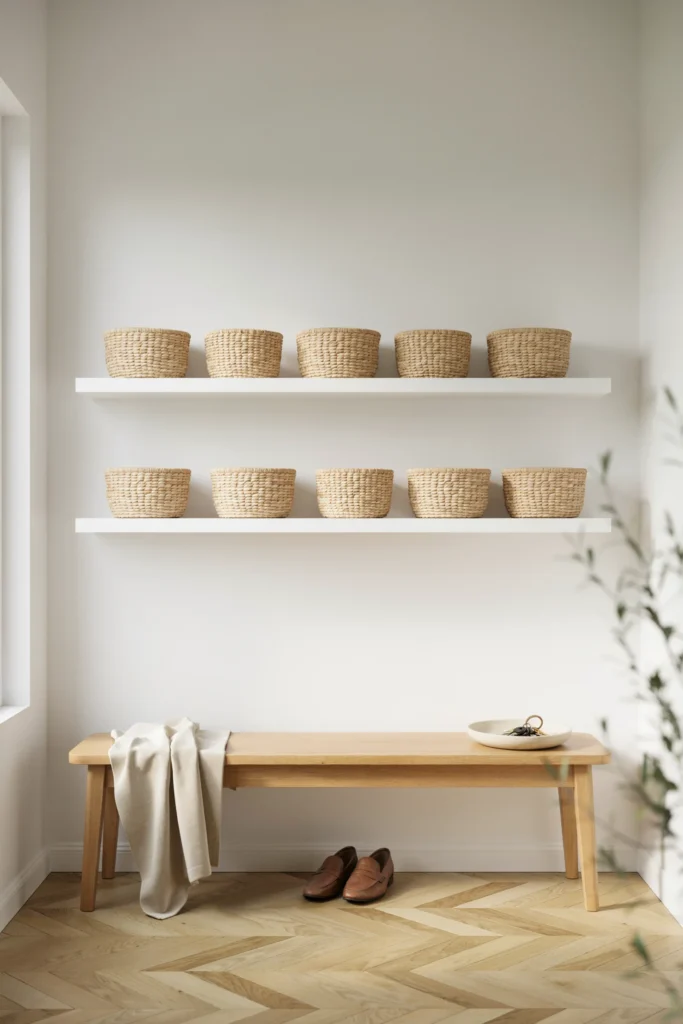
Floating shelves lined with identical baskets look incredibly organized and intentional. It is one of the easiest ways to create visual order without spending a lot of money.
Choose baskets that are all the same size and material. Seagrass, rattan, and woven fabric all work well and add warmth. Label the inside of each basket if you need to but keep the outsides clean.
This approach works especially well in smaller mudrooms where built-ins are not possible.
12. Use a Durable Runner Rug for Warmth and Sound
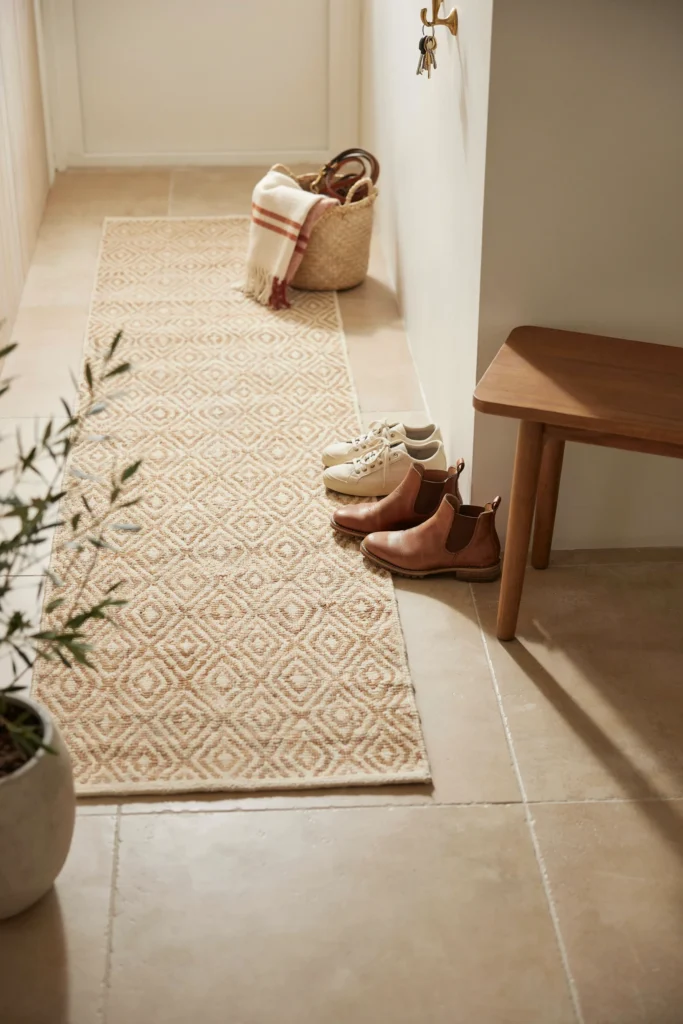
A runner rug softens the look of a mudroom and makes the space feel more finished. It also absorbs sound, which matters more than you might think in a high-traffic entry.
Look for flat-weave or low-pile options since they are easier to clean and hold up better underfoot. Patterns hide dirt well. Neutral colors work with almost everything.
Machine-washable runners exist and they are worth every penny in a mudroom.
13. Add a Chalkboard or Corkboard Panel
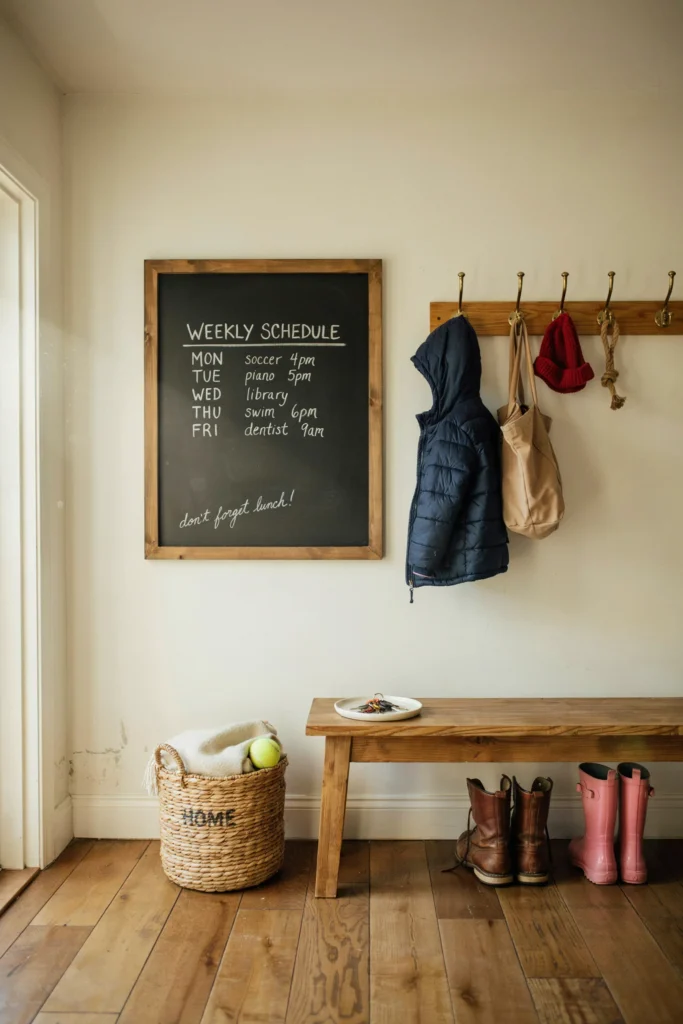
A chalkboard or corkboard built into the wall or cabinetry serves a practical purpose while adding character to the space. Use it for schedules, notes, grocery lists, or just a seasonal message.
Frame a chalkboard panel with simple trim to make it look intentional rather than thrown up as an afterthought. A corkboard in a natural linen fabric has a cleaner, more finished look than a standard cork tile.
14. Install a Window or Add a Mirror to Fake Natural Light
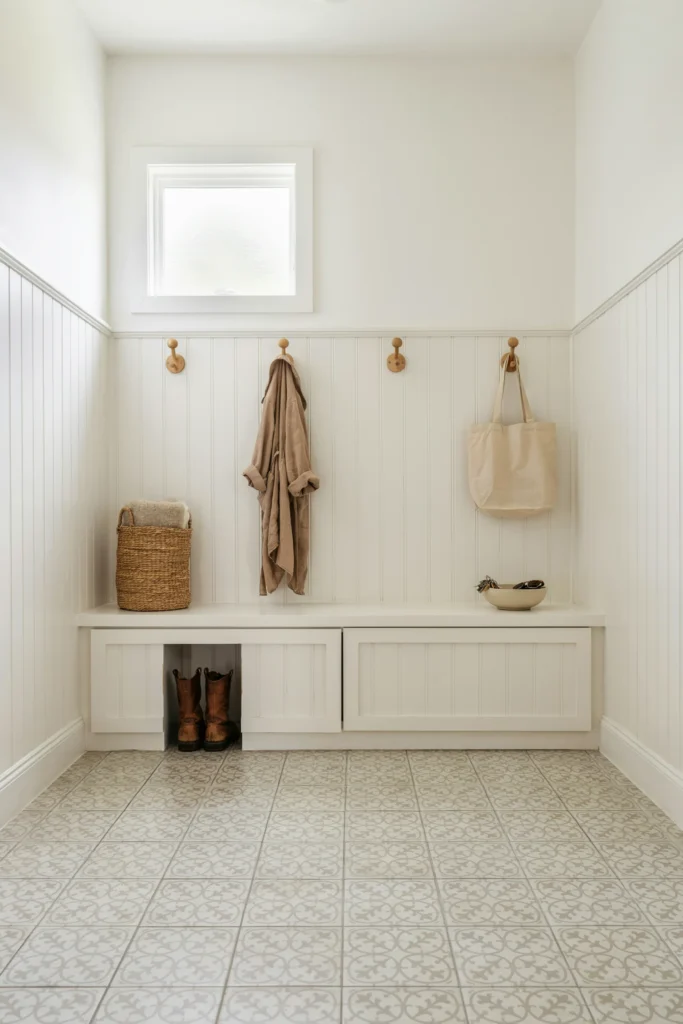
If your mudroom has no window, it can feel like a cave. Mirrors help, but if you are doing a renovation, adding even a small window transforms the space.
A frosted glass window maintains privacy while letting in light. Or add a window in the upper portion of the entry door if building codes allow it.
For non-renovation options, a large mirror opposite any light source, even a pendant fixture, bounces light around the space significantly.
15. Keep the Color Palette to Three Elements or Fewer
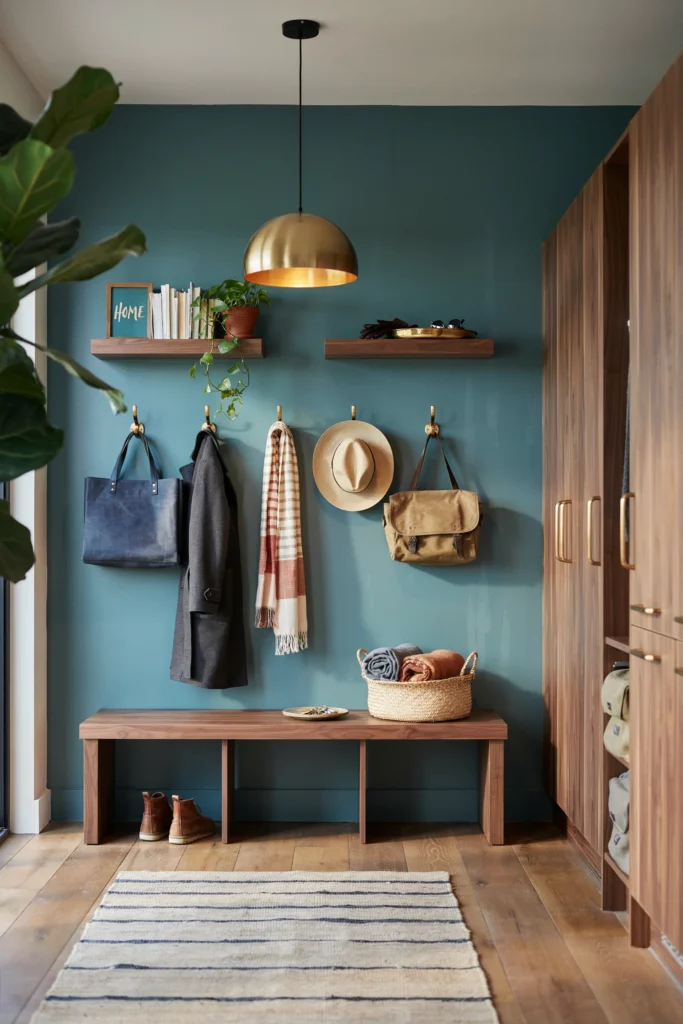
This is the rule that ties everything else together. The mudrooms that look most expensive are not the ones with the most features. They are the ones where everything coordinates.
Pick a wall color, a wood tone, and a metal finish, and stick to all three throughout the space. If your hooks are brass, your light fixture should be brass. If your bench is walnut, your floating shelf brackets should be walnut or at least a warm wood tone.
A simple formula that works:
- One wall color (or wallpaper)
- One wood tone for furniture and shelving
- One metal finish for hardware, hooks, and lighting
When those three things coordinate, the entire room reads as designed rather than assembled over time.
Final Thoughts
A beautiful mudroom does not require a full renovation or a huge budget. Most of these ideas are things you can do one at a time, starting with whatever bothers you most. For me, it was the lack of storage. For someone else, it might be the flooring or the lighting.
Start with one change, live with it, and see what makes the biggest difference in how the space functions and feels. That is how a room actually comes together, not all at once, but in layers that make sense for how you actually live.