



In This Article Show
Most people scroll past brutalist architecture without a second look. Spend a little time with it, though, and something shifts. The raw walls and bold shapes start to feel less cold and more honest.
The name comes from the French phrase for raw concrete, and the style grew popular in the middle of the last century. It celebrates structure instead of hiding it.
These brutalist home designs are inspiration concepts that show how concrete can feel warm, calm, and livable. At the end, I share simple ways to borrow the look for your own home, even if you never pour a concrete wall.
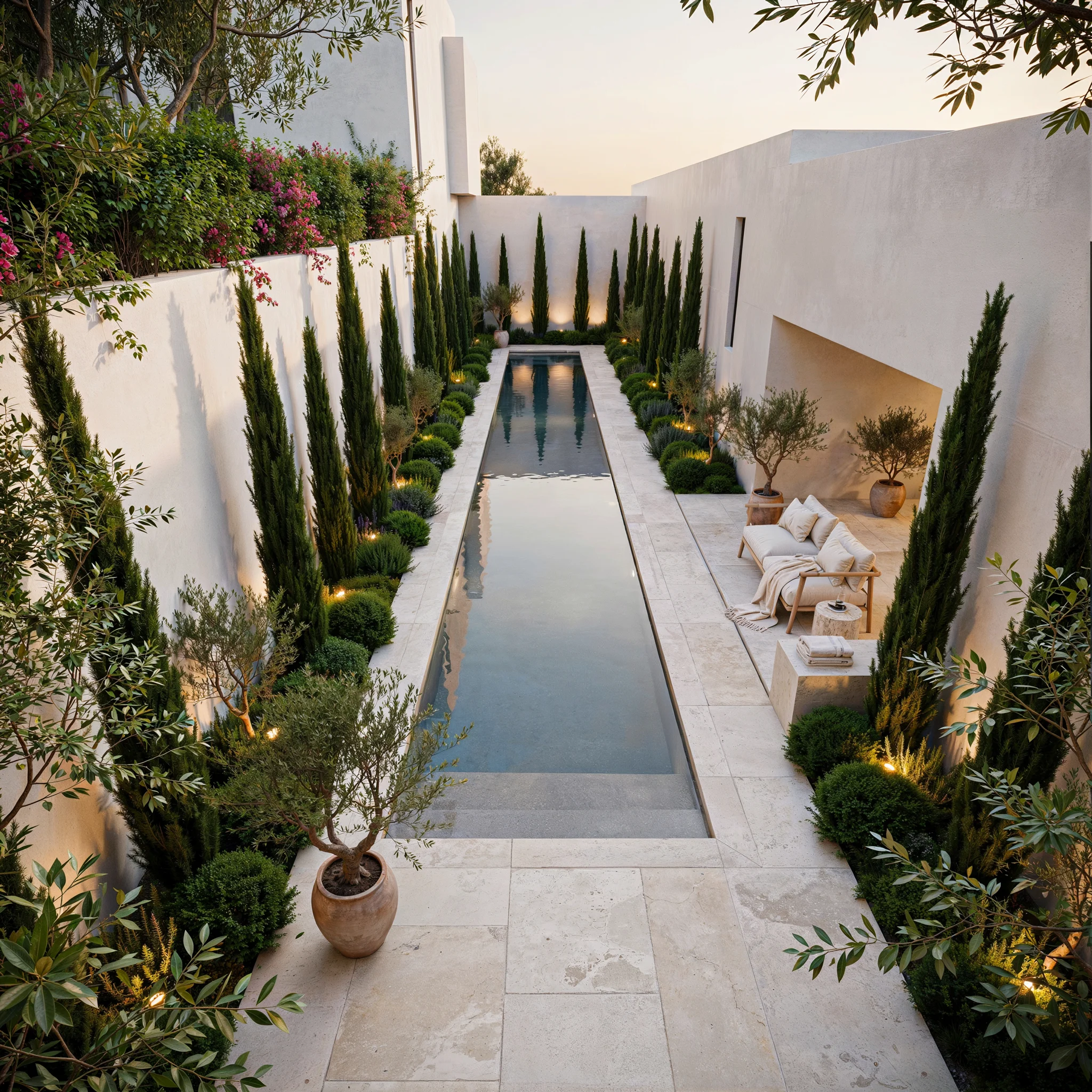
1. Concrete Courtyard Home With a Water Channel
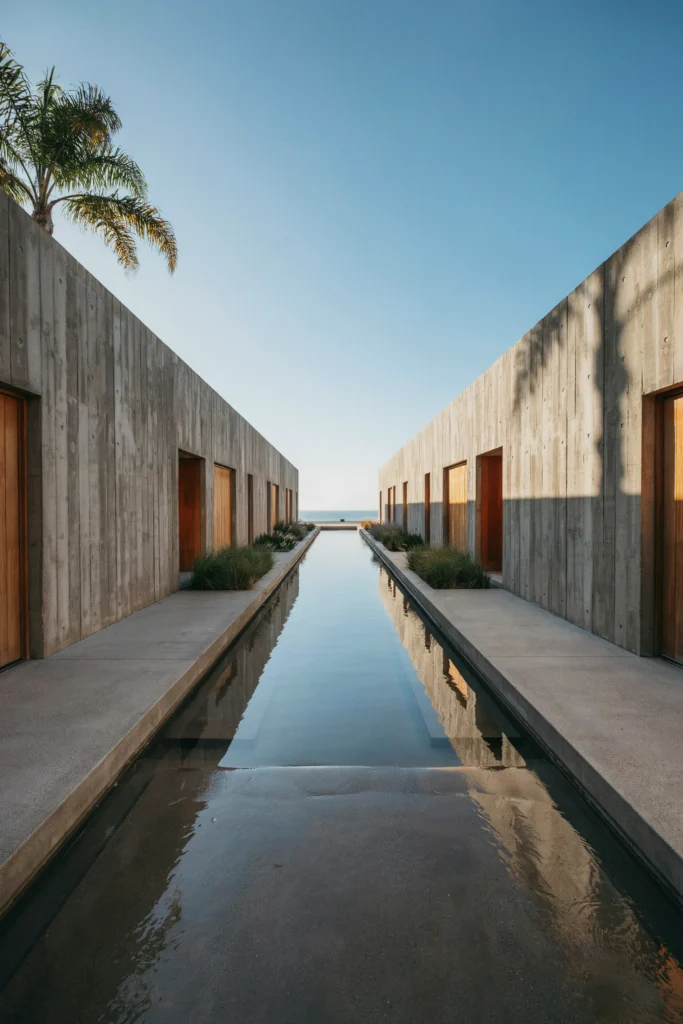
Wide, flat concrete walls framing a long water channel feel calm and almost sacred. The water softens the hard surfaces and reflects the sky.
Deep set windows, warm teak doors, and an inner courtyard keep the home private while bringing light inside. The secret is restraint and human sized proportions. At home, a small concrete water bowl fountain brings a hint of this calm to a patio.
Quick checklist: These concrete courtyard ideas bring the same calm outdoors.
- Wide, flat facades with deep set window openings
- Teak and walnut wood used to warm the raw concrete
- Water features running parallel to the main structure
- Interior courtyards that bring the outdoors in without compromising privacy
- Calm symmetry
- Water softens concrete
- Private courtyard
Project Card · 1 hour · Easy
Materials Needed
- Three round concrete planters in different sizes
- Potting mix
- One sculptural plant, one grass, one trailing plant
- Pot feet
How to Make It
- Choose an entry or patio corner that feels bare.
- Group the planters in a tight triangle, tallest at the back.
- Plant the sculptural plant in the largest pot.
- Add the grass and trailing plant in the smaller pots.
- Raise the pots on feet so water drains freely.

2. Cliffside Concrete Retreat With a Rooftop Pool
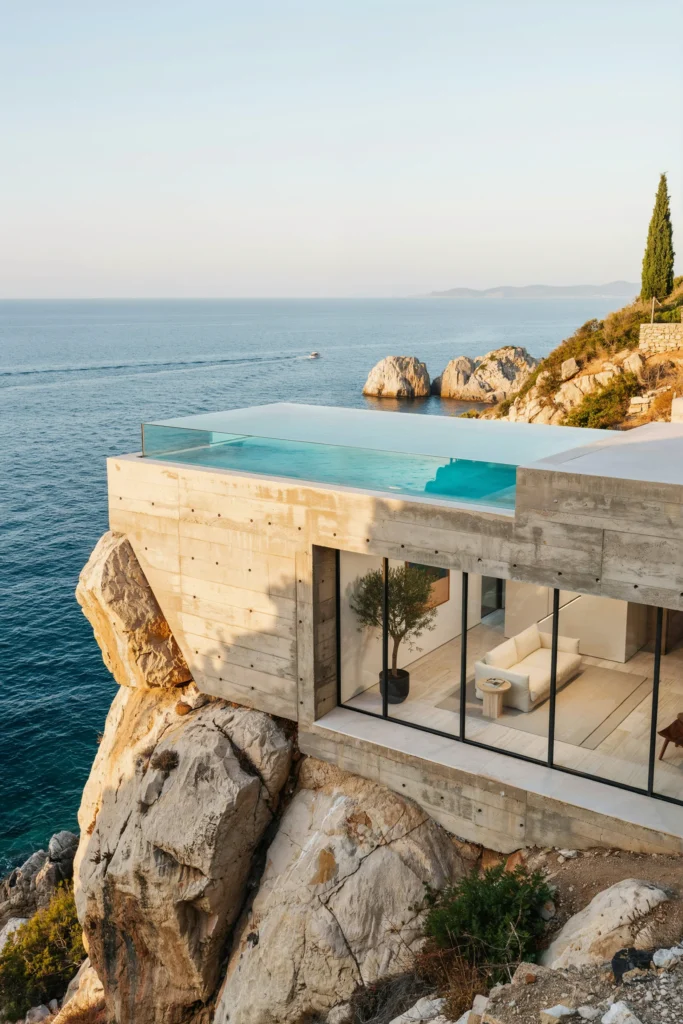
A concrete shell tucked into a cliff can almost disappear into the rock. Glass on the sea side pulls in light and views.
Building into the land keeps the inside cool, and a rooftop pool doubles as a dramatic skylight. It shows that concrete can blend into a landscape gracefully.
Quick checklist:
- The concrete shell blends into the rocky cliff face
- Glass walls on the sea facing side bring in maximum light
- The underground layout keeps the interior cool naturally
- The pool roof acts as a skylight for the rooms below
- Blends with rock
- Sea views
- Naturally cool
3. Board Formed Concrete House in the Mountains
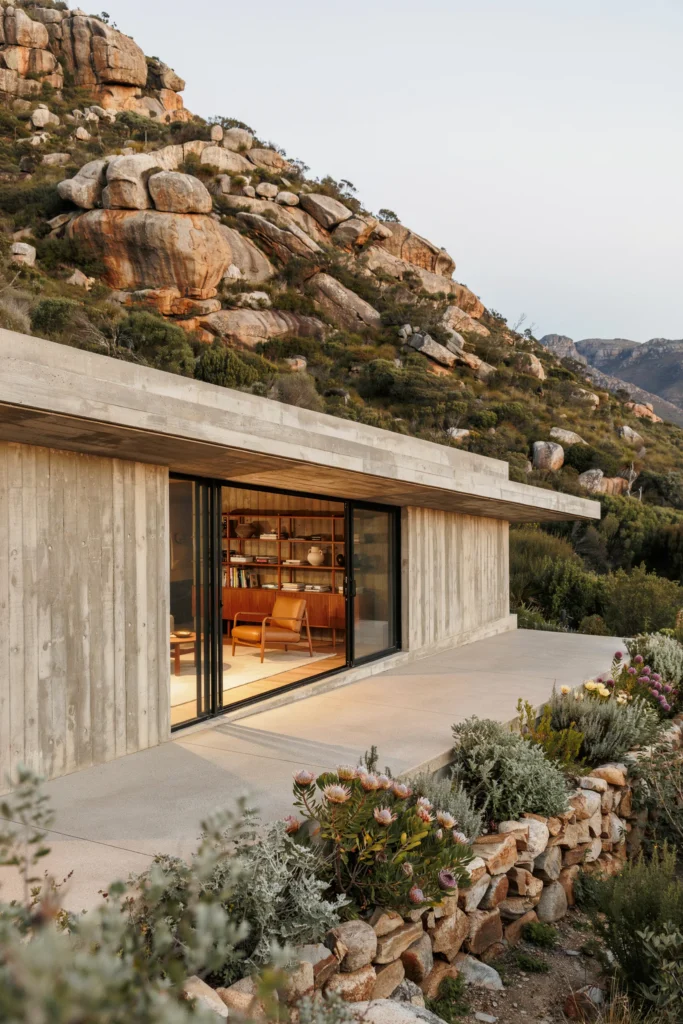
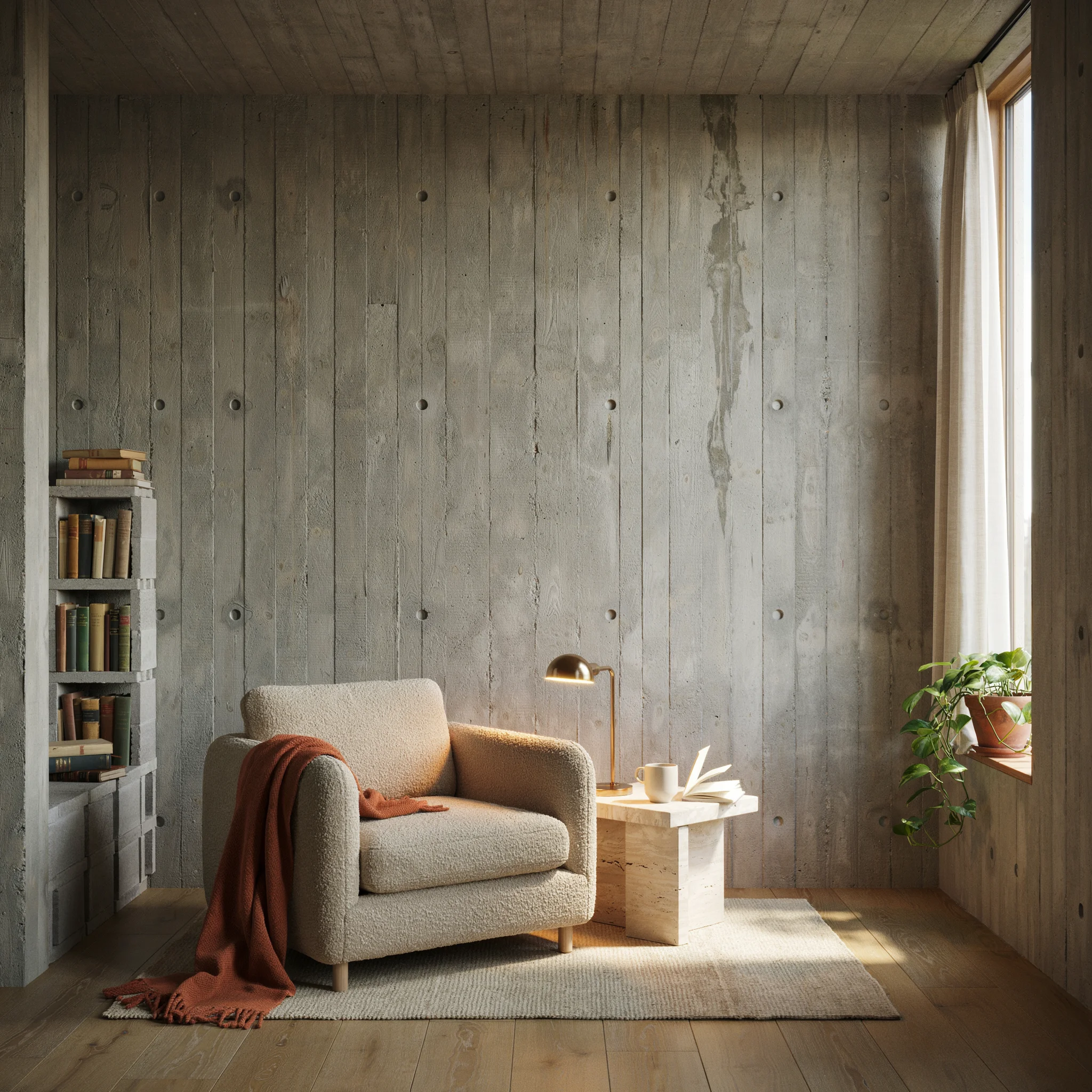
Board formed concrete keeps the grain of the wooden molds, so the walls carry a soft wood texture.
Polished concrete floors inside reflect light, and native planting softens the line between house and hillside. Rough outside, refined inside, is what gives this style its tension.
Quick checklist:
- Horizontal board forming creates texture on the exterior walls
- Polished concrete floors throughout the interior reflect natural light
- A central courtyard breaks the mass into human scaled zones
- Indigenous planting softens the transition between building and site
- Wood grain texture
- Polished floors
- Native planting
4. Cantilevered Concrete Home With Glass Walls
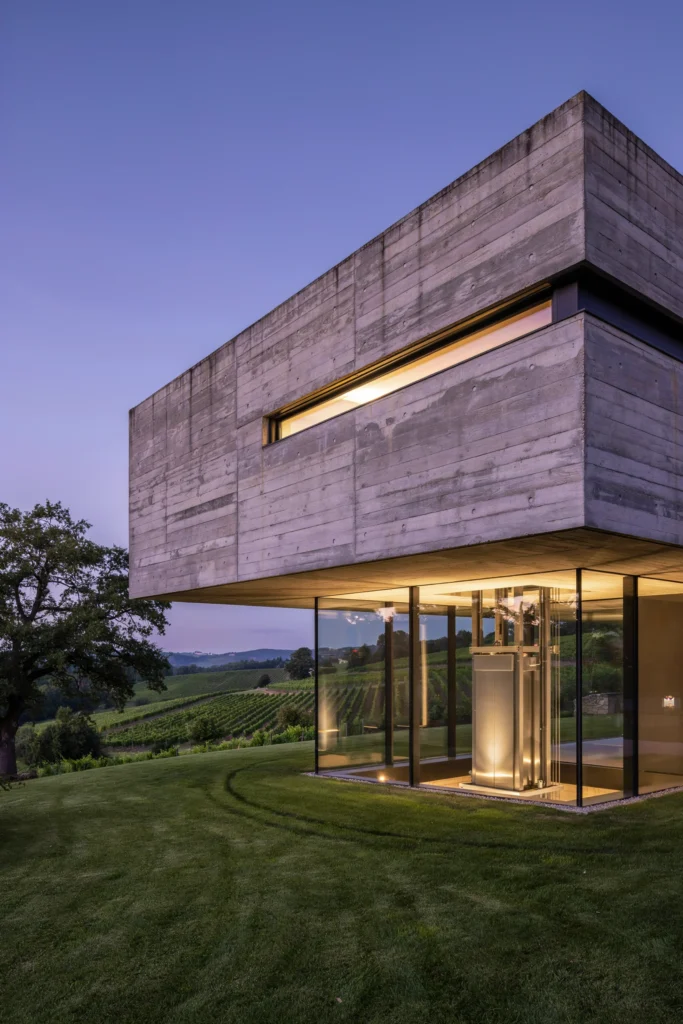
A heavy concrete volume that seems to float above glass walls is both structural and theatrical.
Raw concrete, glass, and steel work together without one material taking over. The home looks different from every angle.
Quick checklist:
- The exposed concrete overhang spans 7.5 meters without visible support
- The moving platform becomes the living room, kitchen, or study depending on where it stops
- Raw concrete mixes with glass and steel without any material trying to dominate
- The home reads differently from every angle, which is rare
- Dramatic overhang
- Glass and steel
- Looks different everywhere
5. Curved Concrete Hillside Home
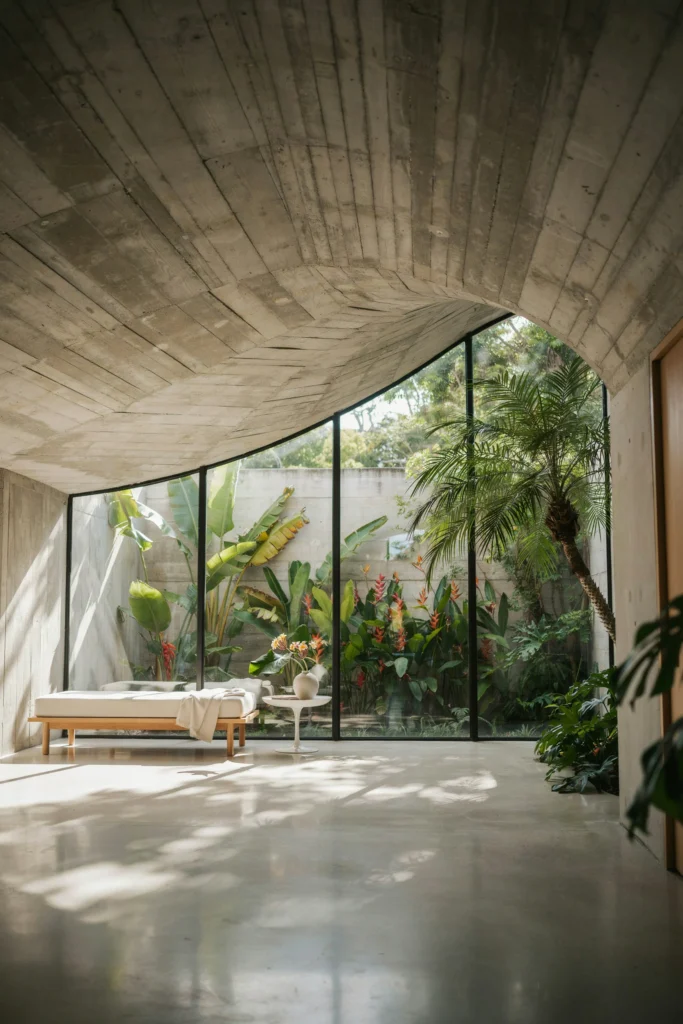
Not all concrete is boxy. Curved ceilings that follow a hillside feel organic rather than industrial.
High clerestory windows wash the walls in soft light, and the concrete flows straight out to a deck. It feels like home, not a monument.
Quick checklist:
- Curved concrete ceilings that follow the natural terrain of the hillside
- Clerestory windows that flood the interior with diffused California light
- Minimal interior walls, letting the concrete structure carry the spatial divisions
- A seamless transition from interior concrete to the exterior deck
- Organic curves
- Soft light
- Flows outdoors
6. Rammed Earth and Concrete Home
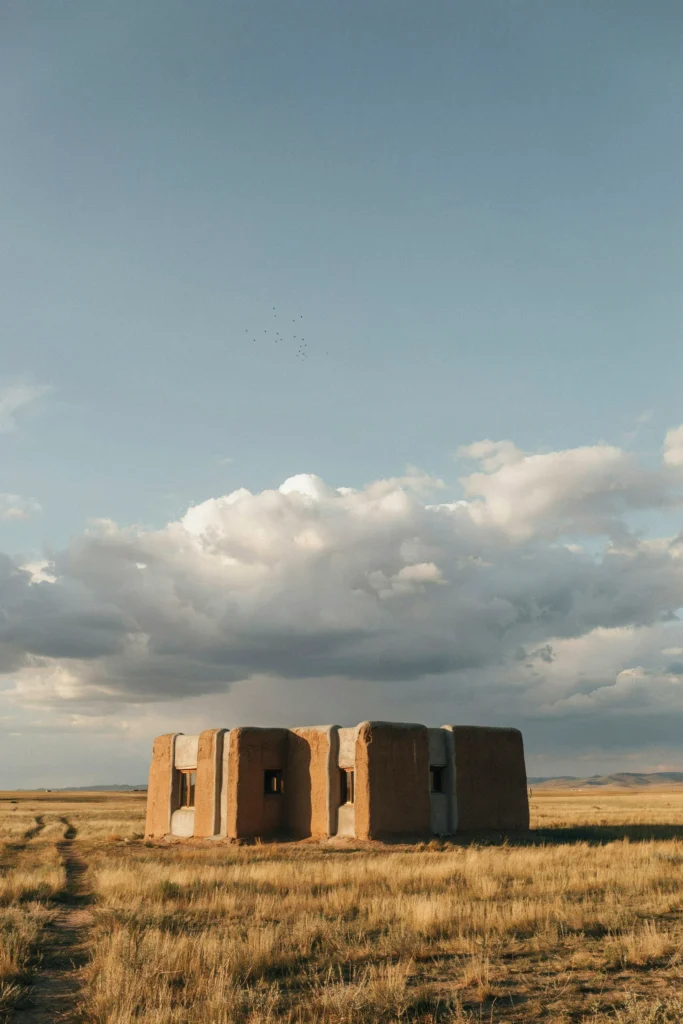
Mixing rammed earth with concrete adds warm color bands that pure concrete struggles to match.
A compact footprint and small, carefully placed windows keep the mass from feeling heavy. Local materials help the home respond to its place.
Quick checklist: If you love homes built into the land, these cave homes are worth a look.
- Rammed earth walls introduce color variation into the concrete palette
- The compact footprint keeps the mass from feeling oppressive
- Small, strategic openings frame views of the Mongolian steppe
- Interior volumes stack vertically to create drama on a modest floor plan
- Warm earth tones
- Compact form
- Local materials
7. Exposed Block Interior With a Sculptural Staircase
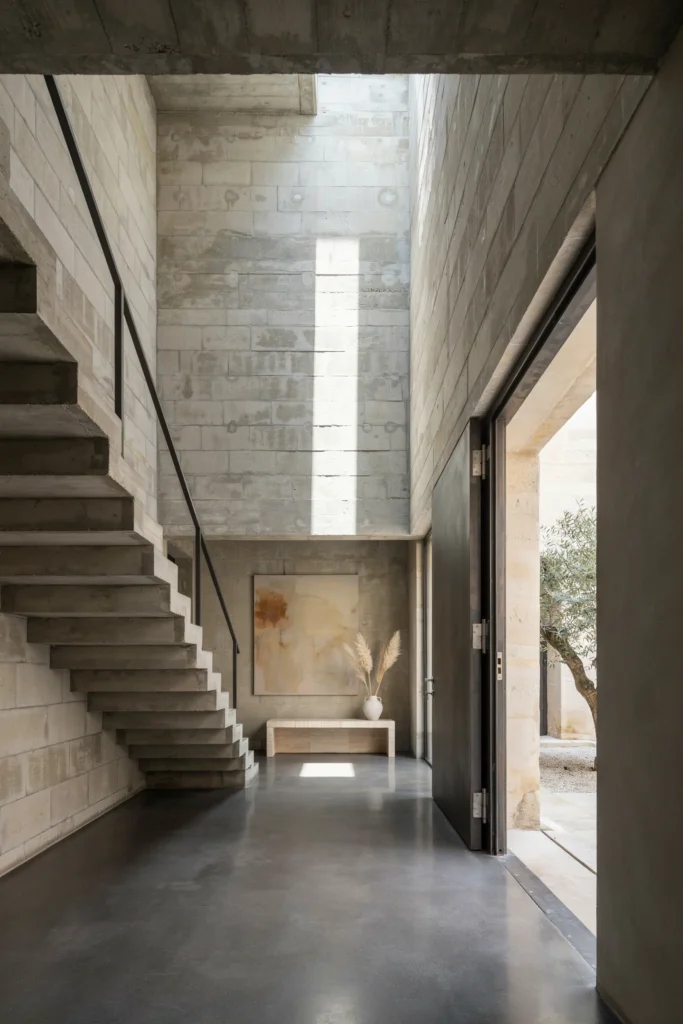
Unfinished concrete block walls, charcoal floors, and an open staircase that reads like sculpture define this interior.
Heavy linen curtains, wool rugs, and warm wood keep it from feeling cold. Light from above makes the concrete feel almost weightless. Indoors, concrete look wall panels give the same raw texture without heavy masonry.
Quick checklist: For a cozy take on this style, see these brutalist reading corners.
- Exposed concrete block interior walls with no applied finish
- Polished concrete floors in a warm charcoal tone
- Steel pivot doors that swing from floor to ceiling
- An open staircase that reads as sculpture rather than circulation
- Sculptural stair
- Soft textiles
- Light from above
Project Card · 2 hours · Easy
Materials Needed
- Heavy linen look curtains
- Ceiling or wall mounted curtain rod
- Large wool or jute rug
- Two or three wool throws
How to Make It
- Mount the curtain rod high and wide so panels frame the window.
- Hang the curtains so they just kiss the floor.
- Lay a large rug to anchor the seating area.
- Drape throws on the sofa and chairs.
- Step back and add one more soft layer if it still feels cold.

8. Coastal Concrete Home With Sun Shading Fins
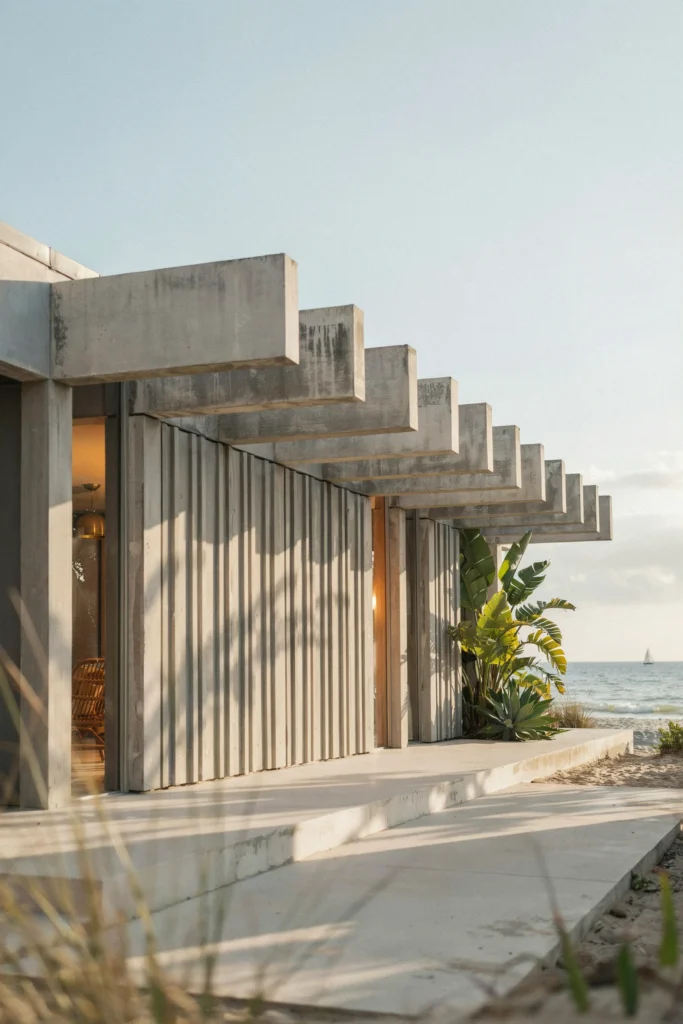
Horizontal concrete fins shade the interior from strong sun, and heavy walls help keep rooms cool in warm climates.
An open plan lets indoor and outdoor spaces blur along every edge.
Quick checklist:
- Horizontal fins of concrete shade the interior from direct sun
- The open plan long predates open plan living becoming mainstream
- Indoor and outdoor spaces blur along every edge of the plan
- The structural grid is the only organizing system the house needs
- Natural shade
- Cooler rooms
- Indoor outdoor
9. Mediterranean Concrete Villa With a Lap Pool
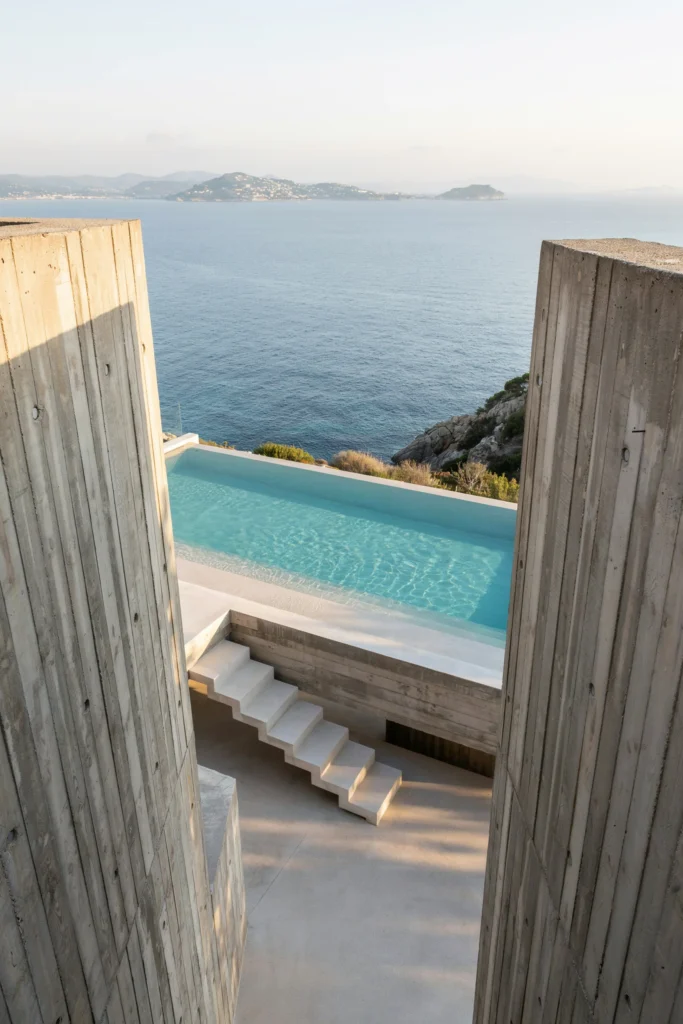
Thick concrete frames push the glass back into shadow, cutting glare while framing the sea.
A lap pool on the terrace seems to run into the horizon. The views are the main event, and the architecture knows when to stop.
Quick checklist:
- Thick concrete frames push the glazing back into shadow, reducing glare
- A lap pool on the upper terrace appears to extend directly into the sea
- Board formed concrete on interior walls matches the rhythm of the wood used outdoors
- The staircase is a single cantilevered slab, no handrails, no brackets, just concrete
- Less glare
- Framed views
- Restraint
10. Fair Faced Concrete Interior With Garden Views
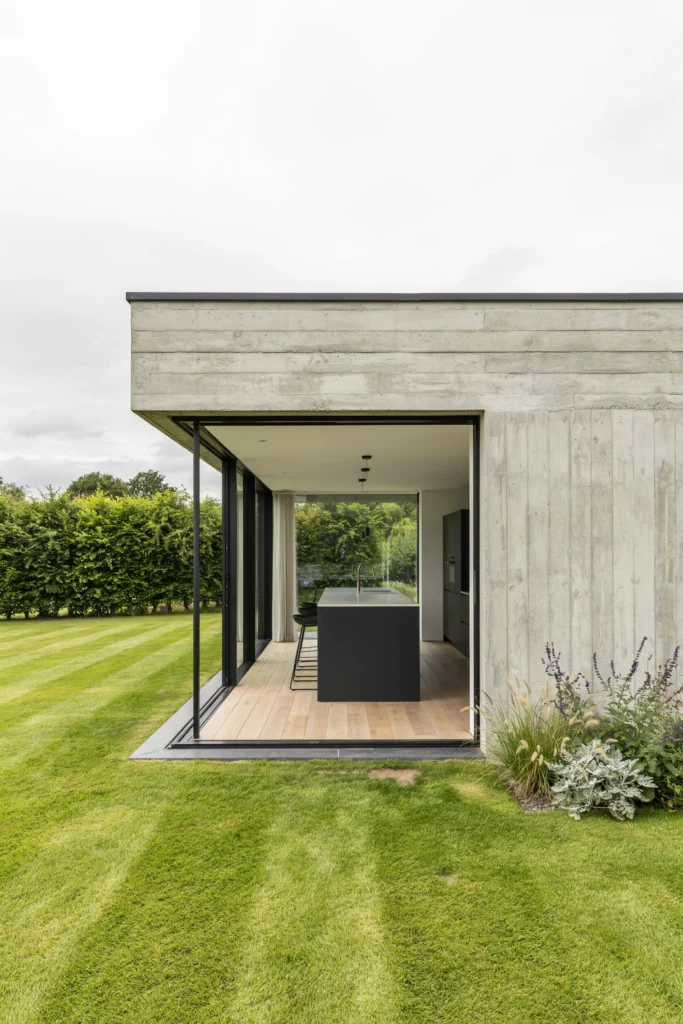
Instead of mass, this style pursues precision. Smooth concrete, clean pour lines, and sliding glass walls opening to the garden.
A dark steel kitchen island anchors the open plan. If you love the look, textured wall panels can bring a similar mood to one wall. A concrete table lamp is an easy way to borrow the look for a side table.
Quick checklist:
- Fair faced concrete with a fine texture that photographs beautifully in flat English light
- Sliding glass walls that open the main living space fully to the garden
- A black steel kitchen island that anchors the open plan ground floor
- A bedroom wing that steps down the slope of the site, so every room opens to grade level
- Precise finish
- Garden views
- Accent wall option
Project Card · 1 afternoon · Easy
Materials Needed
- Peel and stick 3D faux stone wall panels
- Level and pencil
- Utility knife and straightedge
- Soft cloth
How to Make It
- Choose one wall, such as behind a sofa or bed.
- Clean the wall and let it dry fully.
- Draw a level line for the first row.
- Peel and press each panel, matching the pattern edges.
- Trim the last row with a sharp knife against a straightedge.

11. Wabi Sabi Concrete and Bamboo Retreat
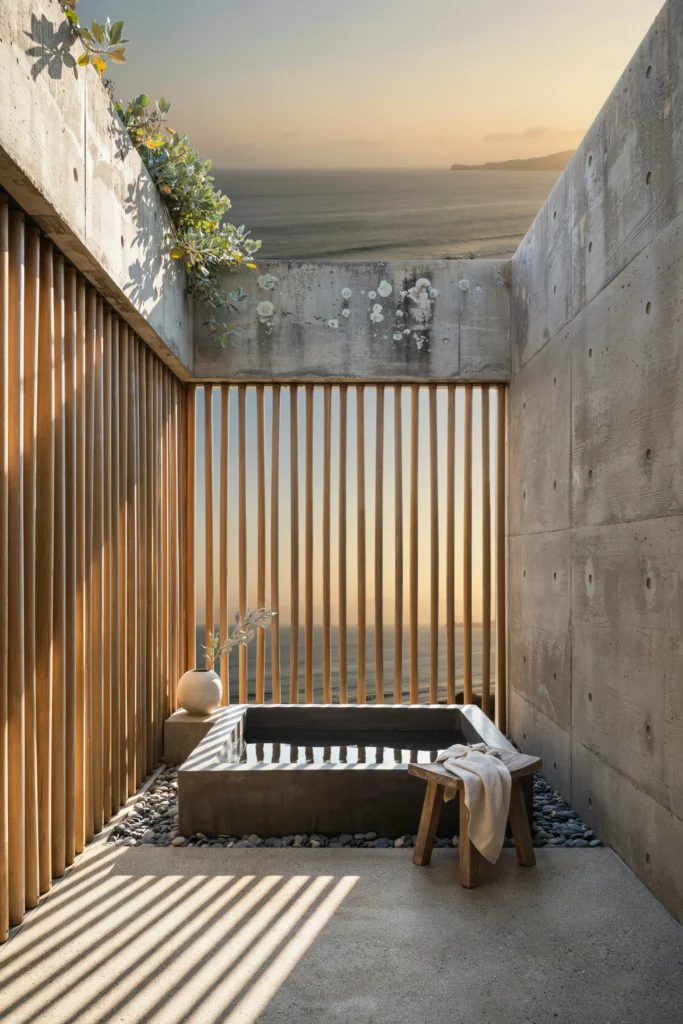
Wabi sabi embraces imperfection, and concrete that shows how it was made fits that idea perfectly.
Bamboo screens filter light into moving patterns, and an outdoor bath enclosed by raw walls feels peaceful. It is honest about its materials and its place.
Quick checklist:
- Recycled concrete mixed with aggregate from the site itself
- Bamboo screens that filter Pacific Ocean light into moving patterns on the walls
- An outdoor bathing area enclosed by raw concrete walls
- Every surface carries evidence of how it was made, no smoothing, no hiding
- Embraces imperfection
- Filtered light
- Peaceful
What You Can Borrow From Brutalist Design
You do not need to pour concrete walls to bring this thinking into your home. These principles work in any space:
- Expose what is worth showing, like brick, beams, or joinery
- Edit without mercy so every object earns its place
- Use texture instead of color, like rough stone and brushed metal
- Let light do the work with simple windows and lamps
- Choose solid, heavy pieces that feel permanent
- Soften the look with wool, linen, and plants
Frequently Asked Questions
What is brutalist architecture?
It is a style that celebrates raw materials, mostly exposed concrete, with bold geometric shapes and little decoration.
Why is it called brutalism?
The name comes from the French term for raw concrete, not from the idea of being harsh.
Can a brutalist home feel cozy?
Yes. Warm wood, soft textiles, rugs, plants, and warm lighting balance the concrete and make it feel inviting.
How can I add brutalist style to a normal home?
Try one concrete look accent wall, concrete planters, a stone counter, or bold simple furniture. Keep decor minimal.
Is concrete good for hot climates?
Thick concrete walls absorb heat slowly, which can help keep rooms cooler during the day when paired with shade and airflow.
Final Thoughts on Brutalist Home Designs
Brutalist homes are not for everyone, but they share something many safe interiors lack: a clear point of view. Every detail serves one strong idea.
If you love raw materials, start small. One textured wall, a few concrete planters, or a solid stone surface can be enough, and the rest of the space often follows. For a café version of the look, see these brutalist outdoor coffee shop designs.