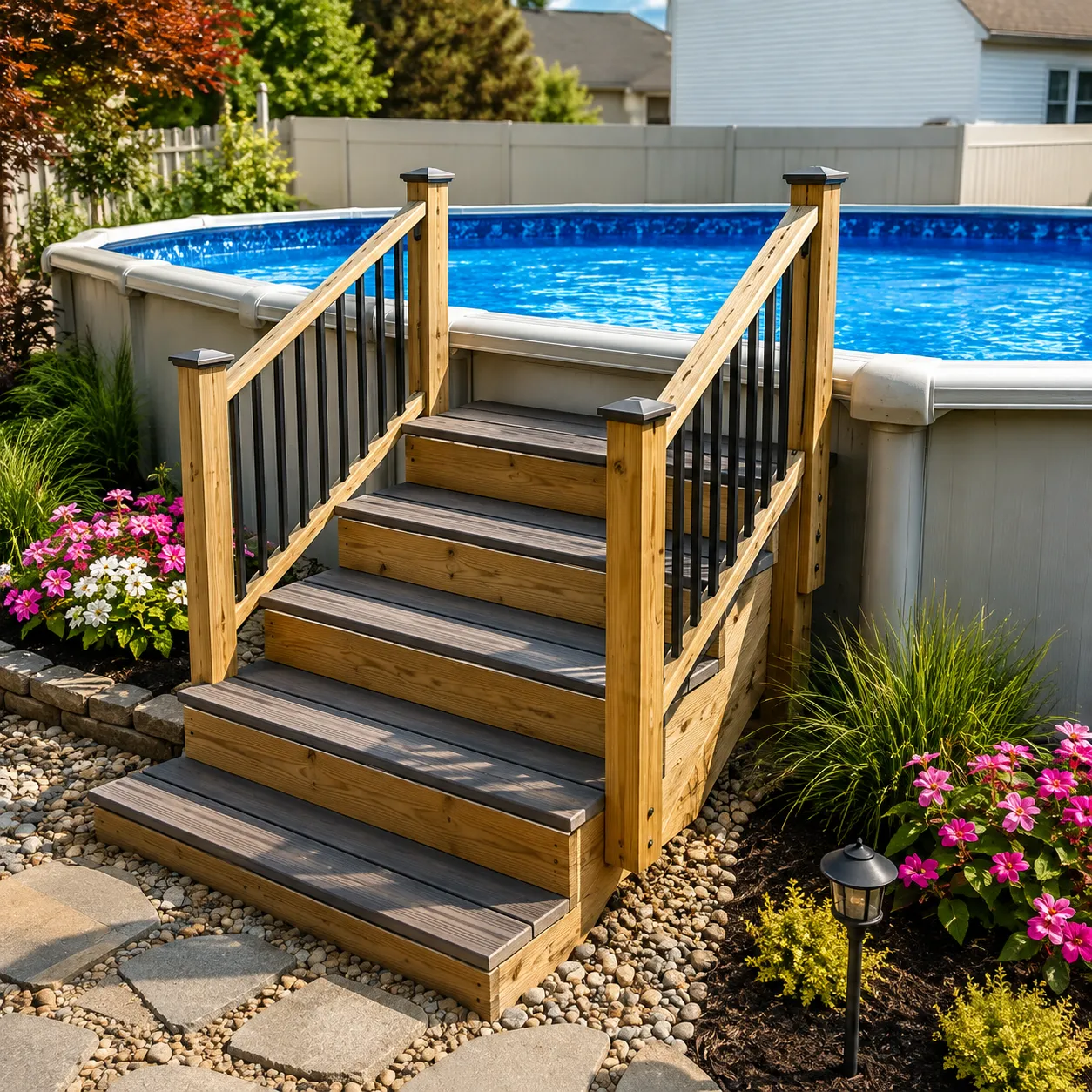
23 DIY Above Ground Pool Steps Ideas on a Budget
Building your own above ground pool steps is one of the easiest ways to improve both safety and style without spending a fortune. I have tried a few simple designs over the years, and even basic materials can create sturdy, attractive steps with a little planning.
Whether you prefer a rustic look or a clean modern finish, these budget-friendly ideas can help you create a safer and more inviting pool entrance.
1. Simple Wooden Box Steps
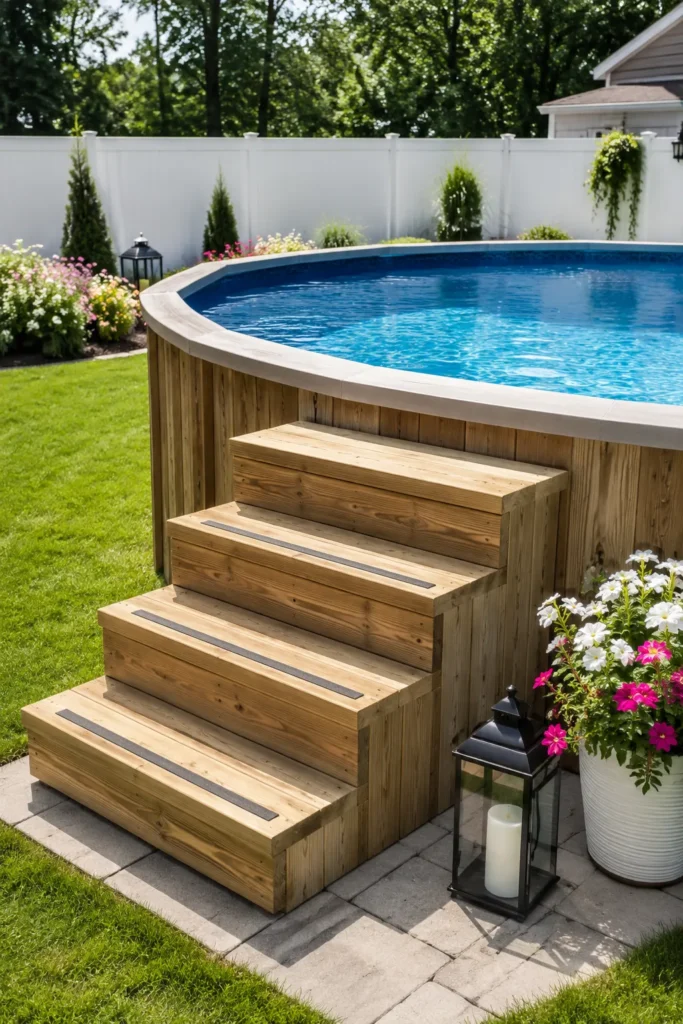
If you’re looking for an easy weekend project, simple wooden box steps are hard to beat. This was one of the first designs I built, and it instantly made getting in and out of the pool much easier. The design uses stacked wooden boxes that become stable steps when securely fastened together. Pressure-treated lumber keeps the structure strong even after months of outdoor use.
Why you’ll love it:
- Beginner-friendly project
- Affordable materials
- Easy to customize the height
- Can be painted or stained
- Works with most above ground pools
For extra safety, attach non-slip stair treads to each step. You can also paint the steps to match your deck or outdoor furniture for a more polished appearance.
2. Wide Deck-Style Pool Steps
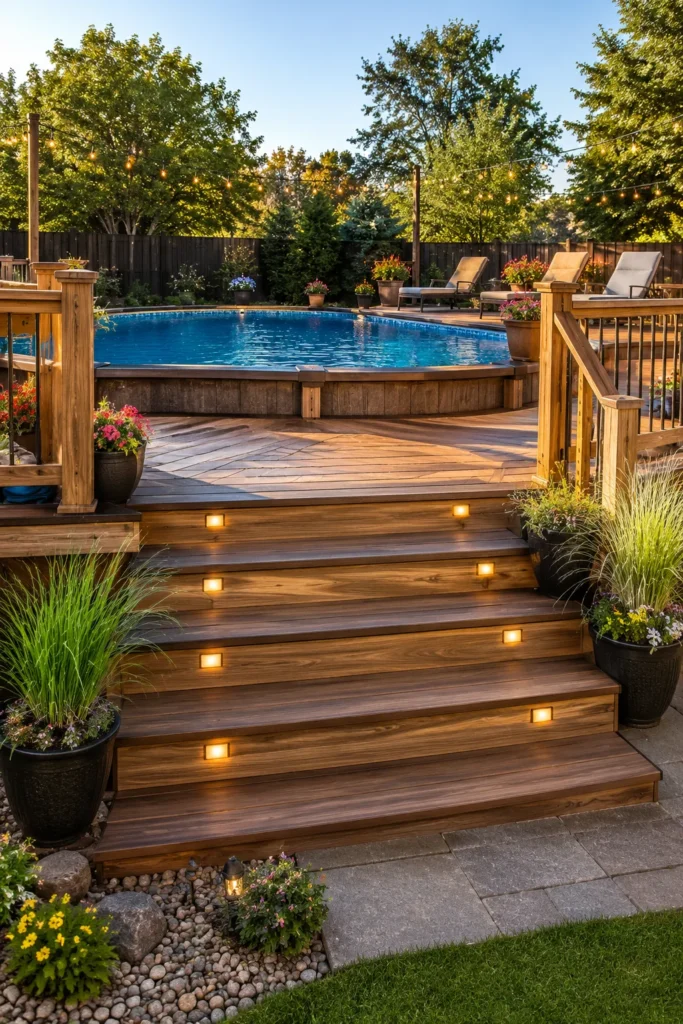
Wide deck-style steps create a welcoming entrance and provide more room for children and adults to move comfortably. I especially like this design because it feels more like walking onto a patio than climbing a ladder. The wider surface also makes carrying towels, toys, or pool supplies much easier.
Benefits of this design:
- Comfortable wide walking surface
- Great for families
- Adds a premium appearance
- Plenty of space for decorative planters
- Easy to expand into a full pool deck later
Using pressure-treated framing lumber and deck boards helps these steps stay durable while keeping maintenance simple. Finish the wood with a weather-resistant stain for long-lasting protection.
3. Cinder Block Pool Steps
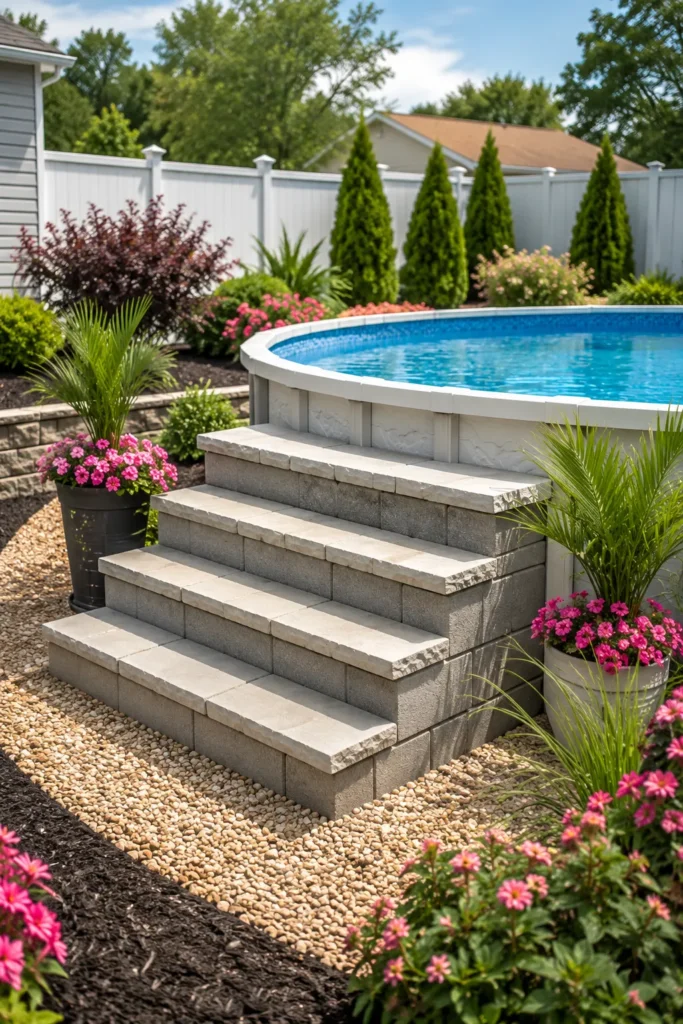
Cinder blocks are one of the most affordable building materials available, making them perfect for a tight budget. With proper leveling and a finished top surface, these steps can look surprisingly attractive. I have seen homeowners cover the blocks with stone veneer or outdoor tiles, and the results look much more expensive than the actual cost.
Reasons to choose cinder blocks:
- Extremely budget-friendly
- Strong and durable
- Minimal maintenance
- Easy to customize the size
- Can be finished with decorative materials
Place the blocks on a compacted gravel base to prevent shifting over time and improve stability.
4. Reclaimed Pallet Pool Steps
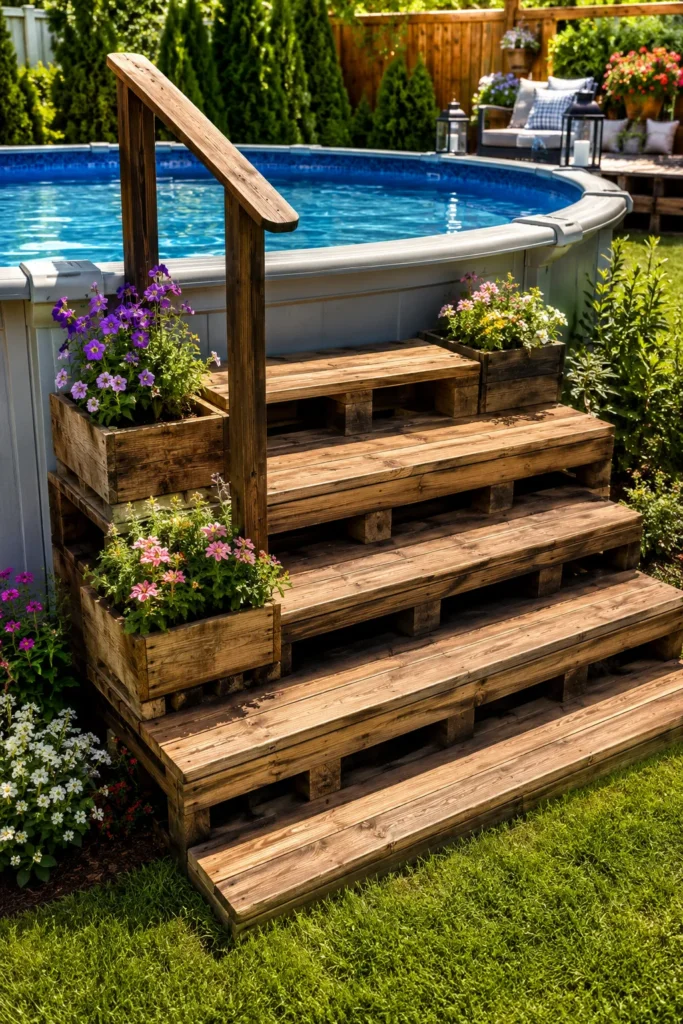
If you enjoy upcycling projects, reclaimed pallets offer an inexpensive way to build unique pool steps. After selecting heat-treated pallets in good condition, you can disassemble and rebuild them into a sturdy staircase. I always recommend sanding every board thoroughly because rough wood and bare feet never mix well.
Advantages of pallet steps:
- Nearly free materials
- Rustic charm
- Eco-friendly project
- Easy to personalize
- Great for DIY beginners
Seal the finished wood with an outdoor waterproof finish to extend its lifespan and reduce splintering.
5. Gravel Base Steps with Pavers
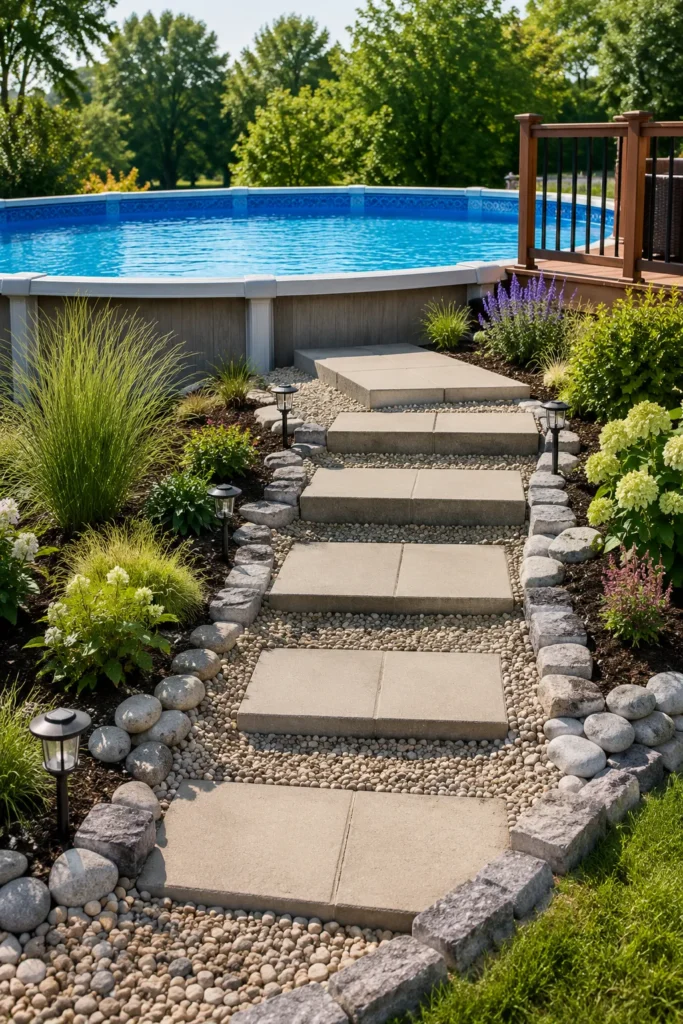
Gravel and pavers create a clean, attractive entrance while helping with drainage around the pool. This idea works especially well if you don’t want to build a permanent wooden staircase. I’ve found that the gravel keeps mud away after rain, making the area much cleaner throughout the swimming season.
Why this option works well:
- Excellent drainage
- Low maintenance
- Affordable materials
- Easy to repair
- Natural appearance
For better stability, compact the gravel before laying the pavers. A level foundation keeps every step secure and comfortable to walk on.
6. Floating Wooden Stair Design
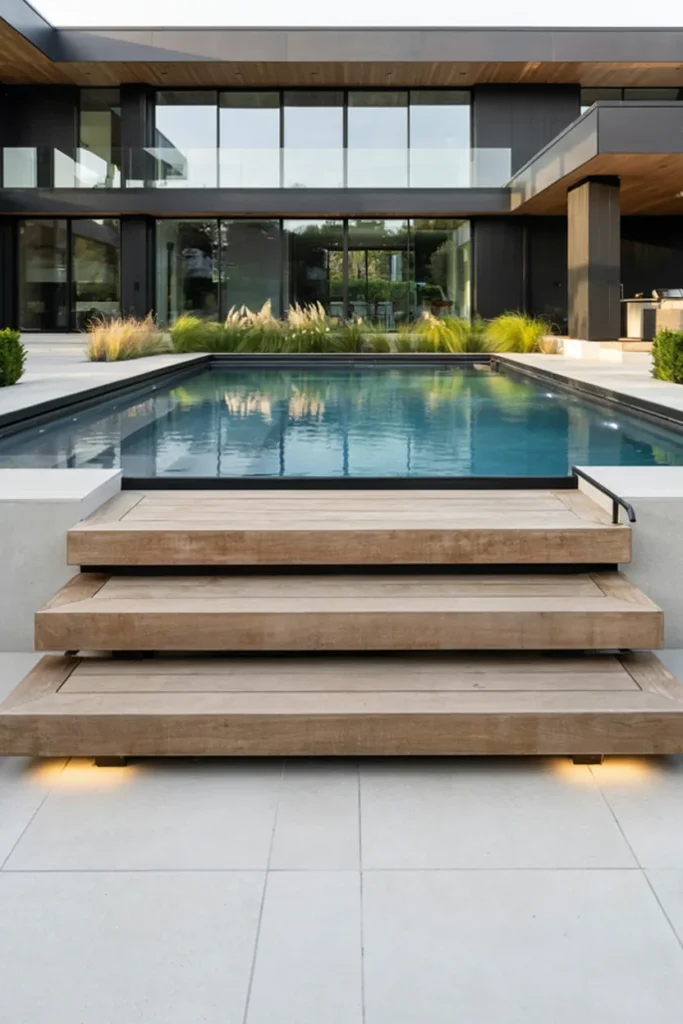
Floating wooden stairs offer a modern look that instantly upgrades an above ground pool. Although the design appears lightweight, the hidden support structure provides plenty of strength. I love how this style makes small backyards feel more open because there is less visual bulk compared to traditional staircases.
Highlights of floating stairs:
- Modern appearance
- Space-saving design
- Customizable width
- Clean, open look
- Pairs well with contemporary landscaping
Choose pressure-treated wood or composite decking to handle changing weather conditions and maintain a fresh appearance for years.
7. Corner Pool Entry Steps
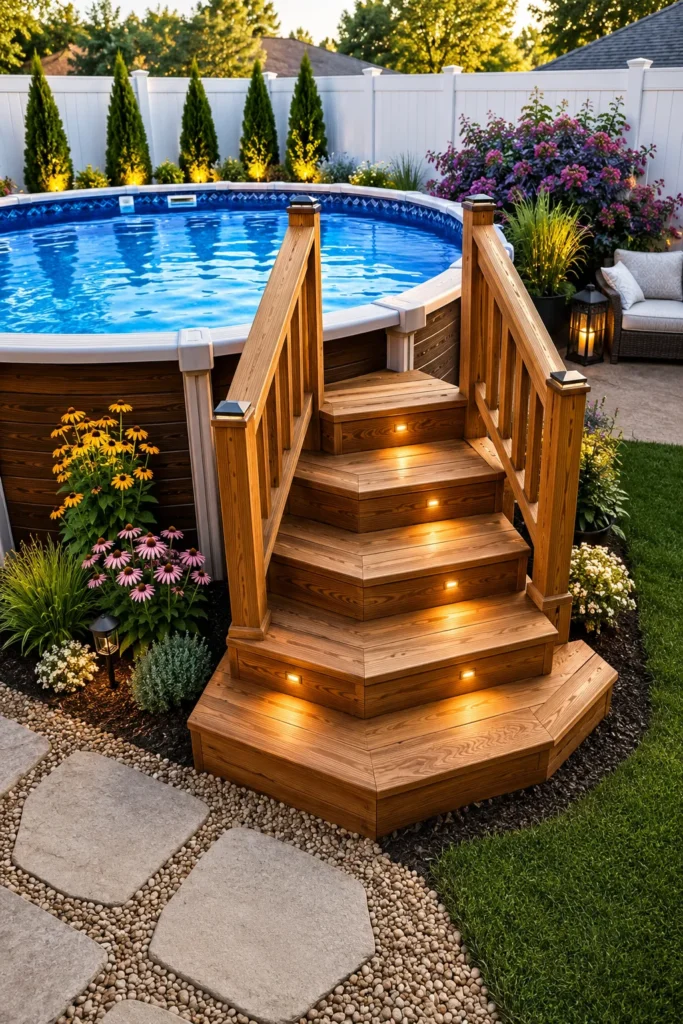
Installing steps in the corner of your pool can save valuable backyard space while creating a natural traffic flow. I have seen this layout work especially well in smaller yards where every square foot matters. The corner placement also leaves more room for seating, storage, or landscaping around the remaining pool perimeter.
Why homeowners like corner steps:
- Saves outdoor space
- Creates a neat layout
- Easy to connect to a deck
- Comfortable pool access
- Suitable for compact yards
You can finish the area with matching railings and decorative planters to create a polished entrance.
8. Rustic Timber Log Steps
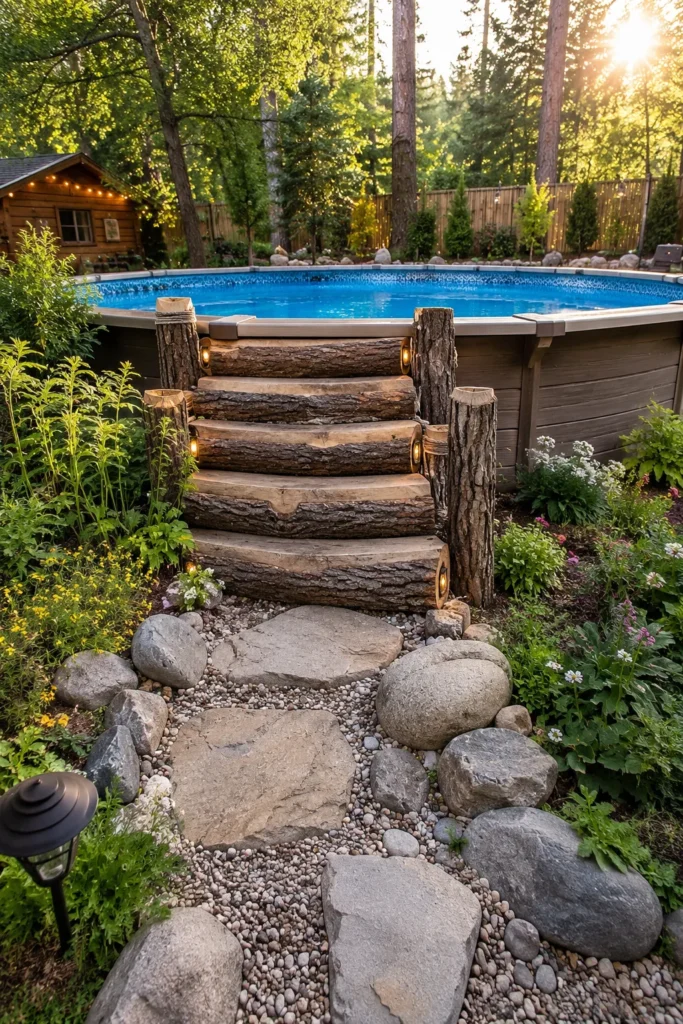
Rustic timber log steps bring warmth and character to any backyard. If your outdoor space already includes natural landscaping, these steps blend in beautifully. I’ve always admired how log steps make a pool area feel more like a cozy retreat than a standard backyard feature.
Features you’ll appreciate:
- Natural rustic appearance
- Strong and sturdy
- Budget-friendly when using reclaimed logs
- Blends with woodland landscapes
- Unique handcrafted look
Treat the logs with a weather-resistant wood preservative before installation. Adding textured anti-slip strips on each step provides extra safety without taking away from the rustic charm.
9. Composite Deck Board Steps
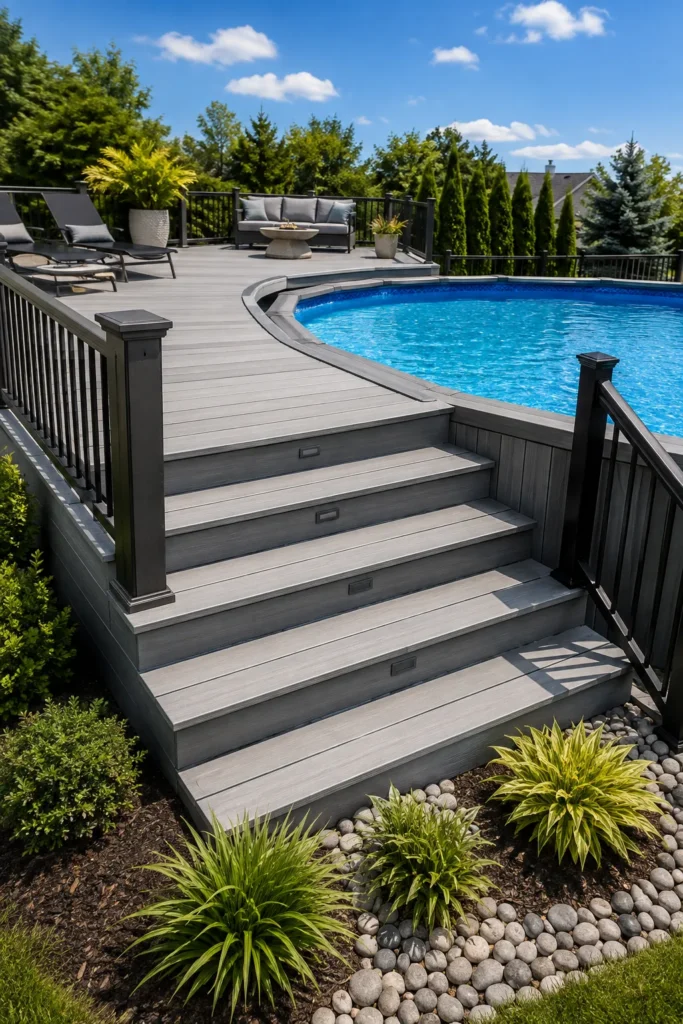
Composite deck boards are a great choice if you want pool steps that look polished without needing constant upkeep. Although they cost a little more than standard wood upfront, they often save money over time because they resist rot, fading, and splintering. A friend of mine replaced old wooden steps with composite boards, and after several summers, they still looked almost new with only occasional cleaning.
Why they’re worth considering:
- Low maintenance
- Resists moisture and rot
- No splinters
- Available in many colors
- Long-lasting finish
Pair composite boards with a pressure-treated wood frame for a sturdy structure that balances durability and affordability.
10. Tiered Platform Steps
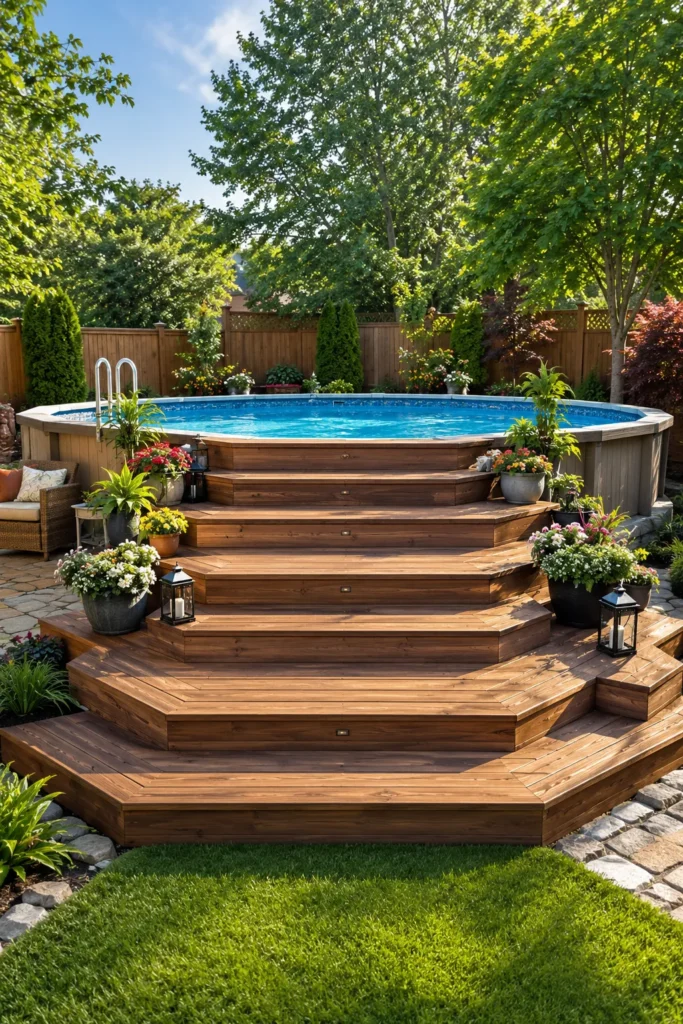
Tiered platform steps create wide, shallow levels that feel comfortable for people of all ages. Instead of climbing steep stairs, each platform gives you a chance to step up gradually. I like this design because it also doubles as a place to sit and dry off before jumping into the pool.
Benefits of tiered platforms:
- Easy to climb
- Comfortable for children and seniors
- Extra seating space
- Attractive layered design
- Can hold potted plants or decorations
Use weather-resistant decking boards and reinforce each platform with sturdy framing to keep the steps solid over time.
11. Stone Veneer Pool Steps
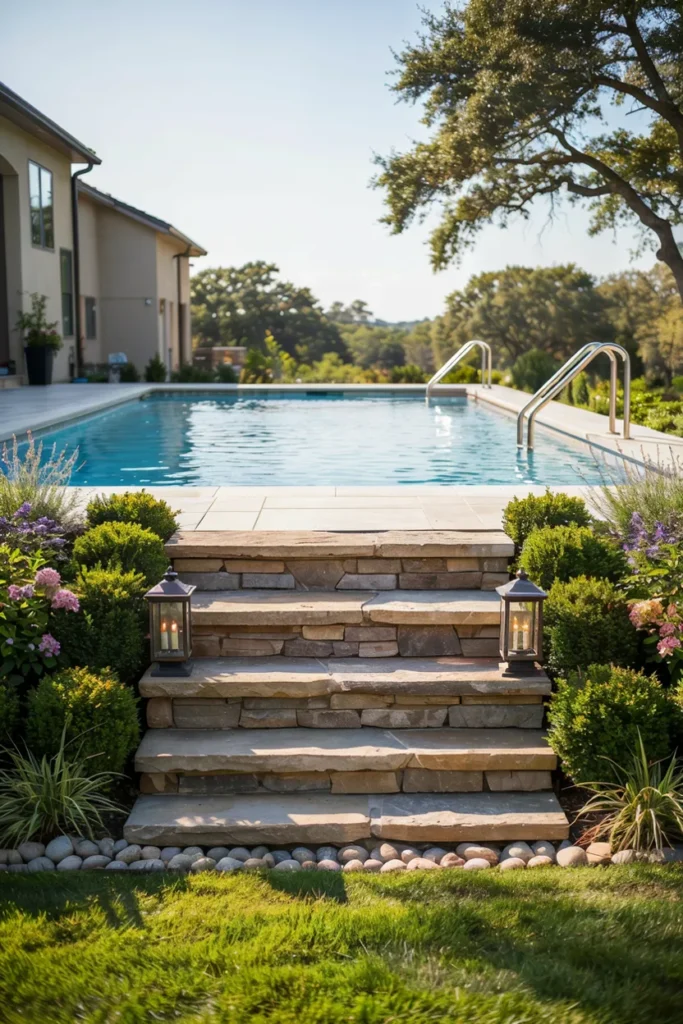
If you love the look of natural stone but not the price, stone veneer is an excellent alternative. Covering a wooden or concrete frame with stone veneer instantly gives your pool area a high-end appearance. I have always been impressed by how realistic modern veneer products look while staying within a reasonable budget.
Reasons to choose stone veneer:
- Elegant appearance
- More affordable than natural stone
- Durable finish
- Wide variety of colors and textures
- Boosts backyard curb appeal
Choose exterior-grade adhesive and grout designed for outdoor use to ensure the veneer stays securely attached.
12. Storage Bench Pool Steps
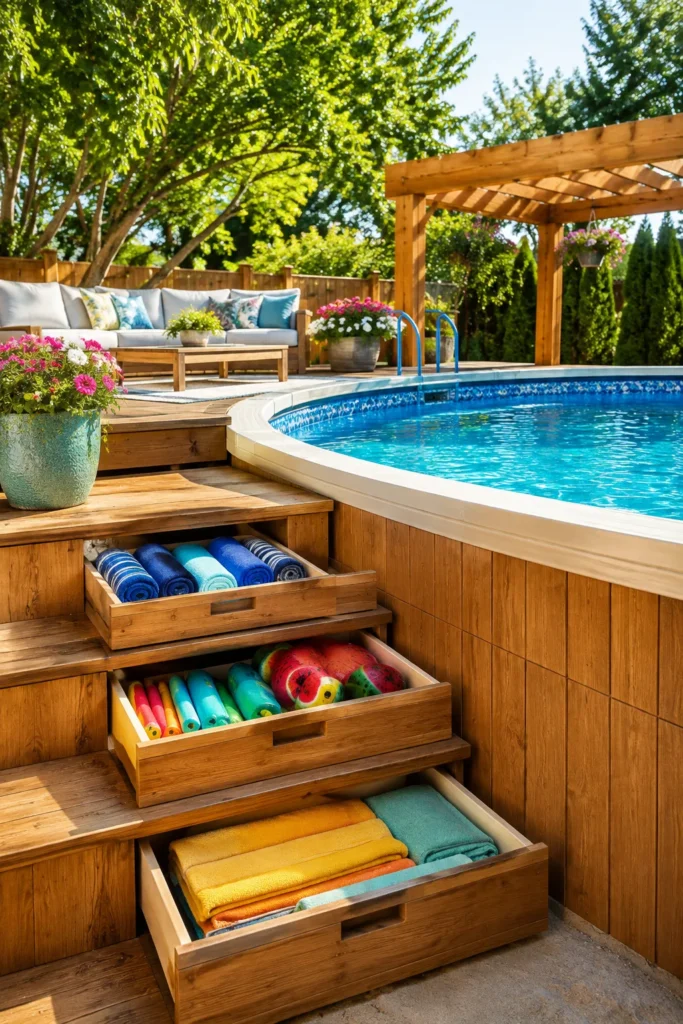
Why build ordinary steps when they can also provide storage? This design combines sturdy stairs with built-in compartments for towels, pool toys, cleaning supplies, or extra sunscreen. I appreciate projects that serve more than one purpose, especially when backyard storage is limited.
Smart features include:
- Hidden storage space
- Keeps pool supplies organized
- Saves backyard space
- Comfortable seating area
- Customizable size
Use waterproof hinges and weather-resistant hardware so the storage compartments remain functional throughout the swimming season.
13. Wraparound Pool Entry Steps
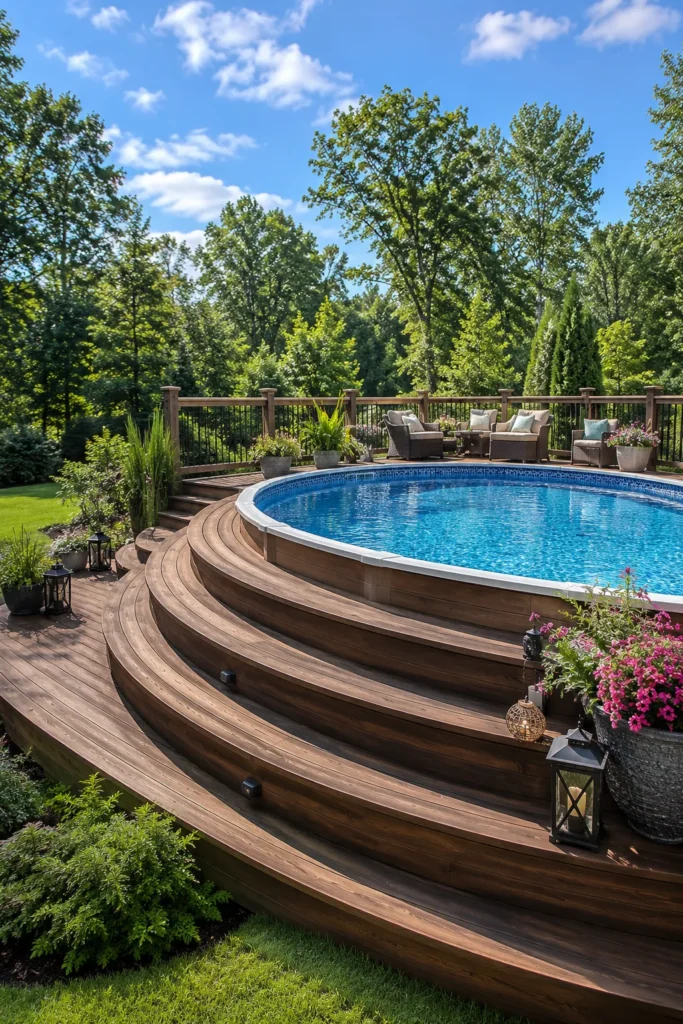
Wraparound steps create a grand entrance by extending around part of the pool’s edge. This style feels open, inviting, and makes it easier for several people to enter or exit the pool at once. I have seen this design completely transform a simple above ground pool into the centerpiece of a backyard.
Why homeowners love it:
- Spacious entry
- Luxurious appearance
- Great for entertaining
- Multiple access points
- Plenty of room for décor
Adding matching railings and outdoor lighting can make the entire setup look professionally built.
14. Mini Deck with Built-In Stairs
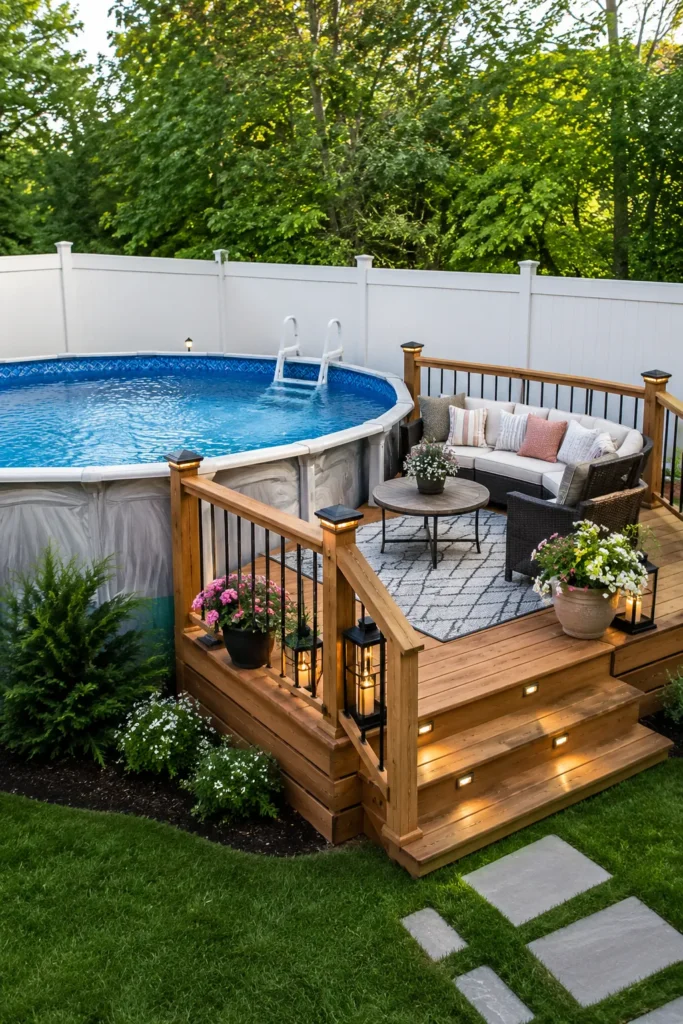
A small deck connected to built-in stairs creates a practical landing area before entering the pool. It gives you a place to set down drinks, towels, or flip-flops while adding a finished look to the space. I find this option especially useful for families who spend long afternoons relaxing by the pool.
Advantages include:
- Comfortable standing area
- Easy pool access
- Great for small backyards
- Adds usable outdoor space
- Simple future deck expansion
Finish the deck with a waterproof stain or sealant to help protect it from constant sun and water exposure.
15. Concrete Paver Staircase
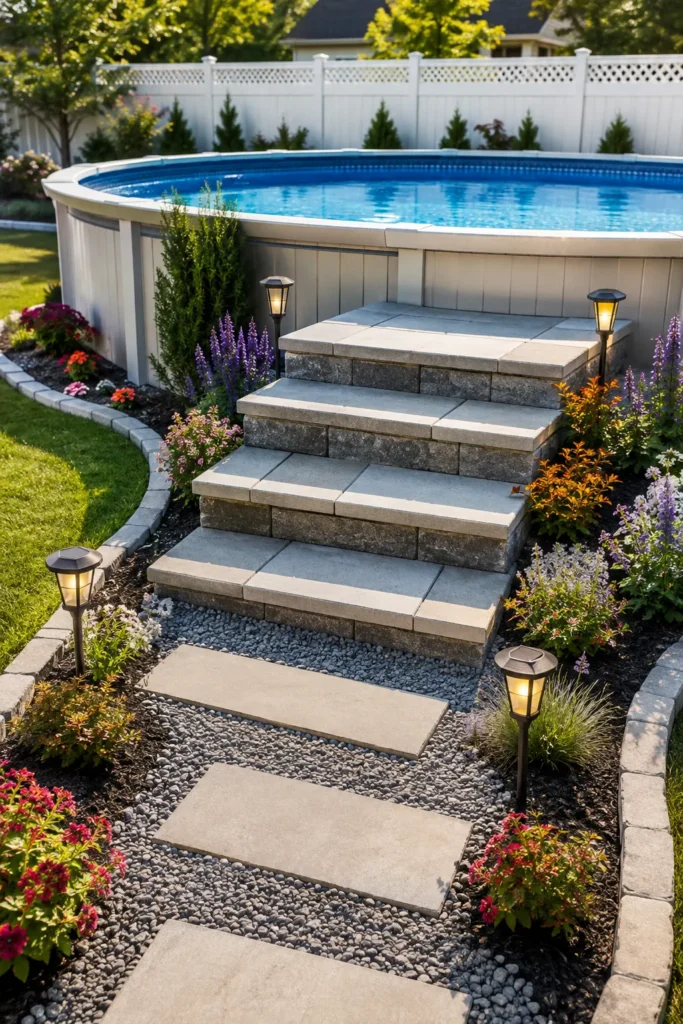
Concrete pavers create durable pool steps with a clean and timeless appearance. Since individual pavers can be replaced if damaged, maintenance stays simple and affordable. I like how this option blends well with almost any landscaping style, from modern patios to cottage-inspired gardens.
Top benefits:
- Strong and stable
- Easy to repair
- Weather resistant
- Wide range of colors
- Budget-friendly compared to poured concrete
Prepare a compacted gravel base before installation to keep the staircase level and reduce movement over time.
16. Small Landing Platform Steps
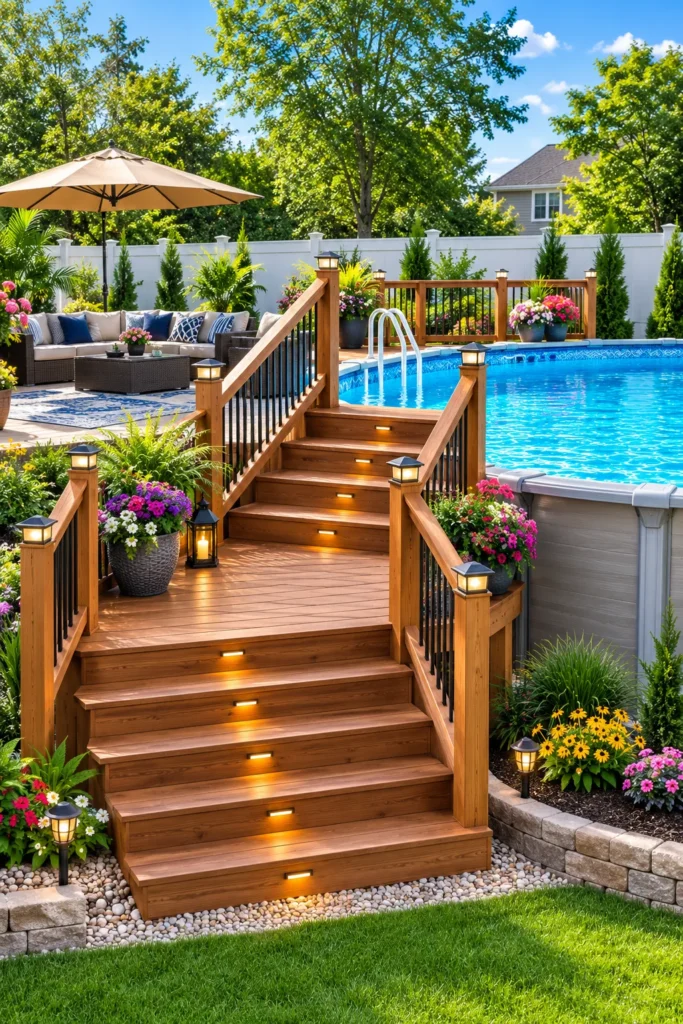
A small landing platform between the ground and the pool entrance makes climbing safer and more comfortable. Instead of stepping directly from the stairs into the pool, you have a stable place to pause. I have noticed that this simple addition makes carrying pool floats or helping young children much easier.
Reasons to add a landing platform:
- Improves safety
- Easier entry and exit
- Comfortable resting point
- Helpful for families
- Works with most stair designs
Complete the project with sturdy handrails and non-slip stair treads for extra confidence, especially when the steps are wet.
17. Modern Black Wood Steps
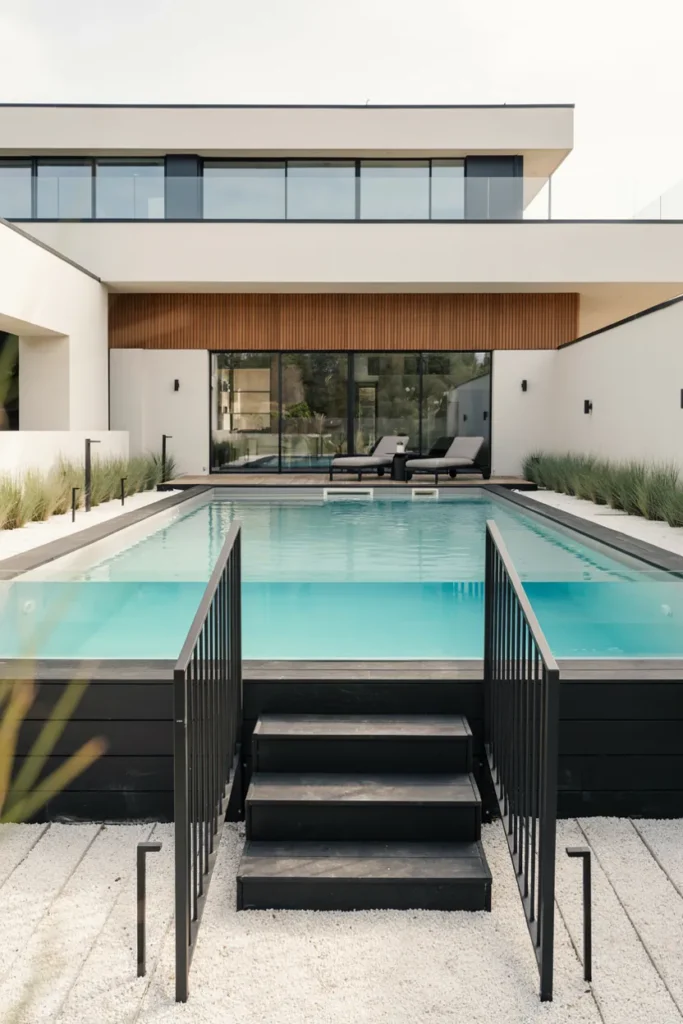
If you want your pool area to have a sleek and contemporary feel, modern black wood steps are an excellent choice. A coat of high-quality exterior black stain or paint can completely transform a basic wooden staircase into a stylish focal point. I once updated an older set of pool steps this way, and the fresh color instantly made the entire backyard look more polished.
Why this design stands out:
- Modern and elegant appearance
- Easy weekend makeover
- Matches most outdoor furniture
- Budget-friendly update
- Simple to maintain with occasional repainting
Use a weather-resistant finish and install non-slip strips on each tread to combine style with safety.
18. White Farmhouse-Style Pool Steps
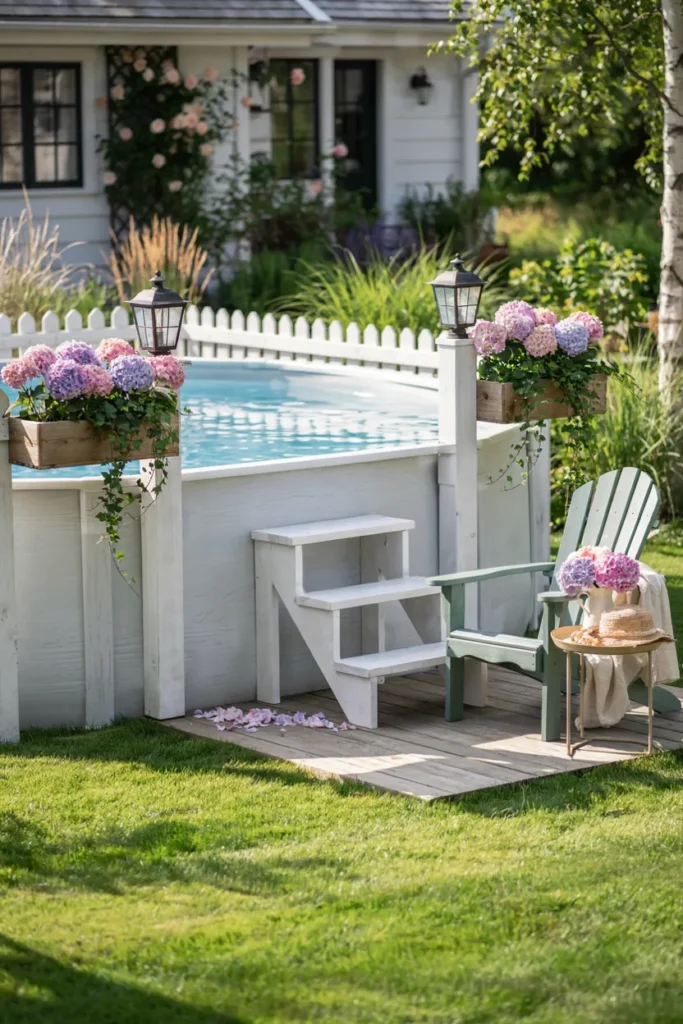
White farmhouse-style steps create a bright and welcoming entrance that feels timeless. They pair beautifully with wooden fences, flower beds, and cozy backyard décor. I especially like this look because it makes even a small pool area feel clean and inviting without requiring expensive materials.
Reasons to love farmhouse steps:
- Bright, classic appearance
- Fits cottage and farmhouse décor
- Easy to customize
- Looks beautiful with natural wood accents
- Affordable DIY project
Choose exterior-grade white paint and seal every exposed surface to help protect the wood from moisture and sunlight.
19. Rope Railing Pool Steps
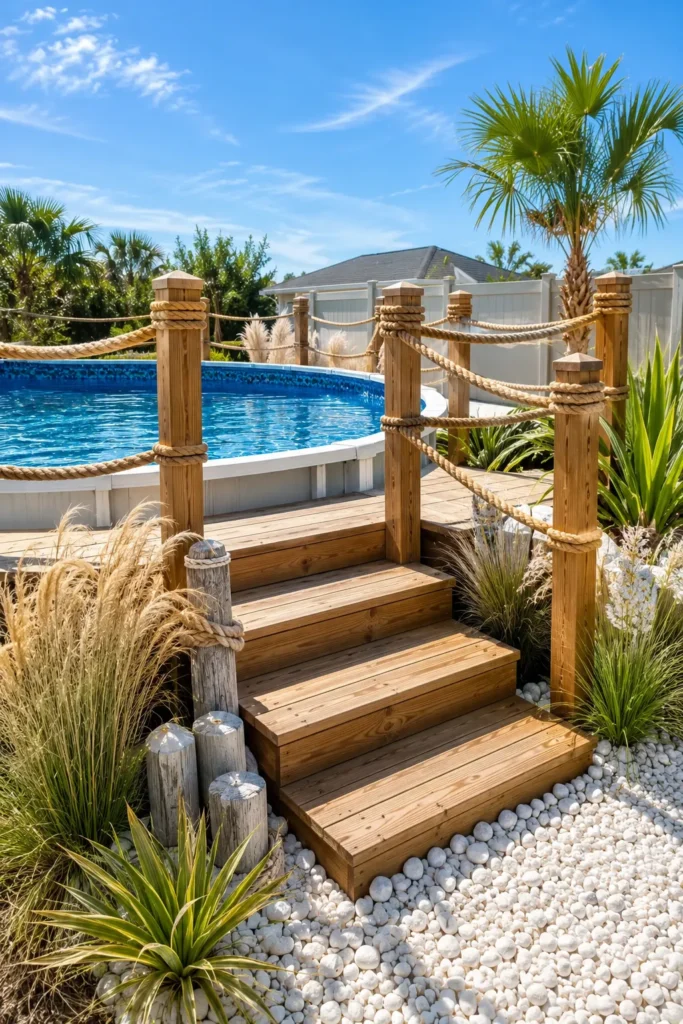
Adding rope railings gives your pool steps a relaxed coastal feel while providing an extra handhold. Thick marine-grade rope paired with sturdy wooden posts creates a decorative feature that is also practical. I have always liked how this simple detail makes a DIY project look thoughtfully designed.
Benefits of rope railings:
- Adds extra support
- Coastal-inspired style
- Budget-friendly upgrade
- Easy to install
- Complements wooden steps
Make sure the rope is pulled tight and securely fastened so it provides reliable support while climbing the stairs.
20. Decorative Planter Steps
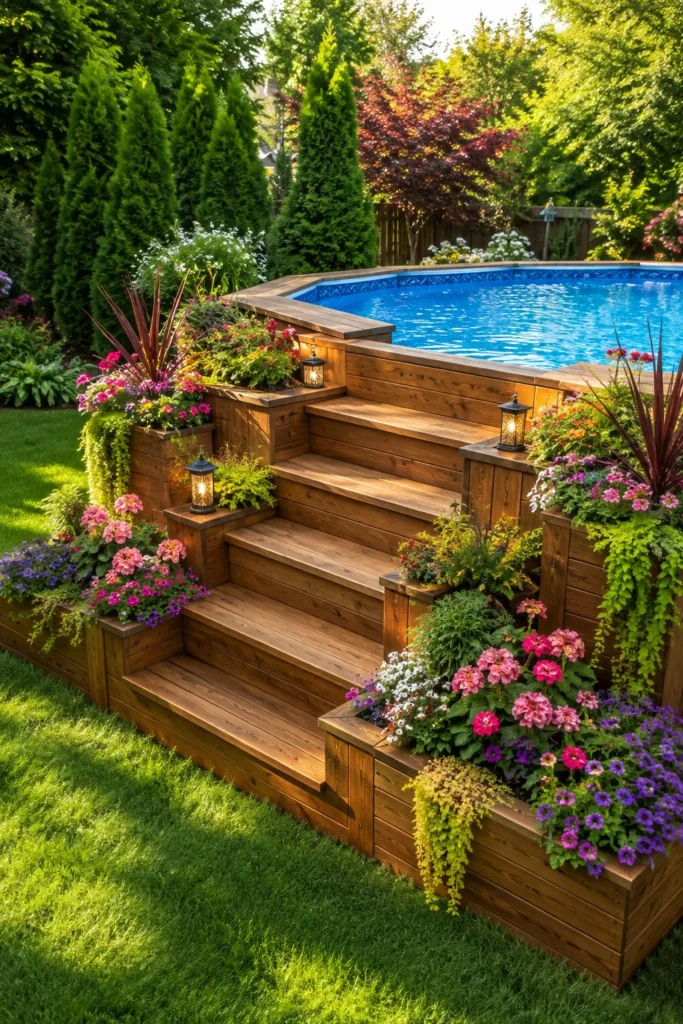
Why not combine your pool steps with a little greenery? Decorative planter steps include built-in spaces for flowers, herbs, or small shrubs that soften the overall look of the staircase. I tried placing colorful flowers beside my pool entrance, and it instantly made the area feel more relaxing and welcoming.
Why you’ll enjoy this idea:
- Adds natural beauty
- Personalizes your backyard
- Makes the entrance feel inviting
- Easy to refresh each season
- Works with many stair designs
Choose plants that enjoy full sun and avoid varieties that shed excessive leaves into the pool.
21. Solar-Lit Pool Steps
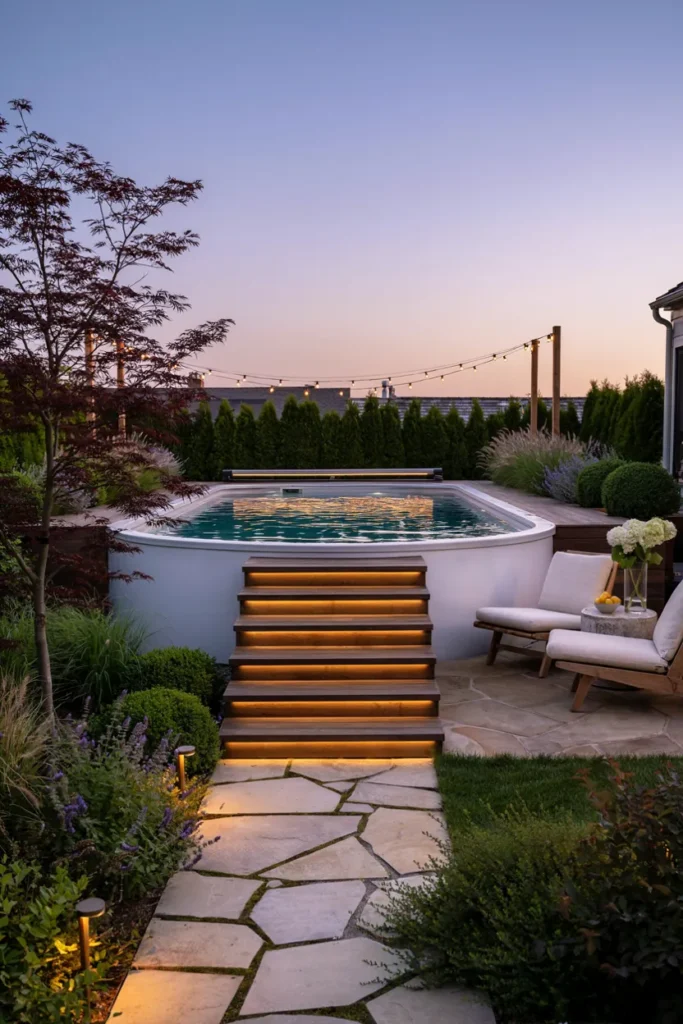
Solar lights make pool steps safer while creating a warm atmosphere after sunset. Since they charge during the day, there is no need for electrical wiring or added energy costs. I added solar lights to my own backyard walkway, and the difference at night was impressive. The soft lighting made every step much easier to see.
Advantages of solar lighting:
- Improves nighttime safety
- No electricity required
- Easy installation
- Energy efficient
- Creates a welcoming outdoor space
Install lights along the sides of the stairs or beneath each tread for a subtle glow that improves visibility.
22. Portable Removable Pool Steps
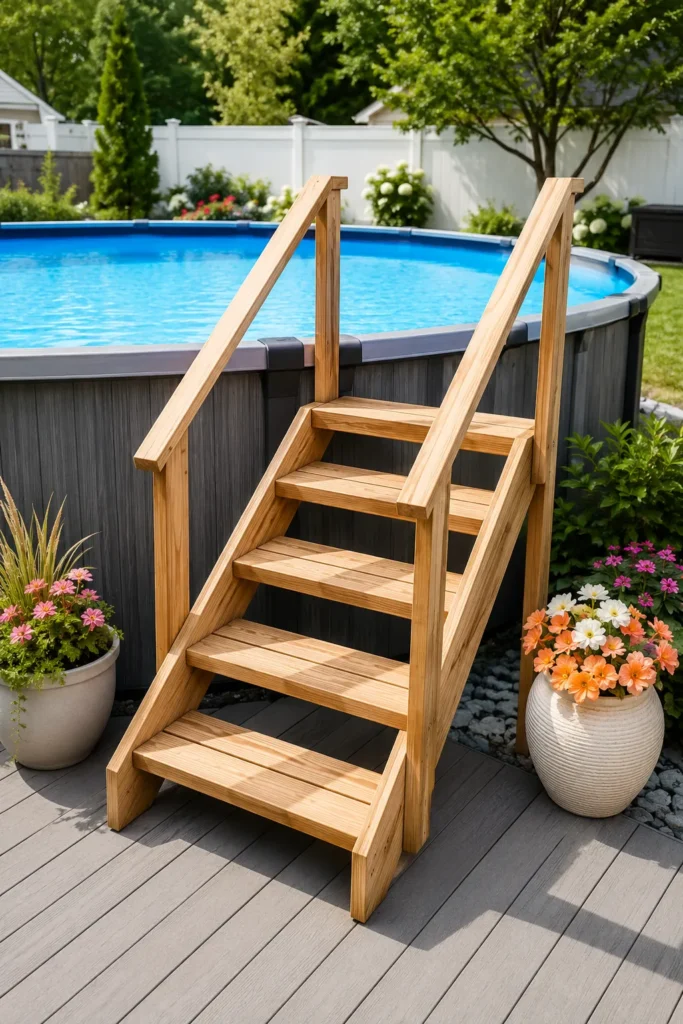
Portable pool steps are ideal if you want flexibility. They can be moved when cleaning the pool or stored away during winter. This design is especially useful for seasonal pools that are taken down every year. Friends who own temporary above ground pools appreciate how convenient removable steps make maintenance.
Reasons to choose portable steps:
- Easy to relocate
- Great for seasonal pools
- Simple winter storage
- No permanent installation
- Convenient for maintenance
Build a lightweight but sturdy frame and add rubber feet to prevent the steps from sliding on smooth surfaces.
23. Budget-Friendly Mixed Material Steps
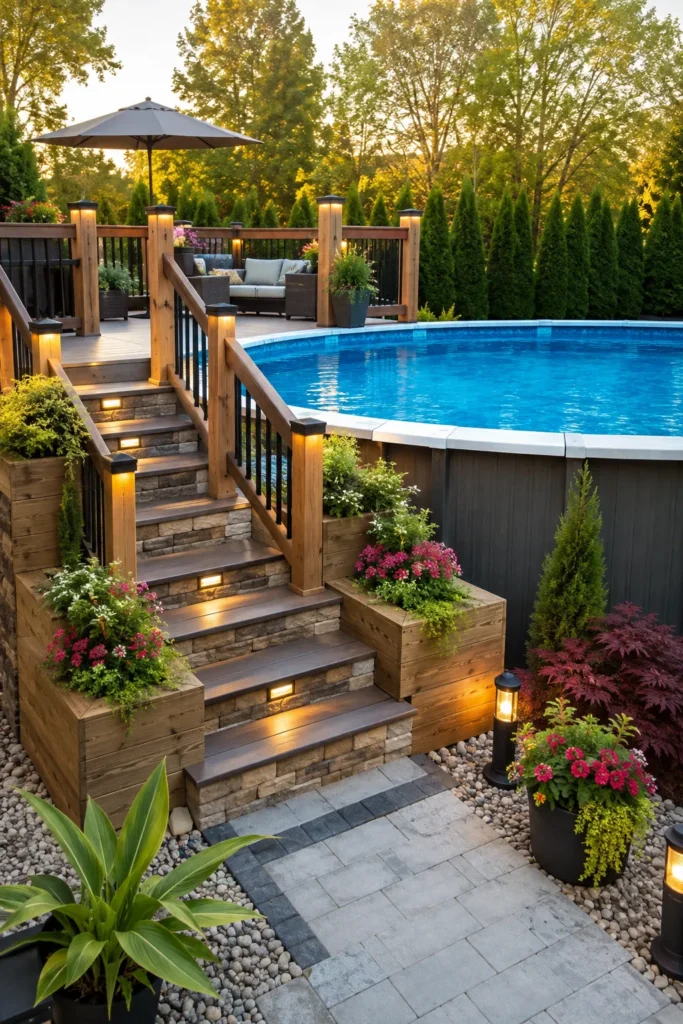
Mixing different materials is one of the smartest ways to save money without sacrificing appearance. You can combine pressure-treated lumber for the frame, concrete pavers for the base, composite boards for the treads, and decorative stone for accents. I’ve found that using leftover materials from previous projects often creates a unique design while keeping costs low.
Why mixed materials work well:
- Helps reduce project costs
- Makes use of leftover supplies
- Creates a custom appearance
- Allows endless design combinations
- Strong and durable when properly built
Plan your design before buying materials so every piece works together and the finished steps look intentional.
Budget-Friendly Materials for DIY Pool Steps
Building attractive pool steps does not require expensive supplies. Choosing the right materials can keep your project affordable while ensuring it lasts for years.
Some of the best budget-friendly materials include:
- Pressure-treated lumber for framing
- Reclaimed pallets for rustic projects
- Concrete cinder blocks
- Gravel for stable foundations
- Concrete pavers
- Composite deck boards for step surfaces
- Reclaimed timber or landscape timbers
- Exterior deck screws and galvanized hardware
- Non-slip stair treads
- Waterproof exterior paint or stain
Whenever possible, check local building supply stores for clearance items or reclaimed materials. You can often find quality products at a fraction of the original price.
How to Maintain Your DIY Pool Steps
Even the best-built pool steps need regular care to stay safe and attractive. A few simple maintenance tasks each season can extend their lifespan and help prevent costly repairs.
Here are a few maintenance tips:
- Wash away dirt, algae, and debris regularly.
- Tighten loose screws and hardware.
- Inspect the frame for signs of rot or damage.
- Reapply waterproof stain or sealant every few years.
- Replace cracked boards immediately.
- Check that the foundation remains level.
- Keep non-slip strips clean and secure.
- Remove leaves that can trap moisture.
- Cover or store removable steps during winter if possible.
A quick inspection at the beginning and end of every swimming season helps catch small problems before they become major repairs.
Conclusion
Building your own above ground pool steps is a practical way to improve safety, comfort, and the overall look of your backyard without stretching your budget. Whether you prefer simple wooden box steps, rustic timber designs, or modern composite stairs, there is an option for every skill level and style.
Start with quality materials, build on a solid foundation, and always make safety a priority. With a little effort, you can create durable pool steps that serve your family well for many summers.
Frequently Asked Questions
What is the cheapest way to build above ground pool steps?
The most affordable option is usually building simple wooden box steps with pressure-treated lumber or using cinder blocks and pavers. Reclaimed pallets and leftover building materials can reduce costs even further while still creating sturdy steps.
What wood is best for DIY pool steps?
Pressure-treated lumber is the most popular choice because it resists moisture, insects, and decay. Cedar is another excellent option if you prefer a natural appearance, although it usually costs a little more.
Can I build pool steps without attaching them to a deck?
Yes. Many DIY pool steps are completely freestanding and rest on a stable gravel or concrete paver base. Just make sure the structure is level, sturdy, and does not shift during use.
How can I make above ground pool steps safer?
You can improve safety by:
- Installing sturdy handrails
- Adding non-slip stair treads
- Keeping the steps clean and dry
- Using a solid, level foundation
- Inspecting the structure regularly for loose hardware or damaged boards
- Adding solar lights for better nighttime visibility
Do DIY pool steps need a concrete foundation?
Not always. Many DIY pool steps perform well on a properly compacted gravel base or concrete pavers. However, larger or heavier stair designs may benefit from a concrete pad for added stability and long-term durability.