9 DIY Outdoor Privacy Screens That Look Surprisingly Expensive
Your backyard should feel like a retreat, not a fishbowl. Whether your neighbor’s deck has a direct sightline to your patio or you just want a cozy, enclosed feel, privacy screens are the answer.
I’ve tested several of these myself, and trust me, none of them require a contractor or a big budget. Just some weekend hours and a little patience.
1. Bamboo Roll Privacy Screen
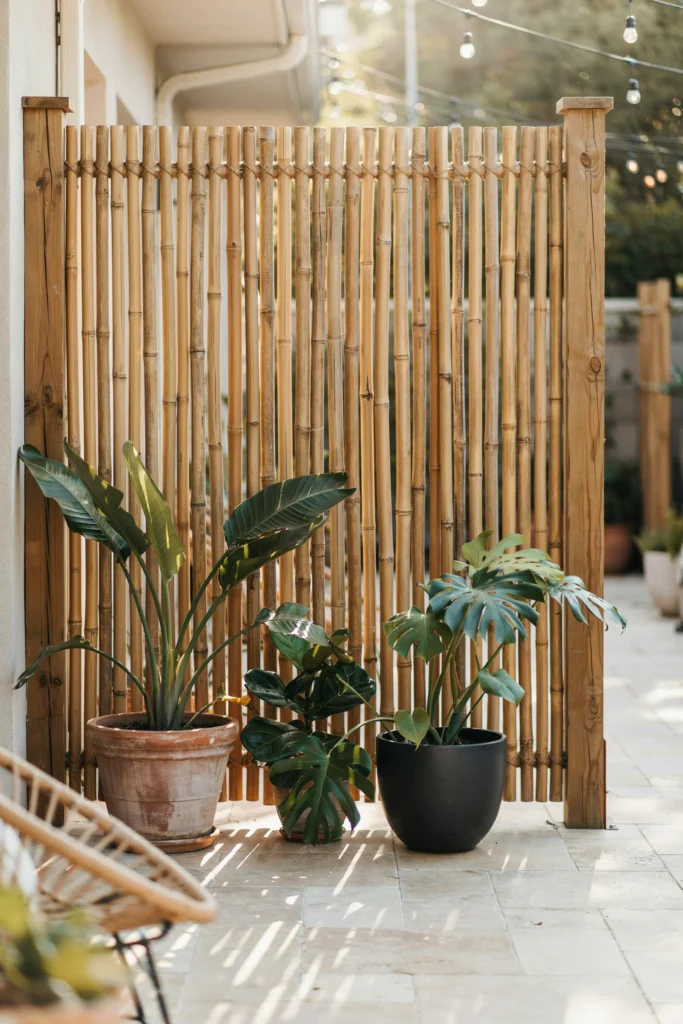
This was the first one I ever tried, and it honestly changed the way I thought about outdoor DIY.
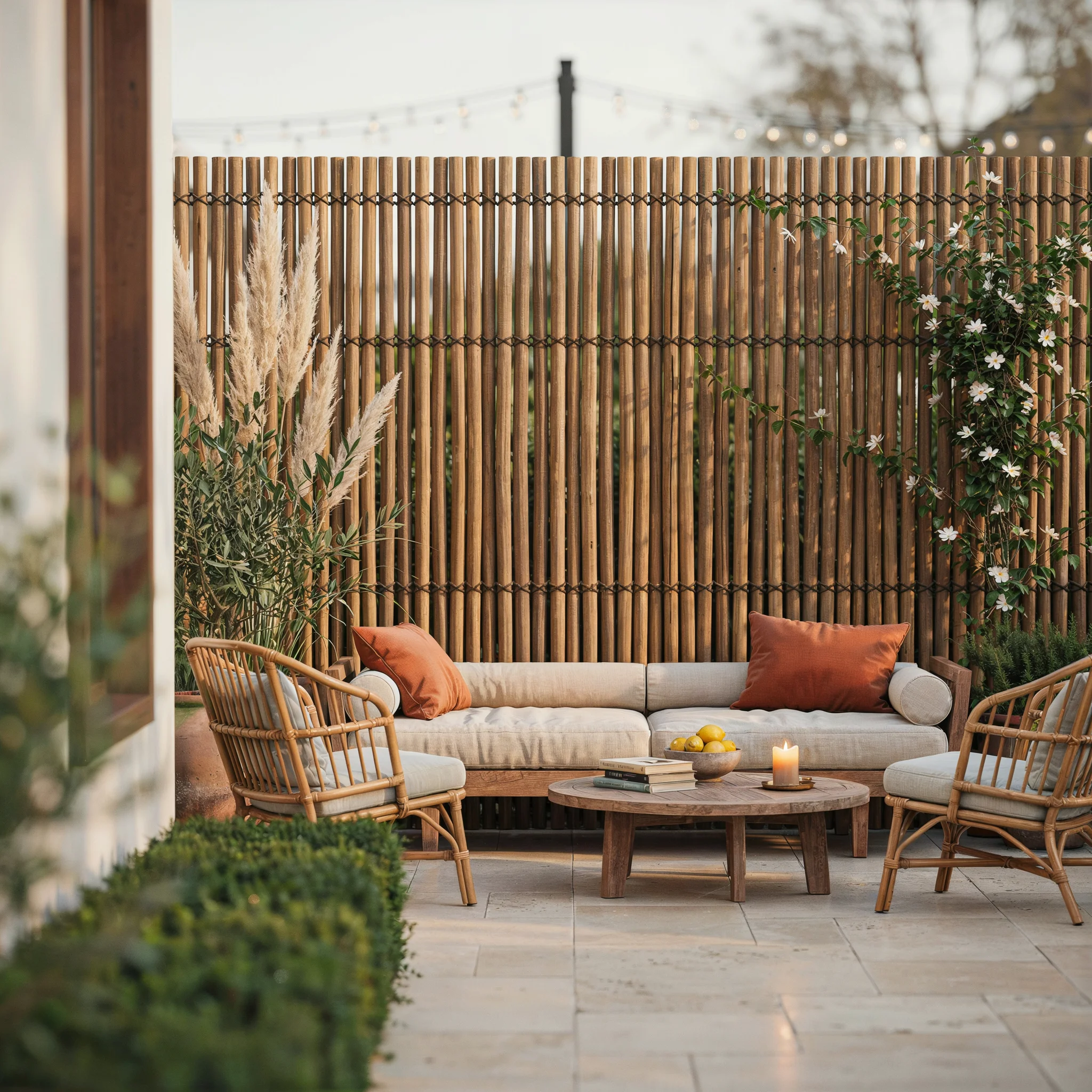
Bamboo rolls are inexpensive, easy to find at most home improvement stores, and they install in under an hour. You simply attach them to an existing fence, railing, or a basic wooden frame you build yourself. The natural texture gives your space an organic, resort-like feel that looks far more expensive than the price tag suggests.
What you’ll need:
- Bamboo roll fencing (sold by the linear foot or in pre-cut rolls)
- Zip ties or wire
- A basic wood or metal frame if you don’t have an existing fence
Tips that make a difference:
- Double up the bamboo layer if you want full opacity
- Seal the ends with outdoor wood sealant to extend its life
- Pair it with potted plants at the base to soften the look
I attached mine to a simple cedar post frame along my back patio, and guests always think I paid someone to install it.
2. Cinder Block and Wood Planter Wall
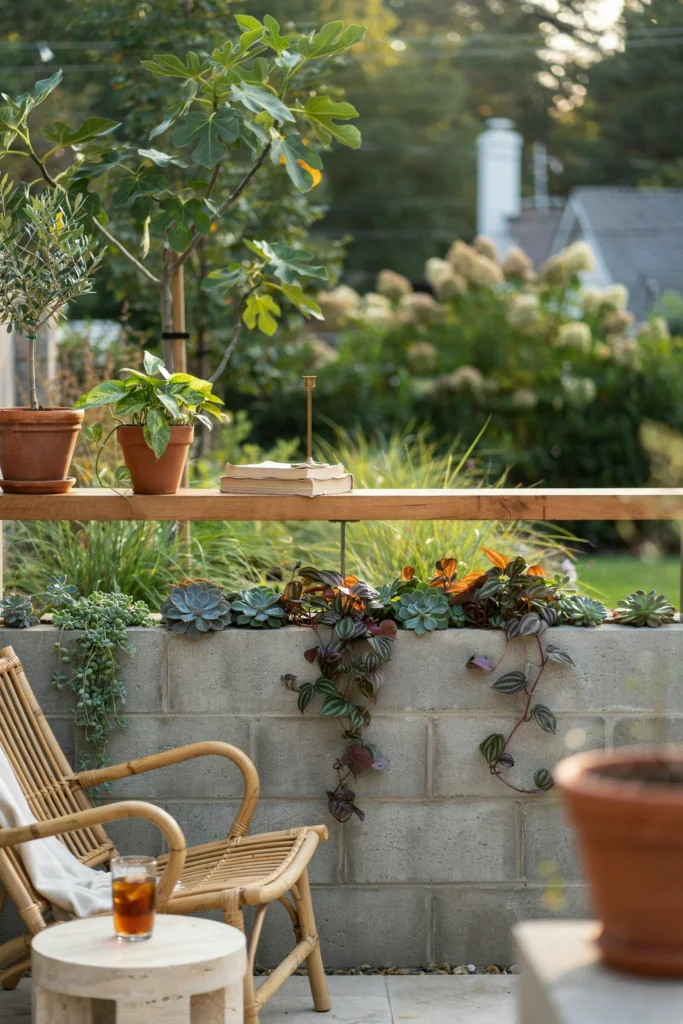
This one takes a weekend but the result looks like something straight out of a landscape design magazine.
You stack cinder blocks in a low wall formation, fill the hollow cores with soil, and plant trailing greenery or flowers right inside the blocks. Then cap the top with a smooth wooden board that doubles as a narrow shelf or drink ledge.
Why it works:
- The combination of industrial concrete and warm wood looks intentional and polished
- Living plants soften the hardscape and add color
- It doubles as a raised planter, so you get two features in one
I used succulents and trailing sweet potato vine in mine. Low maintenance, high visual impact.
3. Outdoor Curtain Privacy Screen
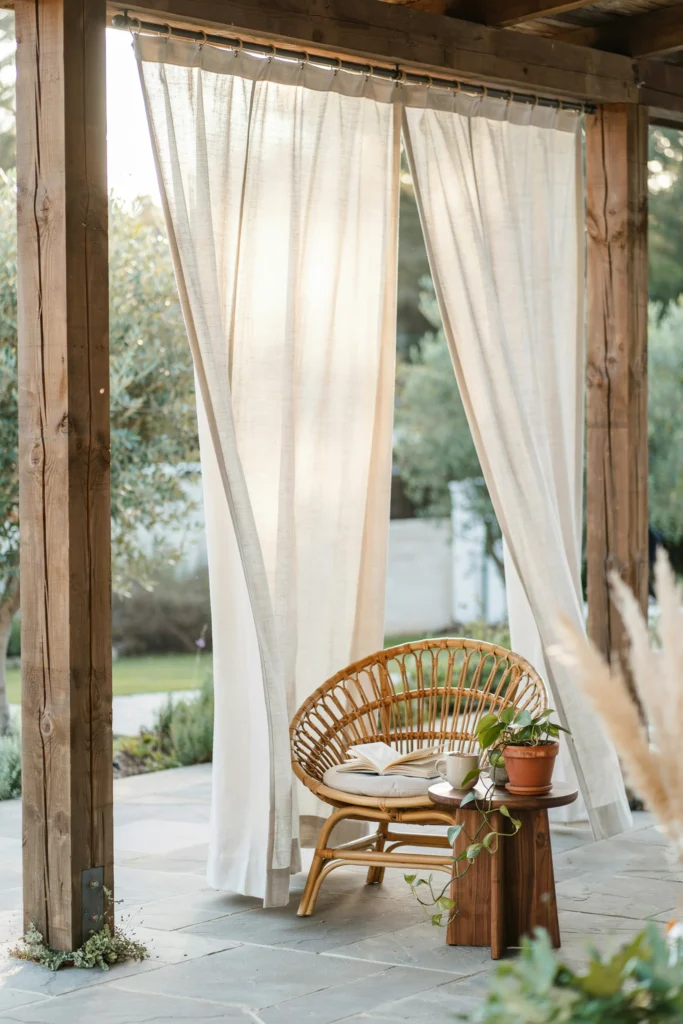
If you have a pergola, porch posts, or even two sturdy wooden posts you’ve set in the ground, outdoor curtains are one of the fastest and most elegant privacy solutions out there.
Use weather-resistant curtain panels made from outdoor fabric (SUNBRELLA is a popular option, but there are plenty of affordable alternatives). Thread them onto a stainless steel tension rod or a basic curtain rod with outdoor-rated hardware.
What makes this look expensive:
- Choose solid, neutral colors like warm white, linen, or slate gray
- Hang the rods high and let the curtains puddle slightly at the ground
- Use large curtain rings for a clean, finished look
I hung outdoor linen curtains between two posts on my side patio, and they completely transformed the space. They filter the light beautifully in the afternoon and add a soft, breezy feel.
4. Vertical Pallet Garden Screen
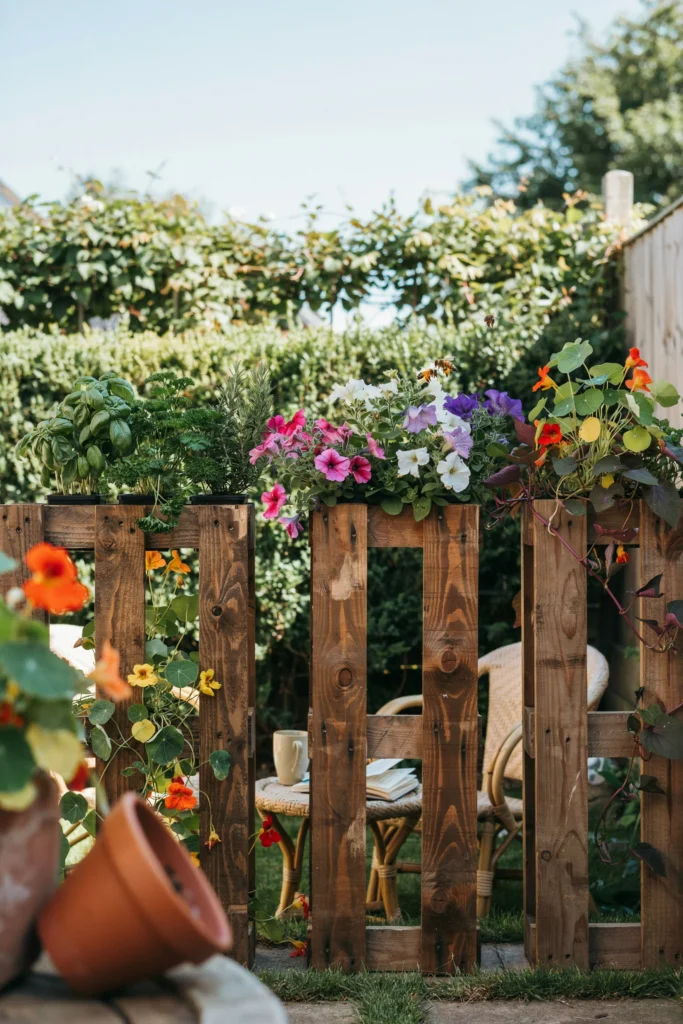
Old wooden pallets are practically free if you know where to look, and they make genuinely beautiful privacy screens with a little bit of work.
Stand two or three pallets upright side by side, secure them together with heavy-duty brackets, and anchor them to the ground with post stakes. Then staple landscape fabric to the back of each pallet opening and fill with potting soil. Plant herbs, flowers, or trailing vines directly into each opening.
Best plants for this:
- Trailing nasturtiums (they fill in fast and flower)
- Herbs like thyme and oregano (practical and attractive)
- Succulents (low water, easy care)
- Petunias or calibrachoa for color
The key is to treat the pallets before you start. Sand them lightly, check for splinters, and apply a coat of outdoor wood stain in a color that complements your home. Gray or dark walnut stain makes pallets look like they came from a furniture store.
See Also: 12 Eco-Friendly Outdoor Privacy Screens That Make Your Backyard Feel Like a Retreat
5. Lattice Panel Screen with Frame
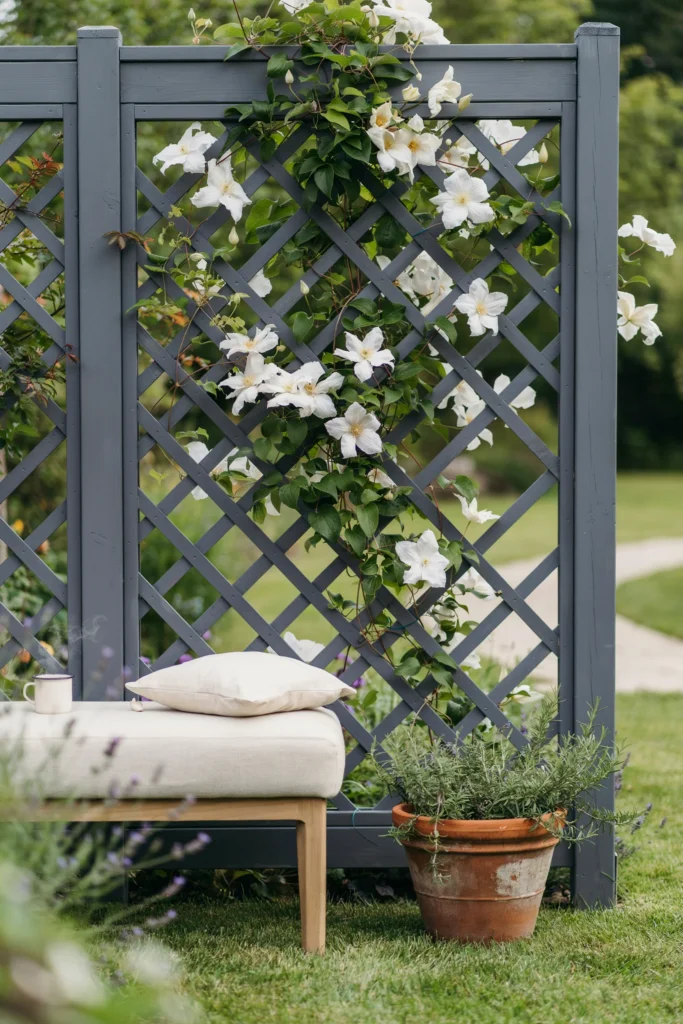
Lattice panels have been around forever, but most people install them poorly and end up with something that looks cheap. The secret is framing them properly.
Build a simple rectangular frame out of 2×4 lumber, drop a lattice panel inside, and cap the frame with a routed edge or simple trim boards. Paint or stain the whole thing in a consistent color, preferably something that matches your home’s exterior.
Upgrade ideas:
- Use diagonal lattice instead of square grid for a more classic look
- Train climbing roses, jasmine, or clematis up the screen
- Add a simple post cap on each corner post for a finished, architectural feel
I built three of these panels for my side yard and finished them in a deep charcoal gray. More than one person has asked which landscaping company I used. The answer was just me, a miter saw, and two weekends.
6. Hanging Macrame Privacy Wall
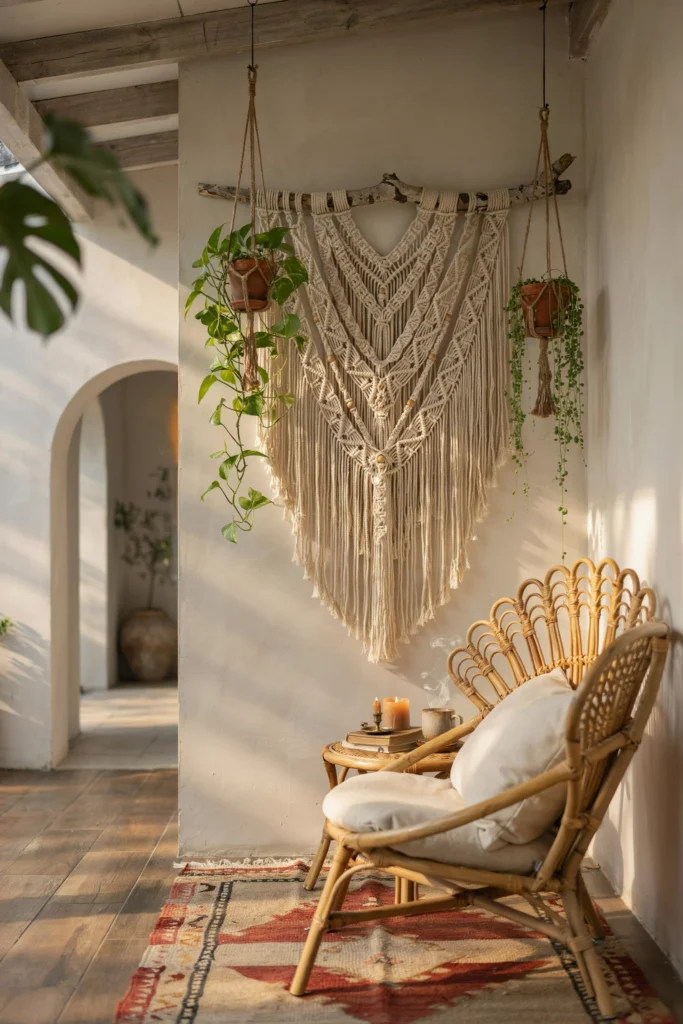
This one works best for covered patios and porch areas rather than open yards, but if you have overhead structure to hang from, it is one of the most visually striking options on this list.
Large-scale macrame hanging panels create a textural, bohemian screen that diffuses light without completely blocking it. You can buy pre-made outdoor macrame panels, but making your own is surprisingly straightforward if you know basic knots.
What you need:
- 5mm or 7mm cotton or jute rope (outdoor-treated if possible)
- A dowel rod or driftwood branch for hanging
- Basic knots: square knot, spiral knot, larks head
Honest note: This is the most labor-intensive option on the list, but the finished product is something you genuinely cannot find in stores. Every single person who sees mine asks where I bought it.
7. Corrugated Metal Panel Screen
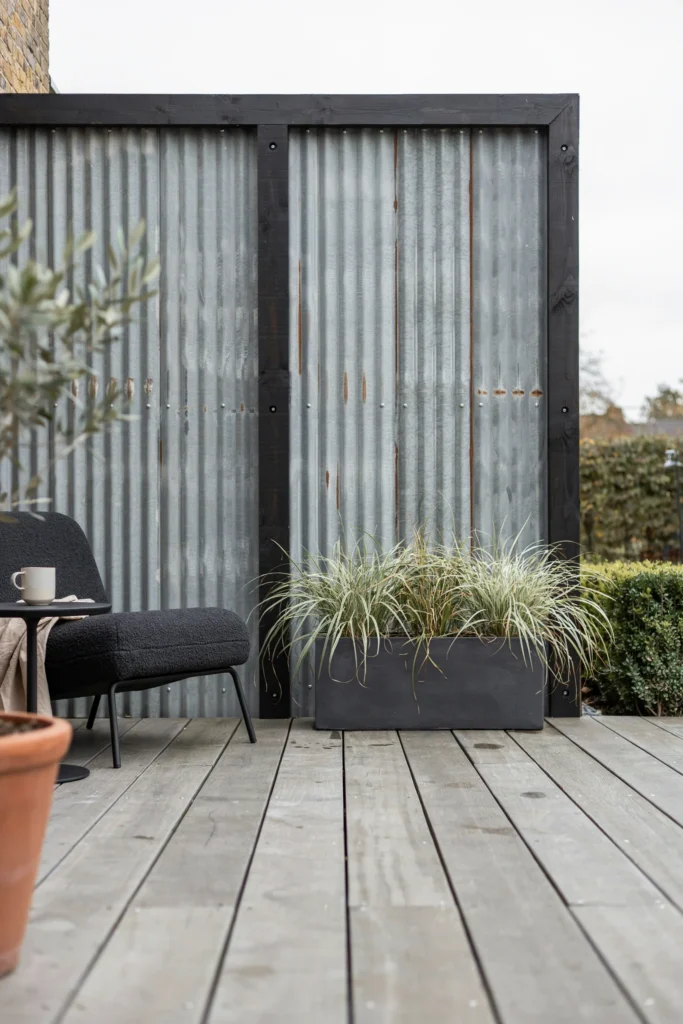
This one surprised me the most. Corrugated metal, which is the same material used on barn roofs and garden sheds, looks incredibly modern and clean when framed and installed correctly.
Build a simple wooden frame from cedar or pressure-treated lumber, cut the corrugated metal panels to size with tin snips or a circular saw with a metal blade, and attach them to the frame with metal screws. Finish the frame with a dark stain or matte black paint.
Why this reads as expensive:
- The contrast between raw industrial metal and dark-stained wood is sharp and intentional
- It ages beautifully over time, developing a patina that adds character
- It is completely opaque, so you get full privacy
This works best in contemporary, farmhouse, or industrial-styled outdoor spaces. If your home leans traditional or cottage-style, the look might feel slightly out of place.
8. Outdoor Bookcase Privacy Screen
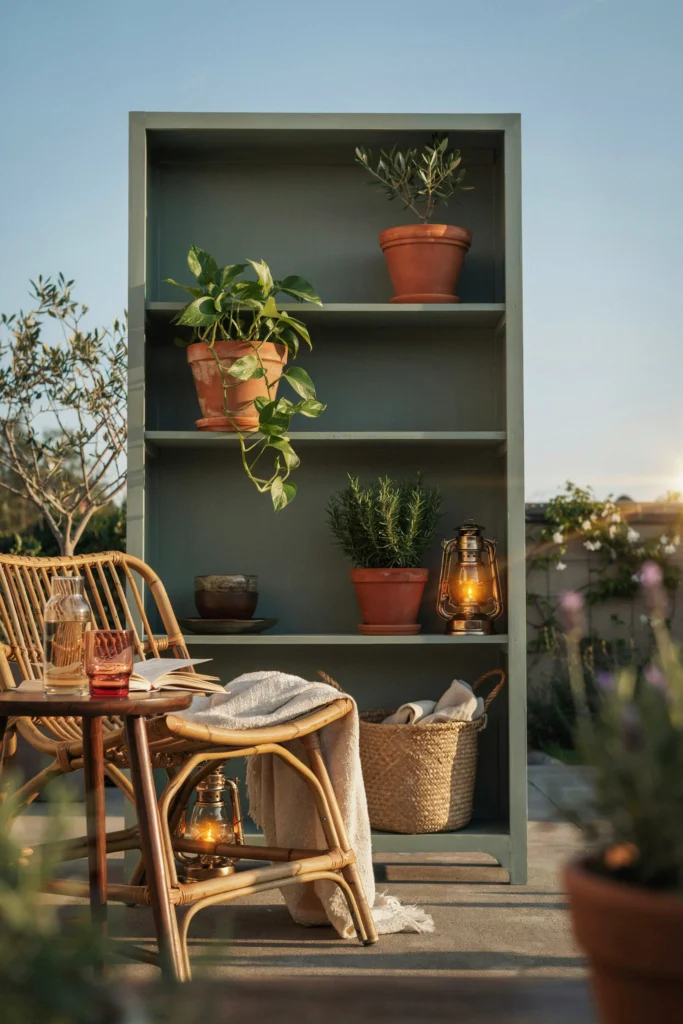
This is the one that gets the most comments whenever I share photos of it.
Take a basic outdoor-rated bookshelf or build a simple open-frame shelving unit from pressure-treated wood. Position it as a privacy divider on your deck or patio and style it with outdoor-safe items: ceramic planters, lanterns, weather-resistant baskets, and small potted succulents.
What makes it work:
- It creates privacy while also acting as a styled vignette
- The depth and layering make it look incredibly intentional
- You can rearrange it seasonally to keep it feeling fresh
Use exterior paint or a solid stain on the wood. I did mine in a warm sage green and filled it with terracotta pots, brass lanterns, and a few trailing pothos. It photographs beautifully and functions as both a screen and a display shelf.
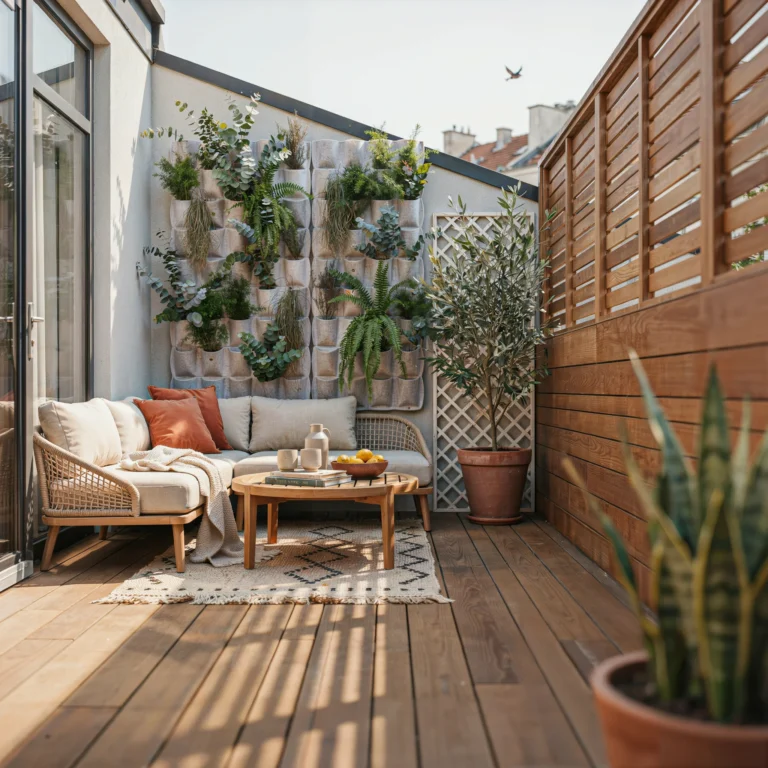
9. Wooden Slat Privacy Screen
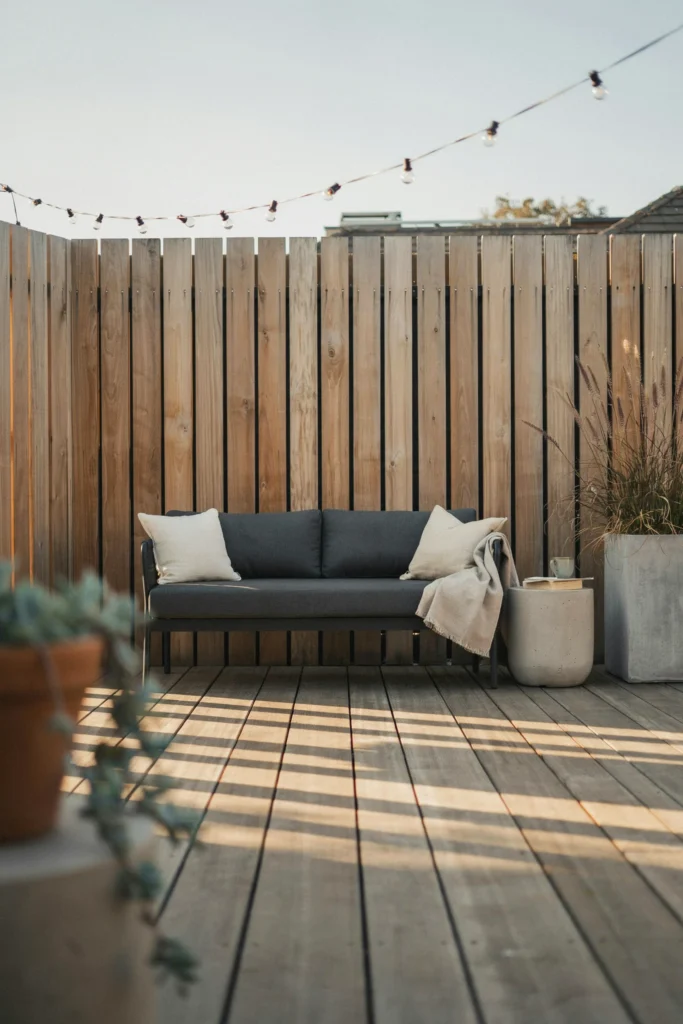
This is the most classic option on the list and, when built well, the one that most closely resembles something you’d see in a high-end landscape architecture project.
You build a frame from 4×4 posts and horizontal rails, then attach evenly spaced 1×4 or 1×6 cedar slats vertically. Leave a small gap between each slat (typically half an inch to an inch) so air flows through and the screen doesn’t feel completely solid.
Details that elevate the look:
- Use cedar or redwood, both are naturally rot-resistant and have beautiful grain
- Leave the wood natural and seal it with a clear exterior finish for a clean, modern look, or stain it dark for a more dramatic effect
- Space your slats consistently and use a simple jig to ensure even gaps throughout
This is the project I’d recommend to anyone who wants something that looks truly built-in and permanent. The material cost runs higher than some other options, but the result is worth it. Mine has held up through three seasons without any issues, and it looks as good today as when I first built it.
Final Thoughts
You do not need a massive budget or professional help to create a backyard that feels private, polished, and personal. Most of these projects cost between $50 and $300 depending on the scale, and all of them can be completed over a single weekend.
Start with the one that fits your skill level and aesthetic. If you are a total beginner, the bamboo roll or outdoor curtain screen is your best entry point. If you have some tools and confidence, the wooden slat screen or corrugated metal panel will give you the most dramatic transformation.
The goal is a space that feels like yours. These screens do exactly that.