18 Outdoor Home Gym Ideas That Will Transform Your Backyard
When I turned my own backyard into a workout space, I realized pretty quickly that an outdoor gym isn’t just about dragging a few dumbbells onto the patio. It’s about creating a space you actually want to spend time in.
Whether you have a sprawling yard or a tight side lot, there’s a setup here that will fit. Let’s get into it.
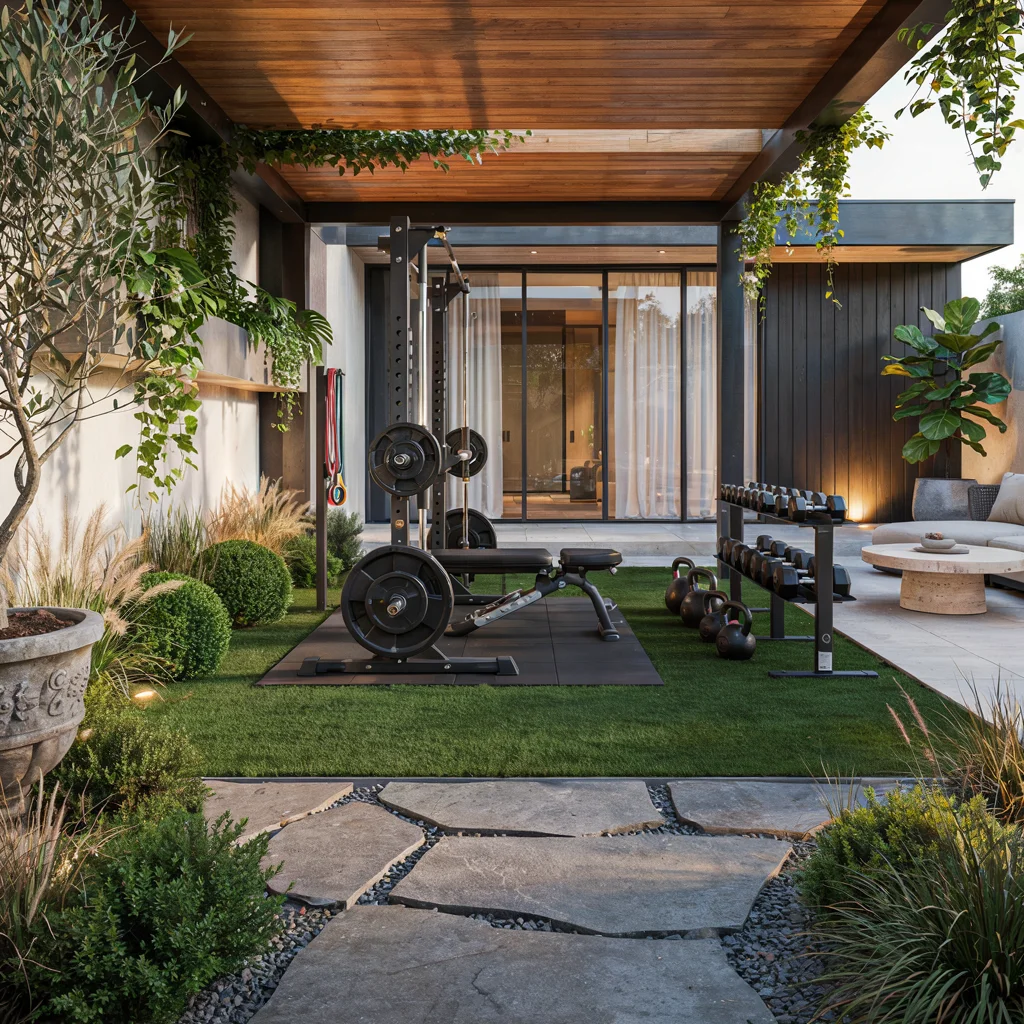
1. Covered Patio Gym

If you already have a covered patio, you’re halfway there. This is one of the easiest ways to start an outdoor gym because you get shade and rain protection without building anything new.
- Lay down interlocking rubber mats to protect the existing flooring
- Mount a pull-up bar to the patio ceiling if the structure allows it
- Keep equipment along the walls so you still have open space for stretching or mat work
I started with exactly this setup and it made the whole idea of “working out outside” feel a lot less intimidating.
2. Container Gym Conversion
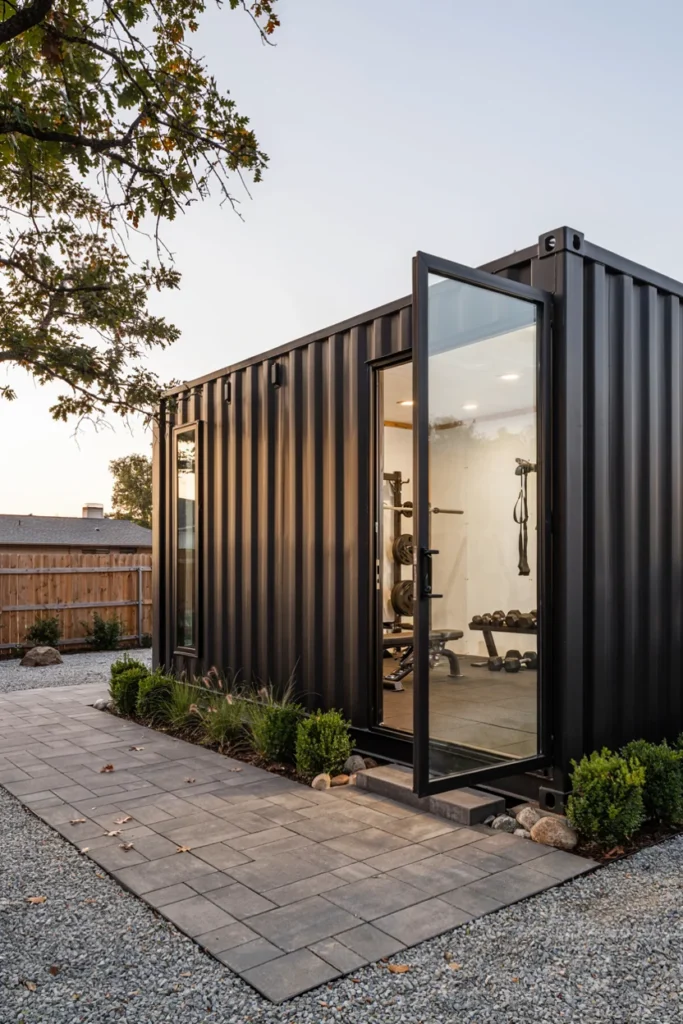
Shipping containers have become a favorite for backyard gyms, and it’s easy to see why. They’re sturdy, weatherproof once sealed properly, and give you a real four-walled room without a full construction project.
- Add insulation and ventilation before moving equipment in
- Cut in a window or two for natural light and airflow
- Use wall-mounted racks to save floor space inside the tight footprint
This option works especially well if you want something that feels like a proper gym room rather than an open-air setup.
3. Budget-Friendly DIY Setup
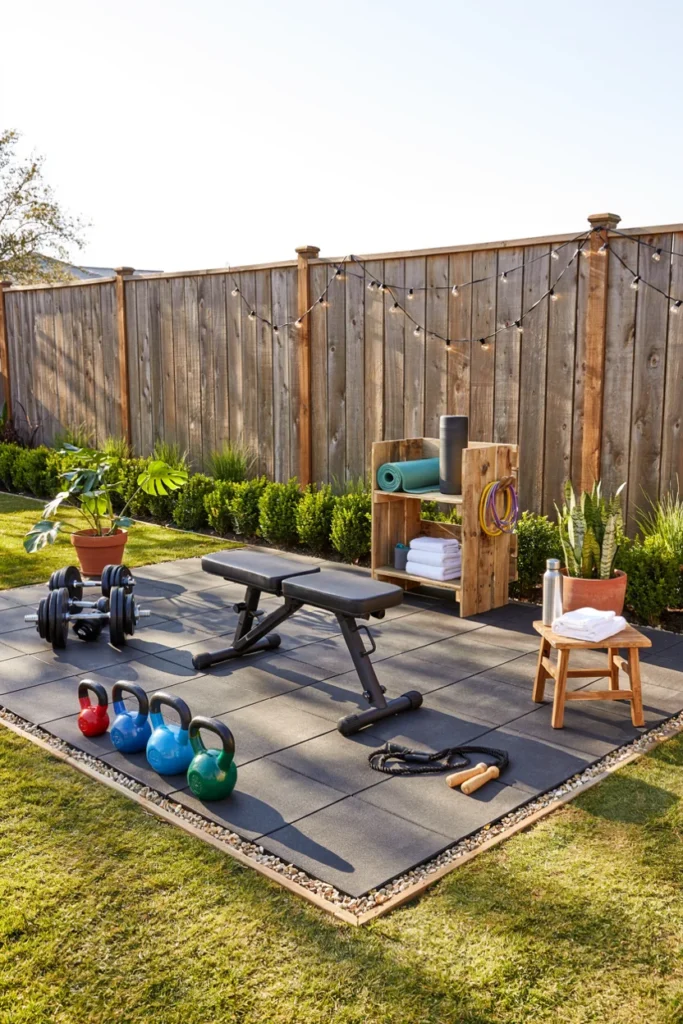
You don’t need a big budget to get moving. Some of the most functional home gyms I’ve seen were built with secondhand equipment and a little creativity.
- Check local marketplace listings for used weights and benches
- Use pavers or leftover rubber stall mats instead of pricey gym flooring
- Build your own storage rack with basic lumber and PVC pipe
Start small, add pieces as you go, and you’ll end up with a setup that actually matches how you train.
4. Small Backyard Corner Gym

Not everyone has room for a dedicated gym area, and that’s fine. A corner of your yard can absolutely do the job.
- Choose compact, stackable equipment like adjustable dumbbells and resistance bands
- Install a slim wall-mounted rack instead of a floor unit
- Use a foldable bench that tucks away when not in use
I’ve found that a well-organized 6×6 foot corner gets more use than a sprawling space that feels like a chore to maintain.
5. Turf-Floored Open-Air Gym

Turf flooring gives your setup a clean, athletic look and it holds up well to heavy equipment and sled pushes.
- Choose a turf pile height around half an inch for stability under weights
- Add a rubber underlay in high-impact zones
- Border the turf with pavers or edging to keep it from shifting
This is one of the more visually striking setups, and it photographs beautifully if you’re documenting your fitness space.
See Also: 25 Modern Home Gym Ideas That’ll Make You Actually Want to Work Out
6. Pergola Gym Space
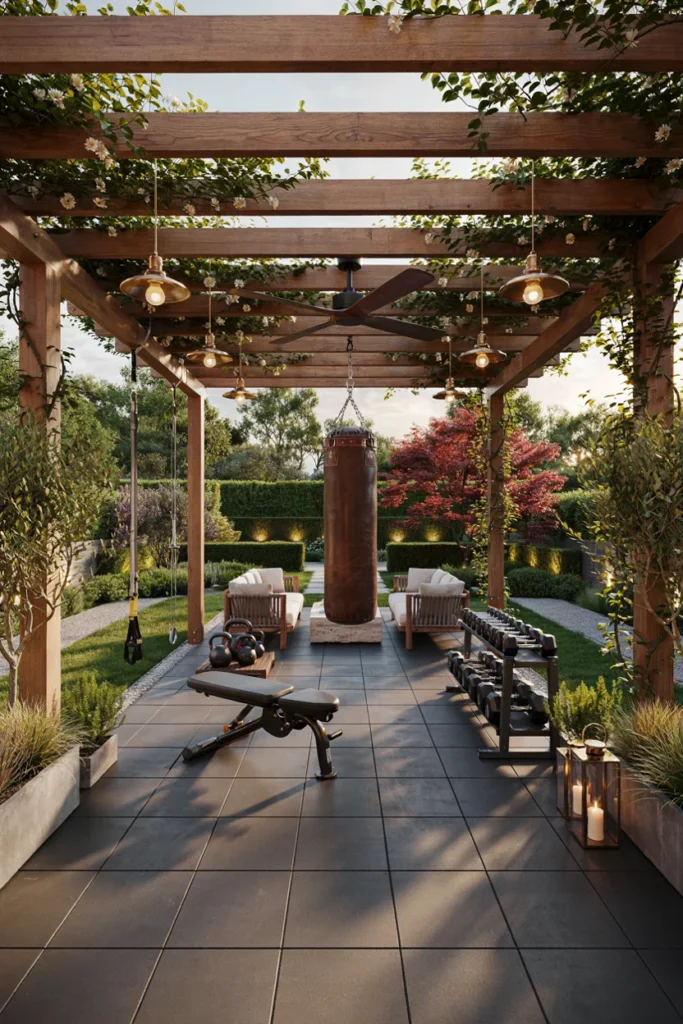
A pergola adds structure and shade without fully enclosing the area, which keeps things feeling open while still giving some protection from direct sun.
- Train climbing vines or install a shade cloth for extra coverage
- Hang resistance bands or TRX straps from the crossbeams
- Add string lights for early morning or evening sessions
There’s something about training under a pergola that feels more intentional than just working out on an open slab.
7. Poolside Fitness Zone
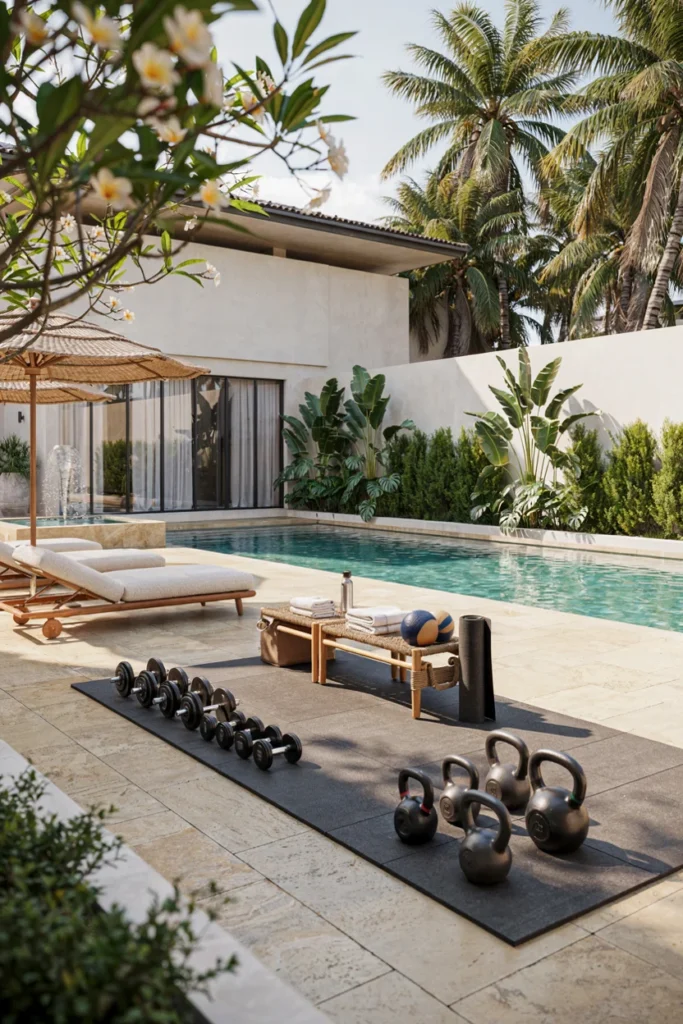
If you already have a pool, setting up a fitness zone nearby makes total sense. You get the benefit of jumping straight into the water to cool down after a tough session.
- Use non-slip, water-resistant flooring around the workout area
- Keep equipment a few feet back from the pool edge to avoid splash damage
- Store weights in a waterproof bin or cabinet when not in use
This setup naturally encourages more outdoor time since swimming and training live in the same space.
8. Garage-to-Backyard Extension Gym

If your garage gym has outgrown its four walls, extending it into the backyard is a smart move. You keep the equipment you already have and just give it more breathing room.
- Add a covered walkway or awning connecting the garage to the outdoor space
- Keep heavier equipment inside and use the yard for cardio or open floor work
- Match the flooring style between both areas for a cohesive feel
This approach worked well for me when my garage started feeling cramped but I wasn’t ready to give up the equipment already set up in there.
9. Rustic Wood-Framed Gym

A wood-framed structure gives your gym a warm, cabin-like feel that fits especially well with a farmhouse or countryside style backyard.
- Use cedar or pressure-treated lumber for the frame to handle outdoor exposure
- Leave the sides partially open for airflow while still framing the space
- Pair with simple black steel equipment for contrast against the wood tones
This style tends to age really well and only gets more character over time.
10. Modern Minimalist Outdoor Gym
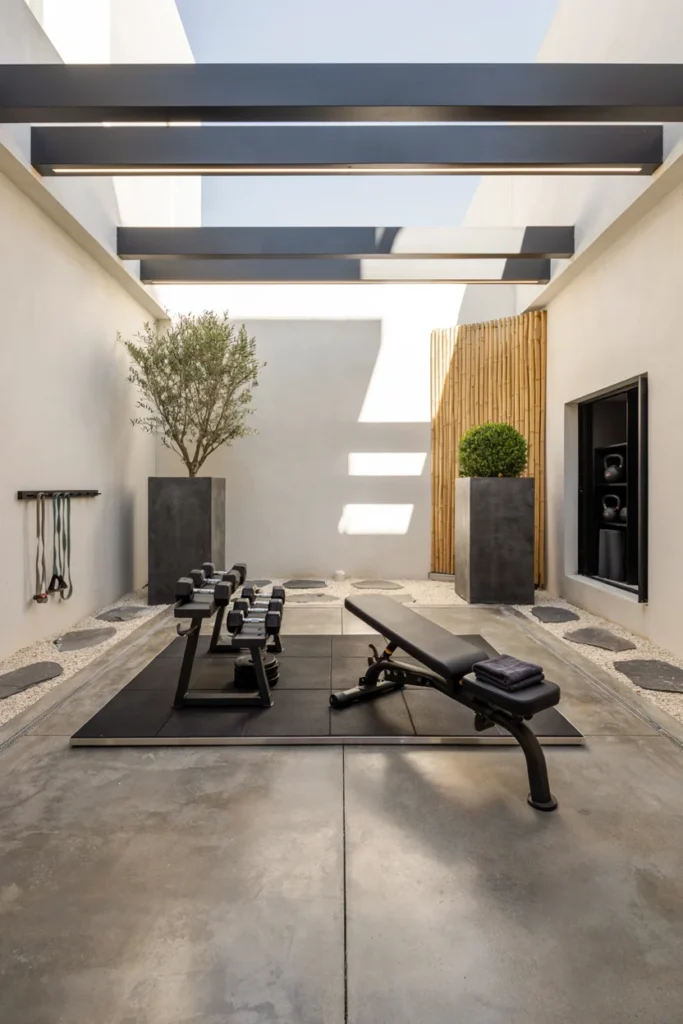
If clean lines and a neutral palette are more your style, a minimalist setup keeps things simple without sacrificing function.
- Stick to a black, white, and gray color scheme for equipment and flooring
- Use built-in storage to keep the space free of clutter
- Choose equipment with a low profile so the area still feels open
This is one of the easiest styles to keep looking sharp because there’s simply less visual noise to manage.
11. Shed Conversion Gym
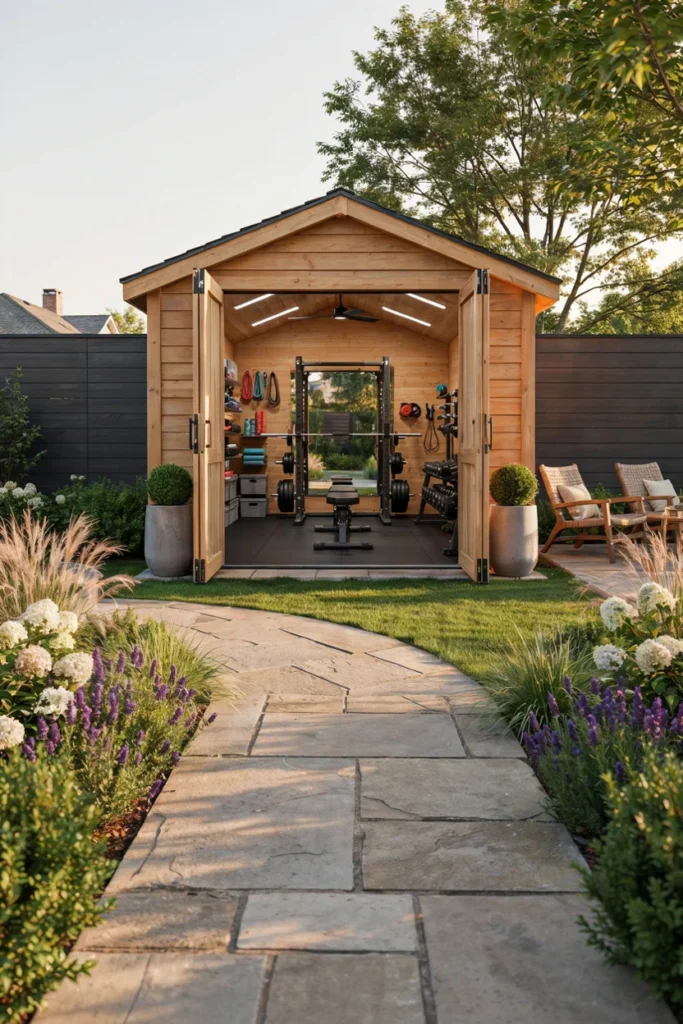
Converting an existing shed into a gym is a great option if you want an enclosed space without starting from scratch.
- Reinforce the flooring if the shed wasn’t built to handle heavy equipment
- Add insulation and a small window unit or fan for temperature control
- Install mirrors on one wall to make the small space feel bigger
I’ve seen sheds as small as 8×10 feet turned into fully functional gym rooms with the right layout.
12. Rooftop or Deck Gym
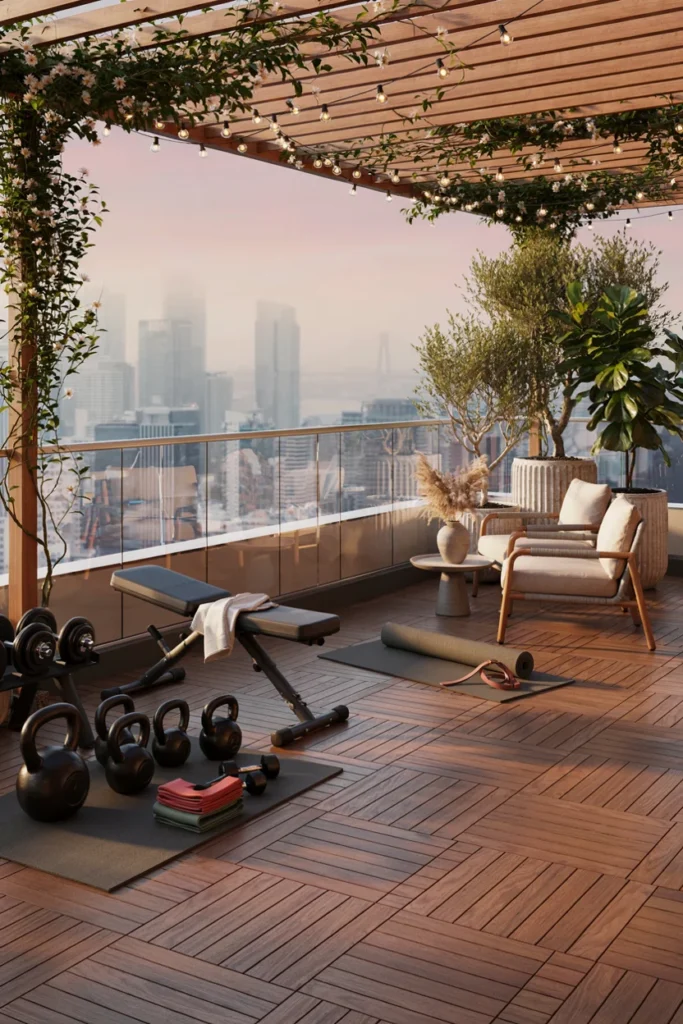
For smaller lots or homes without much yard space, a rooftop or elevated deck can double as a workout area with a view.
- Confirm the structure can support the added weight of equipment before setting up
- Use lightweight, portable gear instead of heavy fixed machines
- Add a railing or privacy screen if the space is elevated and exposed
There’s a real energy boost that comes from training somewhere with an open view, especially early in the morning.
13. Boutique Studio-Inspired Setup
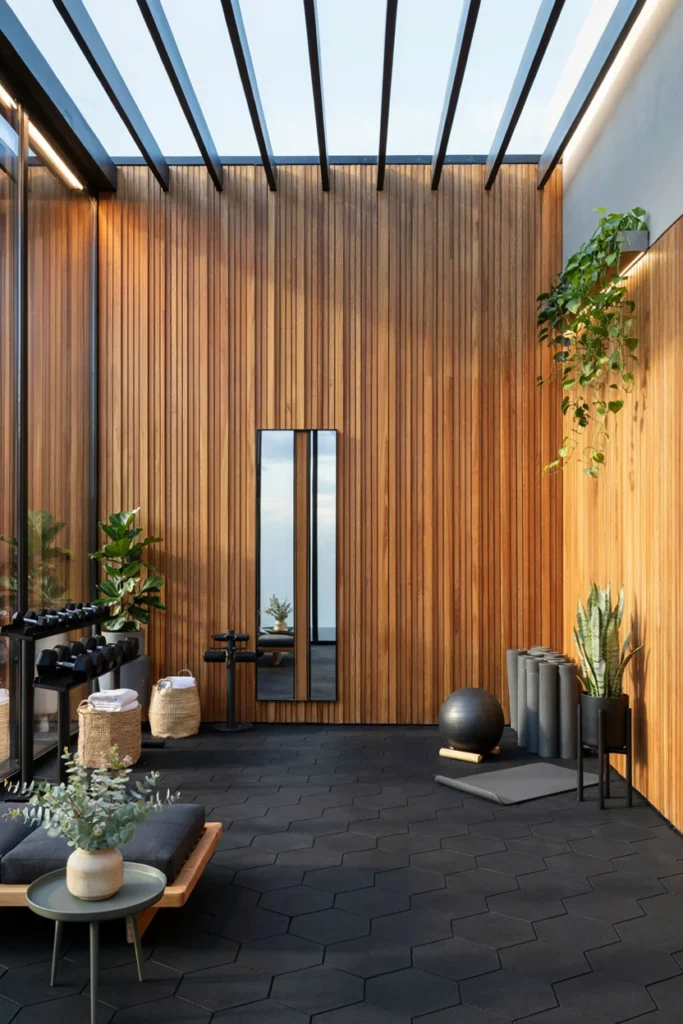
If you love the feel of a boutique fitness studio, you can bring that same atmosphere to your backyard with the right details.
- Add a full-length mirror as a focal point
- Use warm lighting or a simple pendant fixture instead of harsh overhead lights
- Include a small speaker setup and a designated spot for a mat or towel station
This setup is less about the equipment and more about how the space makes you feel when you walk into it.
14. Functional Fitness Zone with Turf Sled Track
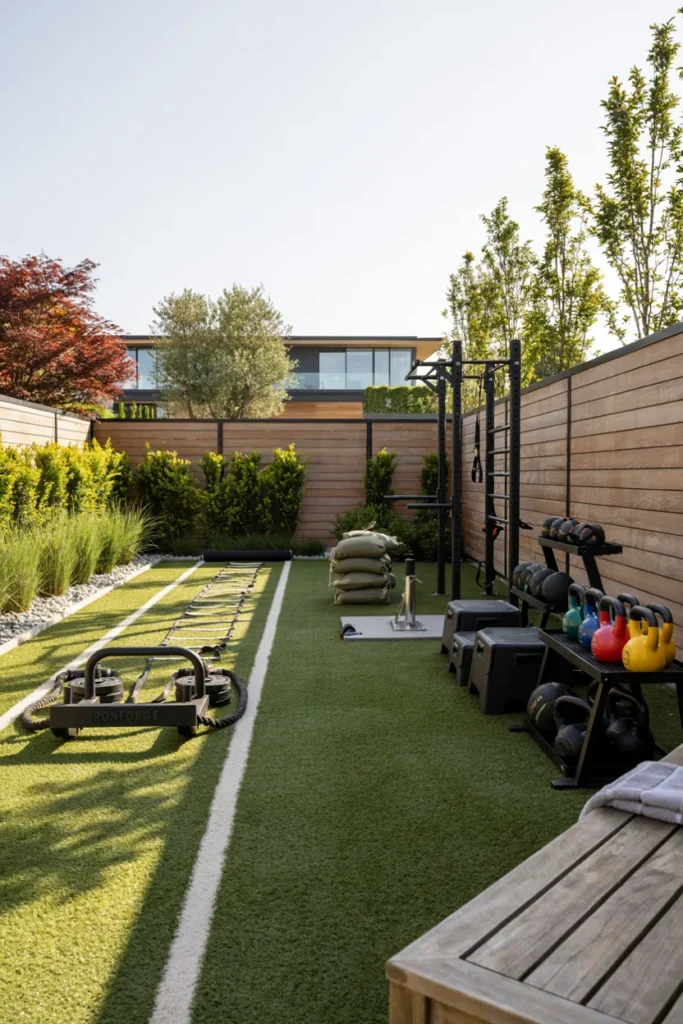
If sled pushes, battle ropes, or agility work are part of your routine, a dedicated turf track makes a big difference.
- Lay a turf strip at least 20 feet long for a proper sled push or pull
- Anchor points at each end for battle ropes or resistance bands
- Keep the track separate from your weight area to avoid overlap during sessions
This is one of the more functional setups on this list and works especially well for anyone training for strength and conditioning goals.
15. Yoga and Strength Combo Space
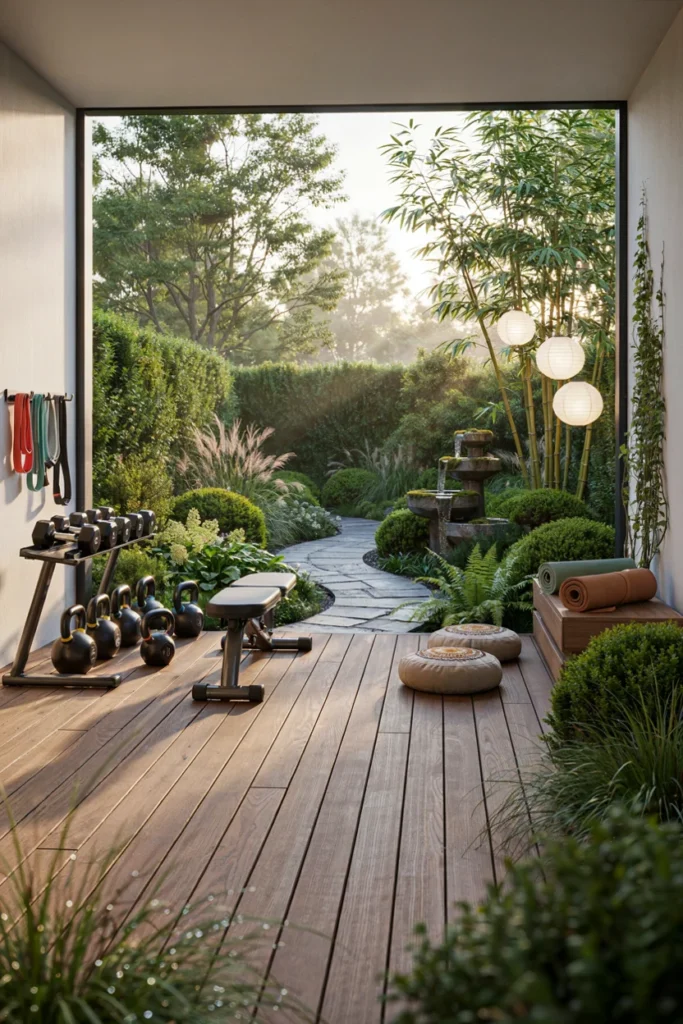
Combining yoga and strength training in one area keeps your outdoor gym versatile without needing two separate zones.
- Use a soft, cushioned flooring that works for both mat work and standing exercises
- Keep weights and bands stored to one side so the center stays open for stretching
- Add a small shelf for props like blocks, straps, or a rolled-up mat
This layout has become one of the more popular requests I’ve seen, especially from people who split their week between strength days and recovery days.
16. Privacy Screen Gym
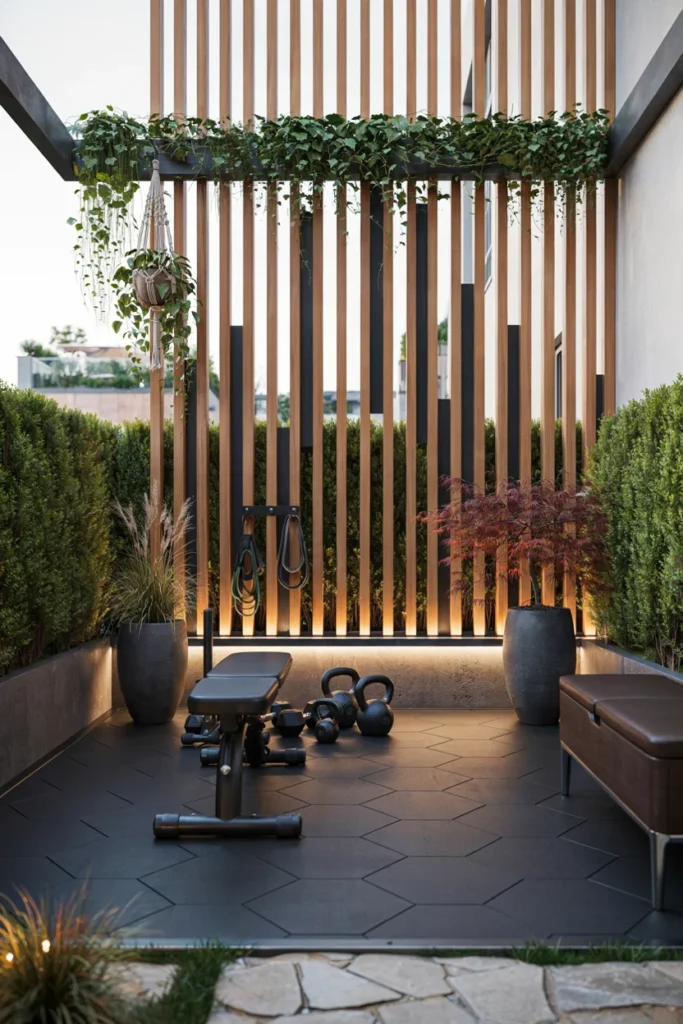
If your backyard gym faces neighbors or a street, a privacy screen makes the space feel more personal and less exposed.
- Use lattice panels with climbing plants for a natural look
- Try bamboo or reed fencing for a quick, budget-friendly option
- Add a solid fence panel behind your main equipment area for a cleaner backdrop in photos
Privacy changes the whole feel of a workout. It’s a small addition that makes a noticeable difference.
17. All-Weather Gym with Retractable Canopy
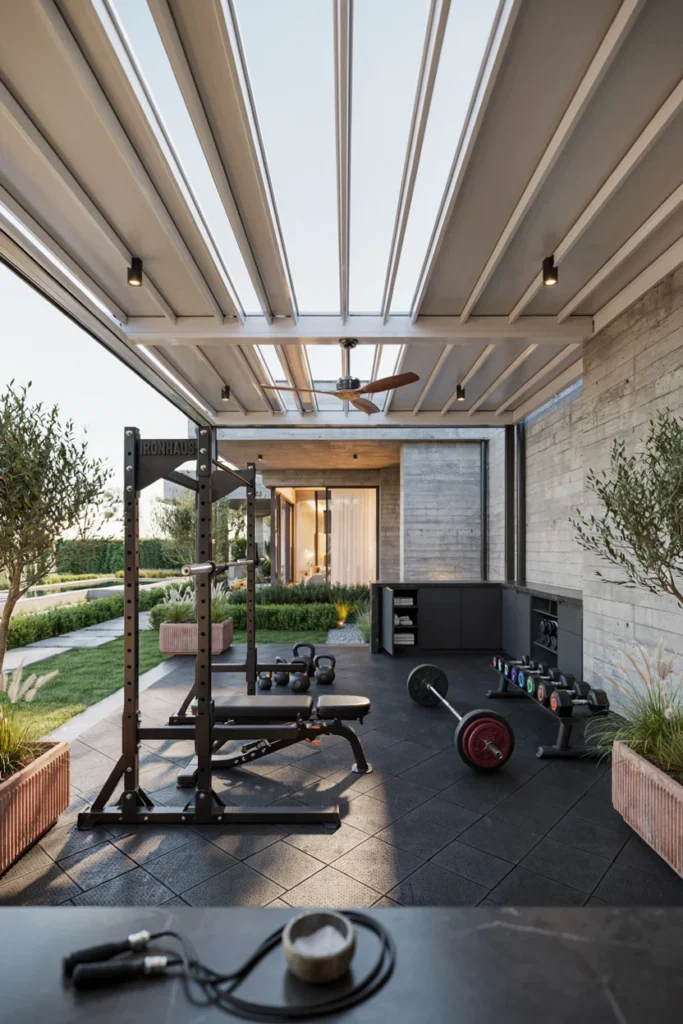
A retractable canopy gives you the flexibility to train in full sun, light rain, or open sky depending on the day.
- Choose a motorized or hand-crank canopy for easy adjustment
- Pick a water-resistant fabric rated for outdoor use
- Pair with side curtains for extra protection during windy or cooler months
This setup takes away the guesswork of checking the forecast before every workout.
18. Family-Friendly Outdoor Gym
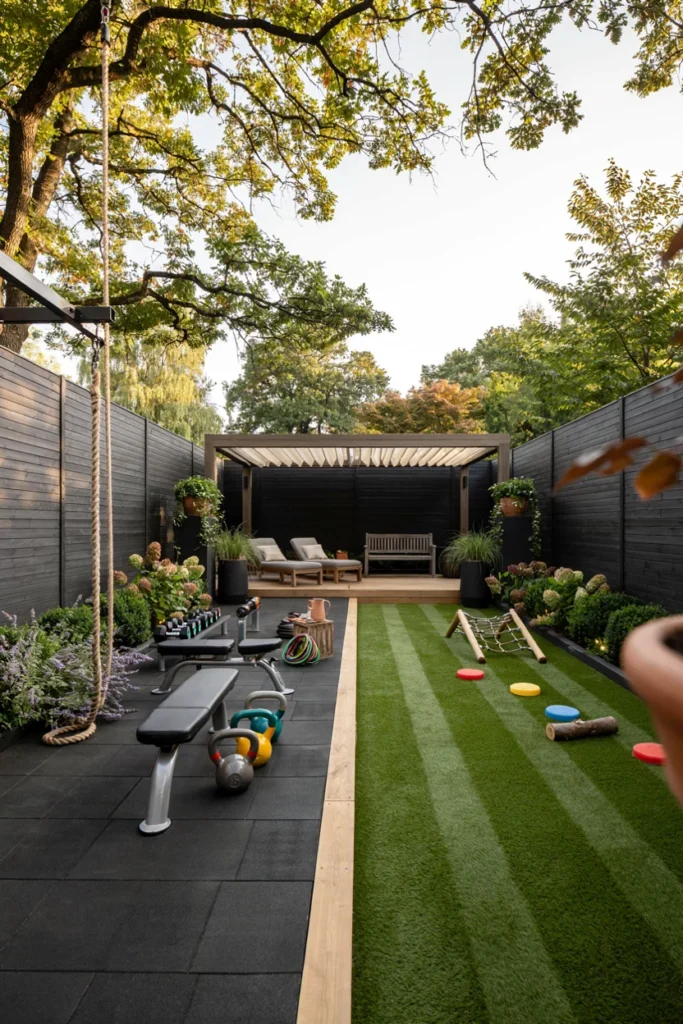
If your gym needs to work for the whole household, a few adjustments make it more practical for mixed use.
- Set up a shaded seating area nearby for kids or family members to relax
- Choose equipment with adjustable settings so it works for different fitness levels
- Keep a designated open area for stretching or simple bodyweight movement
This setup turns the backyard into a shared space instead of something that only one person uses.
How to Choose the Right Outdoor Gym Setup for Your Space
Picking the right style comes down to a few practical questions before anything else.
- Available space: Measure your area first. A corner gym and a full pergola setup need very different footprints.
- Climate: If you deal with heavy rain or intense sun, prioritize covered or retractable options.
- Budget: Container conversions and sheds cost more upfront, while DIY corner setups can start small and grow.
- Training style: Sled work and functional fitness need length and turf, while yoga and strength combos need open, cushioned floor space.
- Privacy: If your yard is visible to neighbors, factor in screening early rather than adding it later.
Walk your yard at different times of day before committing. Morning shade and afternoon sun exposure can change which spot actually makes sense.
Essential Equipment for an Outdoor Home Gym
Once you’ve settled on a layout, here’s what tends to cover most training needs without overloading the space.
- Adjustable dumbbells or a compact weight set
- A sturdy bench that folds flat for storage
- Resistance bands and a set of gliders for versatility
- A pull-up bar, wall-mounted or freestanding
- Interlocking rubber mats or turf for the flooring base
- A weatherproof storage bin or cabinet for smaller items
- A yoga mat and a couple of blocks if stretching is part of your routine
You don’t need all of this on day one. Start with the basics that match your current routine and build from there.
Conclusion
An outdoor home gym doesn’t have to be complicated or expensive to make a real difference in your routine. The best setup is the one that fits your space, your climate, and the way you actually like to train.
Start with one or two changes, see how they work for you, and build the rest of the space around what you use most.
FAQs
How much does an outdoor home gym cost?
It really depends on the setup. A basic DIY corner gym can come together for a few hundred dollars using secondhand equipment, while a container conversion or fully built structure can run into the thousands once you factor in flooring, framing, and electrical work.
What flooring is best for outdoor gyms?
Turf and interlocking rubber mats are the two most common choices. Turf holds up well under heavy equipment and sled work, while rubber mats are easier to install and work well for general strength training.
Can I leave gym equipment outside year-round?
Some equipment can handle it, but most weights, benches, and electronics will wear down faster with constant sun and moisture exposure. It’s best to store smaller items in a weatherproof bin and keep anything with electronics or upholstery covered or stored away.
How do I protect an outdoor gym from weather?
A covered structure like a pergola, patio roof, or retractable canopy handles most of the work. Beyond that, using weather-resistant equipment covers, sealing wood surfaces, and choosing rust-resistant metal finishes will keep your setup in better shape over time.